Showing posts with label community. Show all posts

12 July 2019

How To Start a Community Food Co-op


Plastic Free July is rolling along along, and we've been chatting with people about their experiences with it, and waste-free living in general. As always, there are a few issues that come to light, and we'll be sharing our tips for a couple of the big ones shortly (budget, time...). But for a great many people, the main issue in reducing household waste is easy access to package-free foods. In the greater Hobart area, we have a high number of bulk food options, ranging from small supermarkets to dedicated wholefoods stores where everything is available package-free. Although where we live we're technically in a food desert, we're very fortunate to be a short bus ride away from some amazing resources, and have access to homegrown foods through the community garden and local sharing network. But what do you do if you live even further away from shops and food outlets? You need to find creative ways to bring food closer to your community.

We were fortunate to visit the Bruny Island Food Co-op at the beginning of winter. We were invited to talk to their members about waste-free living and have a look around, and what we saw was more than a little inspiring. Bruny Island (lunawanna-allonah) sits on the south-eastern coast of Tasmania, with a population of 600 residents and tens of thousands of visitors each year. It only has a couple of small shops for basic groceries, and seasonal food producers and cafes that appeal mostly to the tourist demographic. It's accessible via ferry from mainland Tasmania and most residents need to shop for fresh food off the island.


Our friend, Liz, noticed a shortage of access to good food in the Bruny Island community and helped establish a food co-op there. The co-op is run in the community hall each month and you can buy most of the basics and some special luxuries there, without packaging! They're able to keep costs fairly low, helping more people in the community access package-free food. Alongside the co-op, they run skill shares and workshops and a space for members to swap and share food, with future plans and ideas for strengthening this inspiring community hub. We asked Liz about her experience with establishing a community food co-op and she has very generously shared her thoughts with us below. If you're living somewhat remotely, perhaps there's some inspiration here to help you build a co-op of your own. 

How did the idea to start a food co-op come about?

After doing the Spiral Garden Seedlings Permaculture eCourse, I really started to think about the waste we were producing in the kitchen. I'd always thought of ourselves as buying little processed/packaged food, but when I checked our bins I was surprised at how many of the plastic bags could be avoided if we bought in bulk. So I joined a food co-op off the island which was not too far away, and started buying lots of food from a bulk wholefoods store also off the island. When talking with a couple of friends in a cafe on Bruny Island one day, we were envisaging how great a food co-op could be on Bruny Island. What we didn't realise is that a local couple on the next table were listening to us dreaming and before they left the cafe, they came over to wish us luck and offered us a very generous donation to get started!

Was it easy to find support in the community?

Yes, we put a post on the community Facebook page asking for expressions of interest and got a handful of people who were interested to come along to our first meeting, where we just brainstormed ideas and what people wanted. We then set up a Facebook page asking people what they wanted to order and put an ad for the first meeting in the community news. As we didn't have any money we couldn't buy products up front to sell, so we had to take orders and try and make sure that a bulk product was already sold out before we even bought it. The most difficult part of it all was finding a location to hold meetings. While this could have been at someone's house, we had a vision of what we wanted to achieve and it was more like a shop and none of us had the space for that at home.

How many members are involved?

We have about 70 names on our email list, over 150 members on our Facebook page, and about 50 paid members. We have been open about 3 years and over that time the numbers have been steadily growing. The tricky thing is trying to find an opening time that suits as many people as possible, so while we have the numbers who support us, not everyone turns up to every meeting. When we first started there were 3 of us running it, but over time that has reduced to 2 with a couple of people who are often free to help us as needed. We are now at the stage were we need to think about asking volunteers for their help in a more formal way. We are thinking of having "active members" who volunteer their time for reduced prices. However we need to think carefully before implementing anything as we have been advised that managing volunteers is often more time consuming that just doing it ourselves!!!

How often do you meet in the community hall?

We meet once a month - the last Tuesday of every month from 2 - 5pm. At the beginning of the year we were open from 3 - 5pm, but this was just too busy - being open 1 more hour just eases the pressure when lots of people arrive at the same time! We are happy to open more often if we think we will be supported, and this is something we are working on at the moment.


Does the co-op have a formalised structure? Memberships?

When we first started we needed to have a bank account and the only way we could do that was to become a Not for Profit incorporated business. So that's what we did. I guess we are really running it a bit like a small business. Membership is $20 per year, per household and for that members get products at good prices, non-members pay 20% more. Members are also able to bring their excess fruit and veg or jams, pickles, bread, cakes etc etc to swap or sell. We also hold workshops and members pay $5, non-members $10. The money for the workshops goes to the speakers (80%). This is to encourage members of the community to come forward to run a workshop, We think of the workshops as more of a skill share kind of thing - I don't like the idea of "teaching" each other, more sharing what we know. We really want to encourage community involvement and think of co-op as a community hub as opposed to just being a place to buy food. Nicola Hubbard and I work together behind the scenes to organise the workshops, products etc and for that we are now able to get paid a nominal fee - it is a lot less than the work we do, but it's a start!


Did it require much financial investment to get off the ground?

We had nothing but the $400 donation, which we used to buy our first products. Over the 3 years we have made enough to gradually buy buckets, scoops, a very expensive set of scales, a POS system, a computer and insurance. 

How much time does running to co-op take each week?

Now that we are organised and in a routine, it doesn't really take much. At the end of each meeting we have a rough idea of what we need more of for the next meeting, so it's a matter of putting in an order, updating the POS and product list and going to pick it up. We also sent out a monthly email with our workshop details for the following month and our latest product list. We put an ad in the local rag and that's about all. The most time-consuming part is the banking - we are happy for people to pay via a bank transfer as we don't have a card payment system yet, so we have to go through the sales and check them off as the money gets deposited then message anyone who has forgotten - this is a bit time consuming. We estimate that we spend about 10 hours a month between the two of us, then of course there's the time that co-op is open, but we think of that as the fun part!


How have you decided on the product range?

We're always open to new product ideas. Initially we just bought what we wanted as we knew that if we were left with it, we could buy it ourselves!!!! As time went on, people have suggested products they would like. The difficult part is keeping it simple. We are not in a position to have heaps and heaps of products yet and we have to keep in mind how long things like nuts stay fresh as we're only open once a month. We did get products from a variety of suppliers but that proved time consuming - more ordering, more time picking up etc, so now we mainly buy food from one supplier with a big range and a just a couple of other places occasionally. We aim for package free bulk foods, as local as possible and if possible organic. 

How has having access to food in this way impacted on the community?

Initially most of our members were people who were already thinking about waste and organic healthy food etc etc, but over the 3 years the range of types of people who are joining is widening, as they hear about the co-op so come to take a peep.. As both of us (organisers) work at the local school, and the hall is opposite, we are able to reach a broad range of people through the school newsletter. 
There has recently been some discussion on Bruny Island as to how to move forward within the community with the number of tourists etc. and one of the ideas is for the community hall to become a bit of a hub. We are trying to set that in motion by opening co-op at the same time as the community library, and the online access centre and encouraging people to pop in for a cuppa, bring the kids and say hi - building a bit of community spirit! 


Any lessons learnt or anything you'd do differently?

It is a commitment, but it is something that we both love, so that's no problem. I think if we had thought too much about it, we might never have started it as it can be quite daunting at times, so I guess my advice at this stage would be that if you are thinking of setting up something like this, to just do it! Buying a POS system has been a huge time saver (before that we were using an excel sheet and neither of us could understand excel!) and I'm glad we started properly from the beginning with our own bank account etc, rather than using our own bank accounts, then getting in difficulty with tax etc. As I mentioned before we need to really look at the way we run the co-op now as a business - we might find that we wish we had set it up differently, I'll let you know! Also, we never borrowed money or got into any debt etc, so actually there's no pressure - if it doesn't work, we can stop!!!! But for now that's the last thing we want to do.

*****************

Are you tackling Plastic Free July this year? How are you travelling with it so far?

We'll be talking in a few places in Hobart and Melbourne throughout the next month. You can find all dates for talks and workshops updated regularly, here.

We talk about food co-ops and other solutions for making waste-free living possible, and communities stronger, in our book 'A Family Guide to Waste-free Living', published by Plum. Signed copies are available in our shop, or you can find it in all good bookshops. If you're in the Northern Hemisphere, you should have luck finding it at Book Depository, or in eBook format, available here. 

~ Lauren. x

1 April 2018

Should I leave my plastic at the counter?


The other day, a few friends shared with me (Oberon) a UK viral video about plastic, and it got me thinking. In the video, a group of supermarket shoppers collectively do their grocery shopping, but when they get to checkout they all remove the plastic packaging from the bought items and leave it on the counter as a sort of plastic protest. The video describes how the group wants supermarkets to take more responsibility for the overuse of plastic packaging in the products they sell. I find it interesting to think about the issue of ‘who takes responsibility’ when it comes to packaging waste. So, who is responsible for single-use waste plastic packaging? I thought I’d ‘unpack’ (pun intended) the issue a little.

There are four main players (probably more) to consider – governments, producers, retailers, and individual shoppers. You could also add other players – media, insurance companies, packaging designers (note the saying ‘Waste is a design choice’), oil companies, plastics manufacturers, waste and recycling managers, industry regulators, and more – but I’ll set these others aside for now.

Let’s look at each of the first four players I mentioned:

GOVERNMENTS

Each level of government (local, state, federal, plus international obligations) has different responsibilities and capacity to influence single-use plastic packaging. The Australian Government regulates and manages waste at a national level and administers the Australian Packaging Covenant, which is a sort of ‘soft’ regulation, requiring big businesses to report on the steps they are taking to reduce and better manage packaging.

State Governments have responsibilities around pollution and managing all sorts of aspects of community health and well-being (and waste), but regulation around plastic packaging is not generally offered, unless there is lots of pressure from elsewhere (e.g. peer pressure from other states, or strong lobbying from individuals/communities/local govts). State governments do have the potential to enact fantastic positive change around single-use plastic packaging, but they have to have the will.  

Local government is where (I believe) the greatest in-roads can be made in terms of regulating use or sale of certain types of plastics, but the sphere of influence is limited, to the municipality, and also to limited certain business contexts – e.g. Hobart City Council are banning single-use plastic packaging for takeaway food, but are unlikely to be able to ban all the single-use plastic packaging that lines every aisle of a supermarket.

PRODUCERS

Producers (the people who grow the food and make the supermarket products) vary greatly – some give attention to environmental impacts, whilst others completely avoid them. Some will give the impression of addressing environmental concerns, such as by calling something ‘eco’ or ‘natural’, whilst continuing to sell harmful products. Producers often sit between a rock and a hard place – they are bound by governmental regulation (e.g. food packaging laws) as well as retailer contracts that may demand certain products be packaged in plastic (e.g. spinach leaves or strawberries), in order for the product to work within the long supply chain of a supermarket. Many foods in Australian supermarkets have had to travel long distances, and with that comes additional requirements for certain types of packaging to keep food fresh and undamaged. Whilst producers can look for ways to avoid plastic packaging of their products, the alternatives may be cost-prohibitive or a legal nightmare – just look at the struggle Elgaar Dairy (both a producer and a market retailer) have had to go through to provide milk in returnable glass bottles.  

RETAILERS

Retailers also vary enormously, from the massive multinational corporations, down to little Jimmy selling lemonade on the nature strip. But all retailers choose which products they want to sell, and this includes choosing which items they will sell that are wrapped in single-use plastic. Plastic is cheap, and so many retailers are reluctant to avoid its prevalent use. Big retailers will run the argument that customers demand certain items be wrapped in plastic, or they will say that they are simply offering customers the variety of options that they desire. They have control over packaging of home-brand lines, but rarely do anything to reduce the plastic in them.

Big supermarkets now have automatic electronic checkouts, (which, as an aside, cuts jobs), and (say they) require additional plastic packaging to appropriately use the automated checkout system. This is partly why you’ll often see the organic produce in supermarkets is plastic-wrapped. Big supermarket chains will continue to sell what the customer buys, and are strongly driven by their profit margin, with only tokenistic attention given to things like waste and environmental impacts. They will continue to respond to the dollar signs, and rarely to complaints to their social media walls. A couple of years ago, I initiated and worked on a #PlasticFreeProduce campaign to encourage supermarkets to reduce the plastic packaging of their fruit and veggies – but it was like water on rock, as the supermarkets have strong bureaucratic defences, sending out a lowly customer support person to respond to our concerns, offering the same stock standard (weak) responses, and demonstrating very little to no positive change at their end.  

Fortunately, there are some retailers who prioritise packaging and waste – these businesses deserve higher support and their business models encouraged. They are not the focus of the viral video I mentioned above, but they are relevant to the solutions to the problem.

INDIVIDUAL SHOPPERS

Individuals have more power than they know. Whilst we each appear to be a mere drop in the ocean of customers that frequent big retail stores, our influence (including our absence from those stores) is apparent. When you abstain from buying a certain plastic-wrapped product from a major chain supermarket, and choose instead to grow your own or support a small, ethical and local producer, then you are sending multiple positive messages. You will both reduce the sales of harmful items from supermarkets (which can lead them to discontinue items or consider alternatives) and also promote local businesses to flourish, or (if you grow your own) demonstrate self-reliance – which is a fantastic way to reduce waste.

But what about the fact that it is still just a drop in the ocean? Well, my family have limited out waste over the last two and a half years to little more than would fill a medium-sized glass jar. We’ve also stopped shopping at supermarkets and now source food from local, ethical businesses, grow our own, and barter. The (roughly) $250 per week that we used to spend at the supermarket each week is now supporting a healthy local economy. That equates to around $30,000 that we have taken from the sales of major supermarkets, and divested into businesses that prioritise or support zero-waste approaches. Doing this helps to those smaller ethically-driven businesses to offer items at more competitive prices. Also, supporting local is also great, because it is generally easier to open up a dialogue about waste and improved waste-management, because you can speak directly to the person who can influence production and sales.

That is not to mention the 5 tonnes or so of landfill that we have avoided (compared to the average household over 2.5 years), and the numerous tonnes that would have previously gone to recycling (which we now avoid, compost or burn for heat). And then there is the influence of this ‘passive’ activism – others have been prompted to make changes in their habits, upon seeing that living with much less waste can be possible, cheaper and more convenient that the supermarket trawl. There are now around 7000 people in Zero Waste Tasmania, and other zero waste groups that have started in response to this group. Many others are enacting positive change in their area and discussing ways to reduce waste. Maybe it’s not a drop after all – maybe it’s the start of a wave.

It should be mentioned that neither individuals, producers, retailers or governments, hold all responsibility for waste. But each group have things that they have high influence over, that they could be doing more about, especially when they are informed about the harmful impacts of existing practices. I will also add that none of these four players act completely independently – there is an interplay within and between all four – and I believe that effective, positive outcomes are more likely if the dialogue remains open, informed and courteous. But remember, governments don’t have to keep single-use packaging legal, producers don’t have to keep wrapping everything in plastic, retailers don’t have to keep buying plastic-wrapped goods, and individuals don’t have to buy plastic-wrapped stuff. The responsibility is indeed shared amongst all these groups.

So, back to the viral video mentioned at the beginning of this rant. Those shoppers who bought plastic-wrapped items, only to remove the packaging at checkout? They want to absolve themselves of responsibility for the packaging and put the onus back onto the retailer. My problem is that those customers are still choosing to buy the plastic-wrapped products in the first place. The retailer’s bottom line is unaffected. The cost to remove the discarded plastic packaging is minimal (whether they landfill it or recycle it). Mountains more plastic is used in the bundling up of goods on pallets at the back of the store, and during other steps in production and transport. The plastic around the product is merely the tip of the waste iceberg for most items in a supermarket. And the customers have the option to simply not buy those plastic-wrapped items. Most fruits and vegetables can be bought unwrapped at supermarkets, and basic needs met by buying items elsewhere, from local grocers, shops, bulk food stores, markets, community gardens, co-ops, butchers, delis, etc.

The viral video does not offer solutions, nor does it demonstrate willingness by those customers to actually change their own behaviours. But many people CAN change how they shop, get their food, and meet their own needs. The viral video shows does have the effect of showing off just how much plastic is wrapped around items that supermarkets sell. But just filming items on the shelves will do that, right? – you don’t need to buy and remove the packaging to see what it is made from.

We can’t keep hand-balling responsibility around. Seeing supermarkets argue that they are merely responding to customer demand (by offering plastic options), whilst ignoring those who argue to remove plastic, is simply exhausting. Conversely, demanding change from supermarkets when there are perfectly valid and do-able ways to live without them (e.g. see our book ‘Bountiful: A family guide to waste-free living’ to be released later this year! *nudge, nudge, wink, wink*) by following any number of ‘zero-waste approaches’. The short- and long-term solution is for individuals and local communities (including businesses and governments) to adopt new, and environmentally-much-less-harmful paradigms – ones that do not rely on multi-national corporations who demonstrate little care for environmental impacts. If they did care, the supermarkets would have stopped selling single-use plastic products decades ago.

Good in-roads to broad, positive change (e.g. community level and bigger) can be made in various ways. But first, we should take a little time for self-reflection – what can we do as individuals and households to reduce our own waste? Once we are informed about the waste we produce, and take steps to reduce it, then the barriers to further waste-reduction becomes more apparent. You may find that you can live without supermarkets, but that you hit waste barriers when you start focusing on the waste associated with clothing, electrical goods, or travel. For each wasteful item, there can be a number of ways to address it. If you have the time, learn about their production system, business ethics, supply chain, and their organizational context. It may be worth writing to them to highlight a concern, but if you do this, offer solutions as well. Refer them to other businesses who are leading the way on a particular issue, so that they may aspire to improve practices.

Also, write letters and emails to your local government aldermen or members of parliament – people who are in positions to vote on motions for positive change. If you’re in the know on and issue and you think the council member is not, then inform them!
You may also want to let retailers know why you’re opting out of their products, but in the case of big multi-national corporations, don’t expect to see much more than a scripted, copy and paste response from them. In the case of the viral ‘plastic protest’ video, the customers aren’t really opting-out of the products, so the argument for leaving the packaging on the counter is confused.  

Leaving plastic product packaging at the counter is, in my opinion, akin to leaving a big steaming turd on someone’s doorstep – it is only going to incite annoyance and anger, but does not offer any solutions to the waste problem. It is an act of despair, of waving hands in the air and saying ‘What can we do, it’s all your fault!’ At best, such action might prompt discussion, albeit confused discussion.

Activism can be a useful strategy to push for broader shifts towards low-waste lifestyles and processes, but such actions will be more effective if they are solutions focused and not simply buck-passing. A great example the sort of positive activism that I mean, can be seen in Plastic Wise Taroona, who approached local, medium-sized supermarkets and negotiated for them to ditch plastic shopping bags, whilst offering reusable cloth bags instead. This action was collaborative, co-operative and mutually beneficial to businesses, customers and the local environment. I’d love to see similar, innovative solutions and cooperative approaches put in place to address waste problems elsewhere.  

As parents, Lauren and I encourage our children to take responsibility for themselves, and for their waste. We don’t want them to feel helpless in the world, or to constantly pass the buck on issues that they can actively control. We’d rather they problem-solve, and we encourage them to be self-reliant. The goal posts of this planet are constantly changing and so we want to equip our children such that they can adapt to changing times, with novel solutions.

~ Oberon

16 August 2016

Tackling waste in a refugee crisis


With all the talk of asylum seekers and refugees in the news recently, we got to talking about waste (a common topic around our house!) and how that relates to refugees. I asked Big Owlet "How do you think refugees manage their waste?" She said "It depends where they are staying - most often I don't know if they'd have enough money to even produce waste. I'd want to give them food from the bulk food place, instead of lots of plastic wrapped food." I followed with "What would they do with any waste they produce?" and she replied "They'd need portable water bottles (but they're expensive, right?), hmm maybe make something that could hold water, without being disposable, but the water might be polluted so they couldn't refill it... hmm, maybe they could use special bottles that filter water? I'd go to a refugee place and hand out special bottles for filtering water and bulk food." This left us with lots of questions about the waste that might be associated with refugees and so we sought to learn more.

According to the UN High Commissioner for Refugees, by the end of 2014 there were approximately 60 million people worldwide who had been forcibly displaced from their homeland (the highest level since WWII). The waste generated by this displacement is phenomenal. For example, it is estimated that 340 tonnes of waste is generated daily by Syrian refugees fleeing into Jordan (read more here). These are people who need to eat, be clothed, go to the loo, be housed, and be supported to rebuild their lives in a strange new land. There are many ways that aid money can be used to assist refugees with meeting their basic needs, and some are inevitably going to be more wasteful and environmentally harmful than others. Also, asylum seekers in transit may have few options available to them for discarding or managing any waste they accumulate, such as plastic water bottles, nappies, food packaging and broken or heavy items (e.g. see here).  

As at June 30th, 2016, there were 3,496 people living in detention under Australian authority. These folks are spread between Manus Island, Nauru, Christmas Island, and a few detention centres within mainland Australia. All these locations are effectively ‘food deserts’ – where provisions need to be shipped or flown in from far away. We know very little of the waste generated or managed in Australian detention centres (that information is generally not publicised), however concerns have been raised about groundwater contamination through effluent disposal and waste management on the detention centre on Nauru (as reported here). Poor waste management within refugee camps can create terrible hygiene issues, leading to spread of sickness and disease.

Elsewhere, disposal of waste accumulated within refugee camps can vary. At its worst it is left where it was discarded, burned (polluting the atmosphere and local inhabitants), or trucked away to be dumped illegally in local rivers. The World Health Organisation offers a guide to managing solid waste in emergencies (e.g. in refugee camps) which includes disposal into family 'waste pits' (i.e. a hole in the ground with a lasagne like bed of waste and soil/ash) (see the guide here), however, there do not appear to be any solutions offered for high density refugee camps, such as the Shatila Refugee Camp in Beirut, Lebanon (carrying more than 20,000 people). Aid agencies do what they can to help meet the basic needs of asylum seekers in temporary camps, but a consequence of that can be huge amounts of waste from the disposable items (plastic bottles, plastic packaging etc.) provided.

Having the capacity to sort, recycle and appropriately dispose of waste within camps will help to alleviate some of the health risks. In some instances, recyclable items can be sold to industry and funds raised can be directed back to support local communities. Where incineration is the norm (e.g. Greece, Jordan, Kenya) switching to energy-generating combuster incinerators may be a small step forward (as described here), although it is unclear how such technology incinerates plastics without releasing chemical pollutants. There are also numerous options for low cost, environmentally-friendly toilet systems that could be applied, depending on local resources (e.g. see this discussion).

On the Australian-run detention centre on Christmas Island, there are no recycling options available (i.e. all collected waste is sent to land fill - see here). Such a lack of services is similarly apparent in many remote Aboriginal communities, where greater support is also needed to minimise and better manage waste (learn more here). At the detention centre on Nauru, there are reports of poor handling of provisions of food and bottled water to detainees, leading to excessive waste production. To avoid these sorts of waste (and human health) problems, I think it would be more beneficial to support greater integration of asylum seekers into local communities, where fresh food can be accessed (or even grown, such as in community gardens), where they can be supported to be more self-reliant, with access to more permanent services (e.g. running water from taps rather than bottled water). In Melbourne, organisations such as the Asylum Seeker Resource Centre help to assist with such resources (see their Foodbank info here).

There are aspects to waste management in refugee camps/detention centres, that I would like to see discussed much more - I'd love to know of the feasibility of composting of organic waste, using compostable natural fibres over synthetics (e.g. in tents, clothing and other gear provided by aid organisations), alternative modes of water provision besides single-use plastic bottles, and extended responsibility by aid organisations and contractors for the waste-generating products they provide to refugees. This is particularly relevant in areas where people are provided with food and resources in 'temporary' camps, but where there is a high likelihood that refugees will stay in those camps for long periods (years to decades). It should not be up to refugees to solve these problems, and we as a species have the know-how to minimise the waste that refugees generate and discard, for their own health and for the environment.

Wherever systems are broken, there will inevitably be waste. As individuals, we may not feel that we can do much to fix a broken system (e.g. war, rampant consumerism, and human-accelerated climate change, are all consequences of broken systems). Indeed, we can only do the best that we can do, given our own station in life. In my position as a privileged, white, male in Australia, I feel a responsibility to do what I can to enact positive change. We can also try to understand broken systems and look for solutions and options for repair. A lot of the repair will need to be grounded in a position of peace, and empathy for others. We have all kinds of tools at our disposal to communicate our feelings about the world’s injustices; it’s social and environmental problems, and offer our solutions to governments and to other decision makers. So let's do that!

I talked with Big Owlet about some of these learnings and asked her what she’d like to do with respect to asylum seekers and their struggles. She said she’d like to start by making or donating food and clothing (e.g. woollen knits or sewn clothes from second hand fabrics) for refugees in Tasmania. We are also going to (re)watch the SBS series Go Back to Where You Came From to learn more about the stories of asylum seekers. 

Here are some other things you can do to help:

  • Learn more about the plight of those people seeking asylum, their needs, and the challenges they face so that you can speak up about those issues. We are presently doing this with the owlets, and working out what other helpful actions we can take.
  • Start a group similar to Bellies Beyond Borders (based in Europe), which is a creative foodwaste kitchen-on-wheels to welcome refugees (see here). 
  • Join a refugee support or action group, to help communicate messages of support for refugees, and identify way to assist people in need.
  • Donate to an aid organisation that has a good reputation for directing helpful resources to the people that need it most. It's worth reading up on an organisation before sending wads of money to it.
  • Devise novel ways to reduce waste and communicate those solutions to the aid organisations you support.
  • Other helpful options are suggested here.

~ Oberon.

25 October 2015

Sustainably Challenged :: Waste Free


Last week we posted about the Sustainability Challenge we're taking part in. After a week full of reflection and research, this past (almost) two weeks, we've gone head on towards living a somewhat different life. The biggest challenge we set ourselves was to live waste free and although it has made us think LOTS, it hasn't been as difficult as we expected. And there have been some pretty awesome discoveries along the way.

What zero waste means to us

There are a few definitions out there of what zero waste means. For us, it means bringing nothing into our home that we can't consume, compost or repurpose. It means not contributing to landfill, or to giant floating islands of plastic. It means little to no recycling and refusing biodegradable plastics too.

Recycling can mean a portion of our waste is moved to local depots where it is sorted, often added back to landfill, or moved on and sold to companies who purchase and re-purpose it as a raw product. For plastics, this means a downgrade. So a milk bottle doesn't become a new milk bottle, it becomes something else and eventually ends up in our system as a single-use plastic item. That's a whole lot of plastic for the earth to digest. Biodegradable means the plastic breaks up into tiny particles, still floating around, polluting our water and soils.

So for us, this challenge means not being complacent about where our waste and recycling goes. It means thinking. Lots of thinking. And refusing what we can't put to good use. We want to take responsibility for everything we bring into our home.

But rather than focusing on the zero in the whole equation, the refusal, we're choosing to focus on what we can use, and how. Instead of asking is it landfill, or is it waste, we're asking "Is it compostable?" Earth is losing soil at a rapid rate, so anything we can do to help build it up is hugely valuable. Making choices that help us build up the soil in this little patch of land we're care-taking is important. And we've only scratched the surface.


Living without waste.

There are loads of simple choices everyone knows about, that we're making everyday. We're trying a little harder to remember them. Here's what we're doing:

Always carrying water bottles,
Remembering the shopping bags, stashing extras in our bags, pockets and car, just in case.
Shopping at bulk foods stores and taking our jars along.
Using lightweight cloth bags for produce.
Avoiding produce with stickers
Taking containers along to a butcher/fishmonger to place meat, poultry or fish in.


If we're caught short, paper bags are acceptable for us - we can compost them or use them for heat.
When eating out, taking our own chopsticks along and finding take away food available in paper or compostable packaging and bringing it home to compost.
Making our own toothpaste and cleaning products.
Using compostable, wooden toothbrushes and cleaning brushes.
Using cloth everything. From hankies, to family cloth (although guests have an ethical, recycled flushable toilet paper option!).
Knitting our own kitchen cloths. This one is made from an old t-shirt.
Composting everything we sweep up or vacuum. Compost heaps don't mind dust.
Remembering to compost the dog and cat poo in the special pet waste worm farm, rather than throw it out in a plastic bag into landfill - yuck!


Making our own pet food.
Making our own tea.
Getting our ferments happening again.
Getting our yoghurt and cheese making act together.
Using and making home made seaweed tea for the garden.
Learning more about the plants we grow and expanding our medicinal herb garden.
Re-evaluating the processes in our business.
Gardening more.
Sleeping better.


Things we've found challenging

Produce without stickers is hard to find! This is why growing our own is important.

Dairy is almost always packaged in plastic, foil, or coated cardboard. We're having to compromise by bringing home only what we can repurpose. We're allowing ourselves a maximum of 3L of fresh milk each week and repurposing the packaging to make things we can use in our garden, like seedling containers and plant tags. We have powdered organic milk as back-up too. Our dairy consumption has dropped dramatically, which is a good thing environmentally too as it takes about 1000L of water to make 1L of milk. When our beloved Elgaar dairy is back up and running in a few months, we'll be happily drinking ethically produced milk and using reusable glass instead.

Shop assistants may try to help, but not quite understand what we're doing here. Like the butcher who was happy to sell us a plastic-free chicken - once he'd removed it from the bag. Or the cheese seller who we suspect may have just removed the glad wrap, rather than cutting a fresh slice of parmesan for us. You need to be on the ball when shopping.

In Tasmania, we don't really have a one-stop shop where we can buy everything under one roof. We're travelling to the whole foods shop, the butcher, the farmer's market… We're using the car a little more and being conscious of fitting more into each car trip. We need to look into whether bike or bus travel are viable options for our whole family. At the moment, for a family of five, the car is coming out on top as the best use of energy, money and time.

Shopping in small whole foods shops with multiple children is challenging! We tend to all pile up on each other and cause traffic jams by the quinoa. We're thinking of frequenting a smaller shop with a garden where we can park the owlets for a moment while we shop. We're getting better each time we do it.

Carrying all the jars is pretty heavy and requires preparation. But once you've done it a few times, it gets easier.

Medicines, vitamins, bandaids, hardware, gardening products, postage products… even sustainable products like compostable tableware… are all wrapped in plastic. Even the food that we've bought at the whole foods shop has most likely been wrapped in plastic at some point. Our lives are so tangled up in it. So, we work harder to consume a diet that doesn't require supplementing or medicating. We take our own tableware along. We make our own and we find the very best alternatives we can, when we can. If we can't we're going to ask businesses to think about their practices and re-examine just as we are doing. Plastics and packaging create convenience that keeps a whole lot of industries in business, so  we can keep them accountable by asking them to change their practices, choosing alternatives or creating our own.


What are the benefits?

Traveling and frequenting different shops means we're engaging with our community a bit more. We're having conversations with real people and finding out more about where our food comes from. Which is a definite win.

We're more mindful of what comes into our home. There's no waste to deal with. We're saving time and life's getting simpler. Its feeding into other areas of our lives where we're thinking more minimally.

When we unpack the shopping, it's already in the jars we intend to keep it in for freshness, so we just pop it straight in the cupboard, fridge or on the bench. It saves time! Plus jars are kind of lovely food storage.

Food tends to be healthier. Even though we cooked mostly from scratch before and our diets haven't changed hugely, I'd say the way we value our food has changed and we're definitely focussed on the good stuff.

Shopping is more enjoyable. It's quicker. There are fewer choices and fewer decisions to make. There is no advertising or excess packaging to deal with. Once you've got it sussed, it saves you lots of time and it's generally more pleasant.

We thought shopping this way would be more expensive. We're still trying to tally all the exact sums on that, but so far it's not! We have managed to stick to budget and feed ourselves well. We've found there's actually savings to be made on certain items we've always bought. And we're not paying for packaging which makes up part of the cost of most pre-packaged foods. Awesome.

Our soils are improving! By focussing on what we can compost, we're staying mindful of things that feed and nourish the soils that nourish the plants that nourish us. Which may lead us to the final frontier of waste one day… humanure. Possibly the only way we can really, truly live waste free. Baby steps though, right? ;)


Where to from here? 

Well, before we began this challenge, we put all the items that came in non-refillable containers into lockdown. We were fortunate that it began at the end of a pay cycle, so the fridge and cupboards were absolutely empty, so much of our waste had already left the building. Things like shampoo bottles and tea bag packets remained unfinished. Things we could replace with a more ethical, compostable version. Now we've replaced them, and know it's easy enough to live without them, we'll phase them out completely.

So we'll be filling our rubbish and recycling bins one more time. We may even hire a small skip for some bits and pieces we really can't repurpose, sell or give away. Decisions we made earlier that we wouldn't make again now. And we'll be letting them go, learning and moving on. Now we know our version of zero-waste is totally achievable, and actually not as huge a leap as we first thought, we'll be continuing along this path from now on.

We'll be making changes to Spiral Garden, which remove the need for our customers to worry about this stuff, as much as we can. We'll be thinking about how Christmas and birthdays might look for our family over the next few months. We'll be composting and gardening and thinking about some of the other things we might change too, staying positive that every tiny change we make is a step in the right direction for our planet. It's all a bit of an adventure!

Here are some extra links you may like to look at: 
Zero Waste Home
Trash is for Tossers
The Story of Stuff
Put Down the Plastic

Have you ever given much thought to waste, or a zero-waste lifestyle? If you have any questions, we'd be happy to answer them. Have a gorgeous week, whatever adventures you're on! 

UPDATE! We've learnt so much more in our zero waste adventures since this post was written and we've decided to share lots of that information in a supportive and fun space in our new e-course at zerowastefamilies.com! Join us for four weeks as we help you move towards zero waste living. 

~Lauren. xx


24 August 2015

Crossroads


Hello! Oh we've had a time of it lately! It feels like an age since my last post. So much has happened in our little world that it's made us think and re-think who we are and where we're travelling on this little journey. If you're feeling like some happy reflections on unschooling life in our beautiful Tasmania, I'll make sure to post some updates on the excellent fun we've been having, later this week, but this is a big one for us and marking it here feels important.

We're at a crossroads. The whole winter has seen the re-development of the street we live on. It's been noisy and muddy and inconvenient. We watched layers gradually peeled back, deep holes dug, paths strengthened and eventually renewed. It's been a bit of a metaphor for recent weeks in our nest.

We've watched friends move on, or make plans to travel, and celebrated their exciting news. On the flip side, we've uncovered some hard truths about people around us. About what they think of us and what that might mean. We've discovered what comes with the territory when you put your hand up to start something. We've had some hard conversations, had walls put up and then quietly put up some of our own so we feel safer (I'm on my first ever proper holiday from Facebook!). Our happy spaces are suddenly difficult and a bit empty. We're all down a bunch of friends and feeling very sad, raw and misunderstood as we've watched it all float away. And we're not sure how this started or why, but we're sure it must be for some reason or other, which we might find out about one day. And now there's a sense of quiet as we attempt to pick ourselves up and carry on as before…

But things are different now. It can be so challenging creating and keeping community. It's one of the more challenging aspects of home education, needing community around you to make it all work. Finding a balance in loving trust, understanding and clear and direct communication, when it takes all types and when you live in a very small place. When it's good, it's very good. And when it's bad, it's horrid. Humans can be so awful to each other. And we get it. We're human too. Hopefully this all leads to greater understanding.

Thinking about what all this might mean for the future is all a bit unknown and hard. So we're focusing on the right now. The good friends we have. The things we like to do. The nest we've created and the garden we're making together. What we're looking forward to. Rebuilding our beloved co-op. We're slowing down, marking days (and making handprints) and being better, gentler friends to each other.

Around about the time home educated children turn 12, friends start dropping off and entering the school system. We expected it. Perhaps not the day after Big Owlet's birthday, but we did expect it and had been making plans for what we might do if… So we're suddenly at a crossroads.

We've been spending lots of time discussing our choices. Travel, moving away from our beloved Tasmania to be with loved ones, SCHOOL, or continuing along as we set out. The Owlets are up for big change. They want a fresh start. So school is on the table. Forms have been filled out (!!). We've all shed tears at the thought of it and breaking up our little gang of 4 most weekdays, for the sake of a new community. Thankfully, one sleepless night led me to this article and gave us some fresh perspective. So we're trying all the things. Moving towards new opportunities, while staying put for now. Hoping all is not yet lost. Wondering where this new road will take us and looking forward to a smoother ride ahead.

Hoping smooth roads are ahead for you too.

Lots of love,

~ Lauren. xx

30 October 2014

People doing ace things :: Noisy Ritual

Photos via  Tajette O'Halloran Photography


I was having a little chat with a friend last night about supporting things. I was thanking her for supporting a crowd funding campaign I'd recommended and she said that she liked supporting goers. People who get stuff done. It got me thinking about all the goers I know out there. Following their dreams, bringing things together, and making the world a little more sparkly. I've always liked those sorts of people too. I've been fortunate to have many of them around me and to have grown up in a family where no-one ever suggested that we shouldn't just have a go. So I thought I might start a little sometimes series, featuring some of those goers. People doing ace things. And why not start with family….

About a year ago now, my sister and her partner and Cousin Owlet moved into a new house. They discovered that there was a cellar under the house with a strange tub thing in it… and after a little research, discovered it was a fermenter. Whoever lived there before had lovingly built a place to ferment and store wine. So being the goers they are, the new tenants decided to buy a load of grapes and invite over some wine-making pals and a whole bunch of friends and throw a party! They discovered messy, noisy fun and a sense of community in the process and a whole new idea emerged. It's permaculture in action, creativity and fun in all the best kinds of ways. It's involving people in the process of making their own wine - what better way to learn about it and understand it? 

So they're in the process of setting up an urban winery in Melbourne. There they'll be aiming to share the fun, messy, noisy winemaking process with the broader community and introduce a whole bunch of people to the joys of the process of wine and winemaking, in a non-wine-snobby sort of way. I love it, and were I living nearby, I'd be in there stomping those grapes and labelling those bottles… Gladly, I'll get to drink a drop from those bottles, at least. I'm so looking forward to tasting the result of this really ace thing that they're doing. 

You can find out more about the Noisy Ritual project here. If you like the concept to, why not get involved? Stomp some grapes! Or order a bottle and toast some lovely people doing ace things. 


Do you know any goers? 
Any people doing ace things? 
Are you one maybe? 
Or maybe you have a little quiet thing you've been thinking about? Go do it! It'll be ace! xx

30 September 2014

Why we love the farmers' market

image
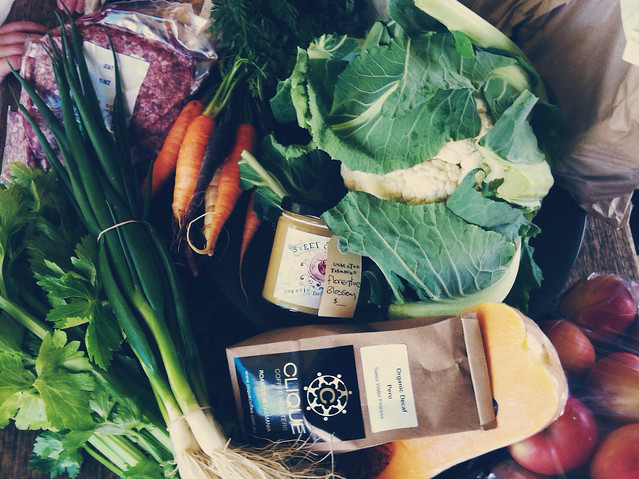
We're getting into a little rhythm in our nest. Having sworn off big supermarkets a couple of months ago, we've started to notice we're managing to pick something from the garden for most meals. Finally! We get a delivery from a local shop roughly once a fortnight, with ethical meats and staples we need, which has been brilliant. Next we're working on a food and essentials co-op with our homeschool co-op buddies so we can order organic, awesome staples at a price our mostly-single-income families can afford.

The final piece of the puzzle for us has been going semi-regularly to the farmers' market. Here's how it works:

1. Arrive and secure donuts or bagels or freshly shucked oysters or something equally amazing for breakfast. Scoff at leisure.
2. Flag down some seasonal veg that we don't have growing in our garden just yet - this will diminish over time, all going well.
3. Find some ethical meat from happy animals. Right now we're loving goat.
4. Pick up a pot of local raw honey and locally roasted coffee.
5. Check out plants, seeds or spuds to take home and grow our own. Or just to admire and get excited about.

Here's why it's so great:

1. The food is so fresh! The veggies we buy last much longer (like, weeks longer) than any supermarket bought produce.
2. We know the people we buy all the produce from. We can ask them about how they grow their food and we see the care and pride they take in it.
3. Sometimes we bump into friends we haven't caught up with in a while, or just share a wave and a hallo across the crowd. That's a bit nice!
4. The donuts and bagels and oysters and… well, you get the picture.

Best of all, the owlets see the transaction of money passing hands and each item being directly paid for, rather than just a big credit card bill at the end, paid for by plastic. It's more real for them and for us. And they like to be involved in buying things too. Unlike the supermarket, which is usually a place we'd rather leave as soon as we've stepped inside, the farmers' market is like a regular community-building experience each time. And one we talk about after the event. It's like we haven't been out to do the shopping at all! See you there next week? xx

Some beautiful resources for talking more about farmers' markets with your owlets:

To Market, To Market, by Nikki McClure.

Alternating between story and fact, this lovingly-crafted picture book follows a mother and son to the weekly market. As they check off items on their shopping list, the reader learns how each particular food was grown or produced - from its earliest stages to how it ended up at the market.  Find it here

Let's Go to the Farmer's Market Kit.

This kit contains everything kids need to have tons of fun at the farmers' market: a strawberry tote bag, 20 activity cards, an informative booklet about farms and the farmers' market, plus a shopping list pad. Find it here. 


14 September 2014

When life gives you neighbours…

afterlight

Every time our minds wander to getting away from it all and moving to some isolated patch of bush, we think about all the good things we have where we are.  Wonderful neighbours is certainly on our list. Even though we are that family in our street… The house with artwork and fingerprints splashed all over the front windows… With Owlets roaring (sometimes nude), around the garden during the daytime. And a weedy, unkempt garden it often is, by most standards. We're that family who are always home and loud and choose to do things a little bit differently. Some of our neighbours choose not to engage and keep heads down as they run from the car to the sanctuary of home.  But the neighbours who do say hello and make time make our street a beautiful and supportive extended family, of sorts. A community.

Over the back fence is a piano teacher who has helped Owlets learn when they've shown interest. Happy for us to fling a ladder over the back fence, she gladly catches them on the other side for a half-hour lesson. And wonderfully, she's not been offended when they decide to give it up, or begin again. Recently her house guests asked to feed our chooks weeds from the garden as they work, having seen us do the same on our side. And so we discovered another beautiful connection for our permaculture design.

Next door on one side, we have a neighbour who has a beautiful, wild garden and she's happy for our Owlets to explore it. There's an amazing dolls house inside, the Owlets tell me. And more than once, we've been given a cup of sugar, a pile of newspapers or a handful of lavender, when we've needed it.

On the other side are neighbours who the Owlets have adopted as surrogate grandparents. Tiny likes to ring the doorbell and say "hi", if she hasn't seen them in a while. They knew our house better than we did when we first moved in and they're always a wealth of information about our street. They assure me that on the night Tiny was born, they heard nothing - although how that can be, I have no idea!

Next door, they are around most days, like us, and pottering in the garden, like us. Their garden is neat, well tended and abundant, with more than enough food for their meals and plenty to share. Often I've seen our neighbour popping in to houses in our street with apples or lemons for who ever is home. Sometimes it's us. Once it was a posie of violets to say she thought I was a great Mum. She had four kids of her own, you see... And there are plenty of times the Owlets have been handed a bowl of raspberries over the fence to gobble up gleefully on the way inside to tell me about it, red stained chin and all…

"Neighbourhood" by Phoebe Wahl. Available in our shop!
We have rather low fences in our neighbourhood, so we've had to become comfortable with company outdoors. Often a head will appear at the fence and we'll get to talking about how the broccoli's growing or why the lemon tree might not be thriving in that spot. Over the years, the next-door neighbours have witnessed our experiments with soil improvement and no-dig gardening and they've shown keen interest. Tut-tutting the weeds at this particularly lush time of year - I suspect they're being polite as we endeavour to get on with the business of growing food, despite the weeds. They're interested to witness the latest transformation as our permaculture design takes shape. And I think we're winning some clout as we seem to have luck with cauliflower.

We've been the glad recipients of a tiny rhubarb plant from next door, which is now huge and adorning our food forest. One of the enormous tomatoes passed over the fence was saved for the seed we have growing in seed trays in the lounge room… And we're more than glad to help out with the lemon glut when we collect the mail while they're away on holidays.

These neighbours embody the permaculture ethics of people care and fair share so well. I suspect that they see success the way I do; that true success is not just being able to feed your own family, but those around you too. And spreading a little joy along the way… I've been giving a little thought to how we can work to make this friendship a little more reciprocal. To be better neighbours and have enough to share (more than the odd cup of milk or stick of butter - although these are helpful too!). Enough useful stuff anyhow, and choosing a few things that are not in our neighbour's garden has been in the back of our minds while putting together our permaculture plan. To begin with, I think it might be a few eggs. They don't have chooks. And when some of the fruit trees grow up a bit, maybe some quinces or pears or cherries. I may just save some seed from the cauliflower and maybe our neighbour will finally have luck with that too, as we have. Hopefully there'll be enough to share with other neighbours too. Even the ones who don't have time for a chat.

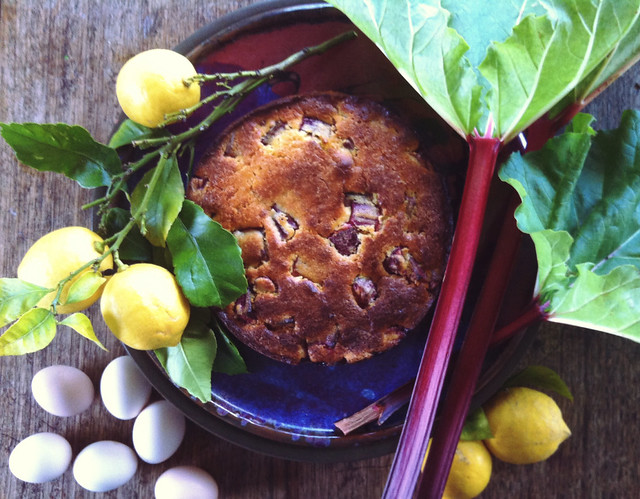
This is how community building starts. Its how Owlets find mentors and friends of all ages. Its how we find support and our garden grows stronger. And it's how, when you think there's nothing much in the cupboard, you suddenly have the fixings for Lemon & Rhubarb cake…

Lemon & Rhubarb Cake

5 rhubarb stalks cut into 2cm pieces
1/3 cup rapadura/coconut sugar/raw sugar/maple syrup/alternative
125g soft butter
1 cup of rapadura/organic raw sugar/ honey/rice malt syrup. Add less if you like it less sweet.
zest and juice of 1 lemon
3 eggs
1 cup plain flour
1/3 cup SR flour
100ml yoghurt

Preheat the oven to 180ºC
Grease and line a 20-22cm springform cake pan

Toss the rhubarb with rapadura and set aside
Cream the butter & larger quantity of sugar/sugar alternative.
Add lemon zest and then the eggs, one at a time.
Stir through the lemon juice.
Fold the flours in gently, a little at a time, alternating with the yoghurt.
Fold in the rhubarb.

Spoon into the cake tin and bake for about 40 minutes, until browned on top.
Test the cake with a skewer. If the skewer comes out with some cake batter on it, cook for another 5 minutes and repeat.
Cool for 15 minutes before removing the tin.
Dust with icing sugar if you like - we don't think it needs it!

Adapted from Allan Campion and Michele Cranston's Rhubarb Lemon Cake in Every Day Cooking. 
Published by Hardie Grant Books in 2006.