Showing posts with label family. Show all posts

6 April 2020

25 Ways to Holiday at Home

This post appears in response to this week's theme for our #52climatesolutions series on Instagram. You can pop over there for more information on how holidaying at home can be a useful skill to learn for the future. 

It may seem a little strange to be sharing this list while none of us really have much choice but to be at home. Those of us who are fortunate to have a home, that is. We’re in the midst of a stressful situation that’s shifting our priorities, bringing forward anxieties and rewiring our brains and how we see ourselves moving forward. Business is anything but usual. Giving ourselves a little space to just be where we are and appreciate our surroundings (like we do on holidays), may be just the ticket. Particularly if you’re self isolating with kids (never was there a clearer oxymoron). Shifting to learning at home full-time isn’t easy, so focusing on spending time together and strengthening relationships can be very important. Perhaps the school holidays came just at the right time. 
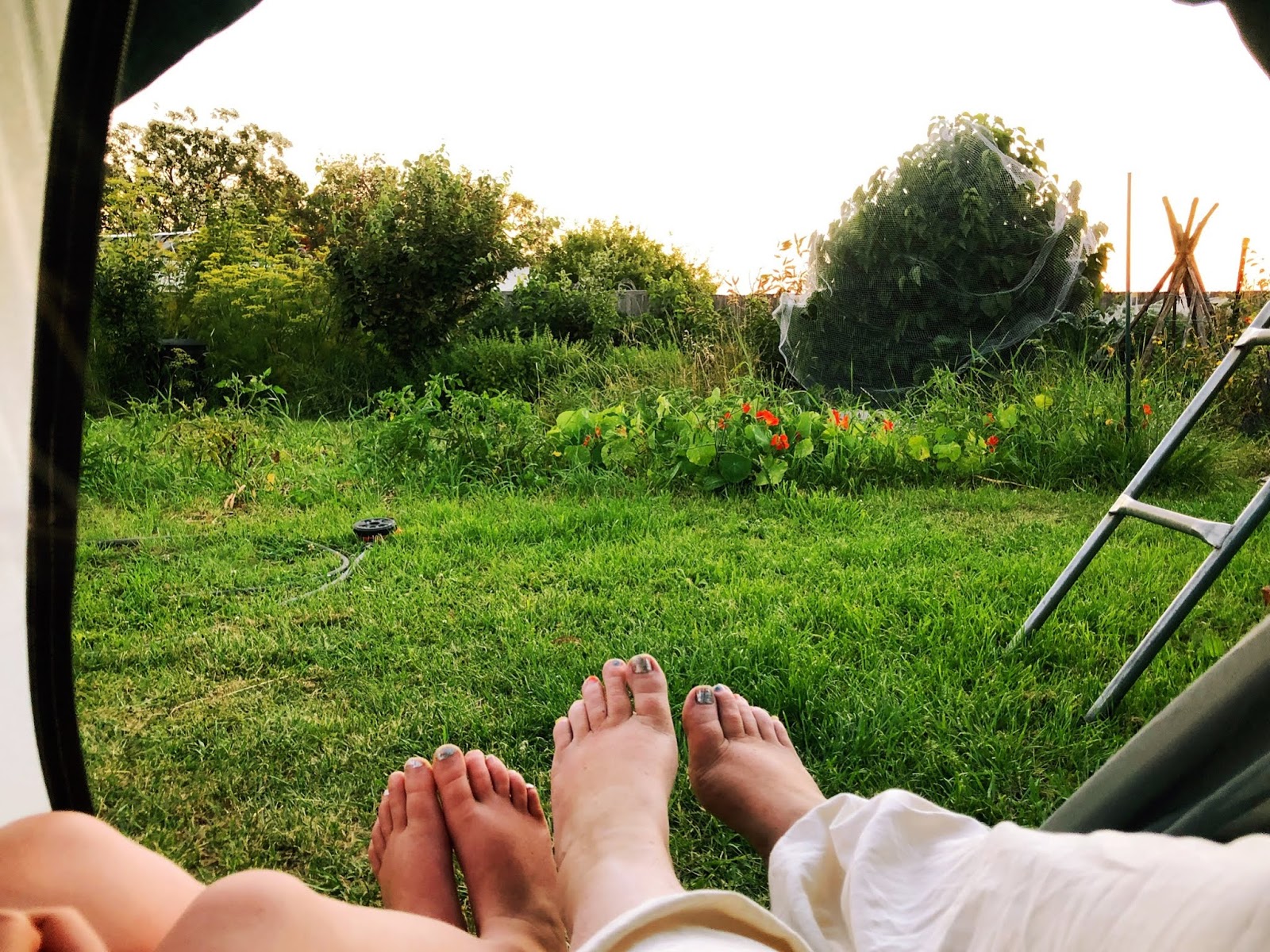


When this period of time is behind us, will we go back to our old ways? Will we ignore the impacts travel has on the environment and holiday like there’s no tomorrow? Perhaps we’ll take some lessons from our period of time at home and holiday at home intentionally again. Whatever you choose in the future, here are some suggestions for now. We hope they help:
  • Camp out - in the backyard or your lounge room. Pitch a tent and sleep under the stars, or under twinkle lights by your tv. We can’t guarantee you a good night’s sleep but your kids (and pets) will love you all the more for it. 
  • Cook with fire - if you have a wood heater or space for a little outdoor campfire, toast some marshmallows, bake some damper, enjoy the warmth and gaze into the coals. 
  • Stargaze - If you have a backyard or a balcony, a little stargazing can be a wonderful way to connect with nature, and observe what’s happening around you. If you’re in the city and can’t see the stars to clearly, perhaps try an app like Sky Safari, or a sky map to help you work out where the constellations are. 
  • Nature walk in your street - what seasonal changes are you noticing? What sounds and scents? Try taking some photos and draw from them when you get home. For extra fun, go after dark, with torches and spot nocturnal wildlife. 
  • Start a holiday diary - perhaps a nature journal, or just daily observations of the world around you. 
  • Move your furniture around - Swap bedrooms, look at your home and how you use it, in different ways. A change is as good as a holiday!
  • Give your bedroom a deep clean - Change the sheets (there’s nothing better!) and put a chocolate on the pillow if you like!
  • Bring the outdoors in - Plant some pots up with herbs, indoor plants or flowers that make you happy, provide food or freshen the air a little. 
  • Send postcards or letters to the friends you’re missing - Tell them what you’ve been up to. There’s something special about receiving a note in the mail. 
  • Send a gift - whether it's a bunch of flowers or a favourite book you’ve been reading, find a small and local business to support and have them send a gift on your behalf, if you’re not able to attend the post office in person.
  • Learn a new skill - Learn to bake bread, knit, grow food, play an instrument. Emerge from your holiday at home with a skill you can share with your friends and family when you see them next. 
  • Find out about a different culture - learn the history, language and perhaps try the foods of the place you’d like to learn about. 
  • Visit museums, galleries and zoos, virtually - webcams and virtual tours are happening now in facilities all over the world. Go exploring and learn all the things! 
  • Write to a pen pal - reach out to people in other parts of the world and look for a pen pal (perhaps through friends of friends or someone you know online?). Send them a lovely message telling them about what it’s like where you are, and ask them to describe their day-to-day. There’s solidarity and connection to be found in the written word! 
  • Learn the history of where you live -  Find out about First Nations people, the geological formations, famous landmarks, favourite buildings. 
  • Read all the books! There’s never been a better time to catch up on the books you’ve been meaning to read. If you don’t have an unread stack and prefer not to buy books, you might try borrowing ebooks and audio books through your local library. Some subscription services are offering freebies now too. 
  • Splurge on a take-away meal - give yourself the night off and support a local hospitality business who makes great food. Many are struggling right now and have opened up take away and delivery meal options. Look for restaurants who cook using local ingredients and ask about compostable packaging! 
  • Eat local food - be a locavore and experience what your local diet really tastes like, whether it’s bought, foraged or both.
  • Go dancing - well, maybe just in your lounge room, but have a dance party and truly let your hair down. 
  • Initiate new routines - perhaps you’ve been meaning to maintain a sourdough starter and bake regularly, do a little yoga or walk each day, or you’ve been meaning to reduce your family’s waste output? Now’s a good time to start incorporating new things into your daily rhythm so they’ll be second nature when life’s feeling more normal. 
  • Get some sunshine - If you have a little sunny space to sit or stretch out, take time to rest in it and enjoy the sun's warmth and a bit of Vitamin D.
  • Catch up on watching old movies - or nature documentaries you haven’t had time for. You’ll have a family of film buffs and nature lovers in no time.
  • Play games - board games, card games, do the crossword.
  • Take a nap - The sign of any restful holiday. Nanas of the world will agree!
  • Slow down - Remember how to slow down and take each day at a time. Be gentle with yourself. These are unusual and uncertain times we're living through. Know that while you stay home, you're currently supporting front line workers and the broader community, and significantly reducing the impact your family has on our changing climate. 


And when the hardest of this is behind us… holidays at home might include visiting local museums, galleries, ecosystems, restaurants, and hotels. You might try camping not too far from home or bushwalking somewhere you’ve never been before. Support your local businesses, keep carbon emissions low, and your local community resilient.  


27 February 2020

80 Life Skills for Kids to Learn


We've spoken before about how the way we've educated our children over the years (at their request!),  has shifted to incorporate more of the practical. The life skills they'll need in the future, whatever that future might look like. Skills for resilience so they can care for themselves and their community. We're also educating them for the present, so that they can contribute to household life, but also so they have the skills they need to help avert climate change right now.

Over a year ago, we all sat down together and wrote up a list of skills we wanted our kids to have, or that they wanted to have, and some us adults  needed to work on ourselves - because we reckon learning and sharing skills is important for everyone, and there's always more to learn!


Our list has columns for each of us to tick off as we get to doing each task, or mastering each skill. There were 80 skills listed originally, and the kids have added more as they've thought of them. The list is now pinned to the fridge, and we've slowly ticked of skills as we've completed them after the list was hung - so there are some skills us adults have learned in pre-list days, but we're not ticking them off until we've done them again since hanging the list. It's proving motivating for all of us, and interesting to see how many are covered in our day-to-day. And it's been lots of fun learning and sharing skills!


After a few requests on our Instagram last week, we've shared our list, with blank columns for family members, here. You might like to use it for a base list for your own family, adding and removing skills as you like. Let us know how you go!


18 June 2019

Educating our kids for the future they'll inherit.


One month ago, we wandered around the corner for a democracy sausage and to choose the government to take us forward into an uncertain future. Voting that day, it felt like choosing the world our kids would inherit. We were full of hope. It felt like so much depended on it, in terms of our response to the climate emergency, and how we care for each other as a community. We were hopeful there would be at least a glimmer of positive change. But for most people I know, the results that day were hugely disappointing. Even my own mum, an eternal optimist, was quite distraught. Friends began looking for ways to create positive change, at a personal and local level. Something we’re all about, because we know the positive impact such changes can make.

For us, it meant taking a moment to think about what more we can do. And explaining to our kids what had been chosen for them. Re-evaluating how we’re living and fighting harder to protect this beautiful planet. But also making sure our kids are prepared for what may come. For us, that also meant examining our home education program and making sure it addresses climate emergency and the consumption crisis. And suddenly the curriculum resources we’d been utilising didn’t seem so necessary any more.

In the same year we began to live waste-free, and after many years unschooling, the owlets asked for a plan. Something mapped out that they could use semi-independently, that would tell them exactly what they “should” be learning. We chose a secular curriculum, and loosely followed it. For the most part they’ve enjoyed it. The history and science learnings reinforcing some things they already knew, and they felt comforted that they were learning the "right things", what their schooled peers were learning. But that shifted for us all last month.


Suddenly, how to write an essay didn’t seem quite as important as how to write a letter to the local MP. Learning things by rote didn’t seem as important as learning from experience. Keeping up academically seemed less important than creative and entrepreneurial thinking and being good humans. Learning about events of the past seemed less important than how to live in the future. We talked about whether university education would be relevant for them and the knowledge and skills they'll need. They're undecided. And although it may seem like a dramatic response, as a family, we decided to let go again and embrace the way of learning we started out with. To trust and keep talking, and working on our passions, and keep learning about nature and how to live as part of an ecosystem, with less harm. But also a long list of practical skills needed now and into the future.

So far, our list is full of skills like baking bread, chopping wood, mending holes in clothes, fixing things, pruning fruit trees, learning how government works, learning about local indigenous plants, animals and people, catching the bus, and finding out about alternative currencies. Each of the owlets has popped their own ideas down and they’ll all be working towards doing each these things independently. Some of them they’ve already mastered. Some of them are in our book! Some are in our Seedlings eCourse, which we're doing again. Some of them we adults are yet to master, so we’ll be working on them too, and adding to this list as we go on. This sits alongside their individual interests and passions, all the books they like to read, the things we like to do and learn about for fun or necessity. We’re making the most of every minute, but also slowing down where we can. Learning what matters, together. Learning from life, and for our lives, now and into the future.

~ Lauren. x


8 March 2019

Women and the mental load of waste-free living (+ a soap recipe)


There's an elephant in the room, when it comes to waste-free living. In the majority of households attempting to reduce their waste, it is still largely the work of women. Women often have the desire to make change in practical ways, and carry the burden of researching and strategising ways to implement waste-free shifts in their households. Women and children worldwide are also most likely to suffer the impacts of environmental issues and poor waste-management. It's been well documented that women are at the forefront of the actual day-to-day work of environmental change. Anecdotally, Oberon and I have seen it in the Facebook group we run (Zero Waste Tasmania), where more than 80% of members are women. And across social media, the majority of accounts devoted to the practical business of zero waste living are women. Women are the ones buying our book, although hopefully the men in their lives are reading it and trying things, too, and we've addressed this in the book. Waste-free living doesn't have to be burdensome. In fact, it can be joyful and enriching as you find a closer connection and care for nature. It's even fun! But in our home, it's fun, and not burdensome, because it's shared.

Women carry the mental and physical load of waste-free living, and we need to see that shifted. It has to shift for more of us to be able to make space to take more waste-free living practices on. It was the manufacturing of plastic packaged products and 'convenience' foods that simultaneously gave women freedom from their homes and created the huge environmental problem we face today. Meanwhile, men have, for the most part, carried on as usual, embracing 'convenience' products and being left somewhat off the hook. This has to change, for all our sakes, but especially for our children who will discover the full effect of choosing 'convenience' over responsibility.

But for today, on International Women's Day, I'm going to leave the mental load of pushing for that shift to the men-folk (thanks, Huz), and recognise and celebrate the women who have done so much practical work to care for their families, their homes and our planet. I'm often drawn to think, on such days, of the people who lived on the patch of land where I live, before me. First the muwinina women who cared for it so very well that only a midden and stone fish traps by the foreshore remain as evidence that they'd impacted this land. And then the farmer's wife, who possibly seldom made it to our patch of the orchard while she tended her home and garden. Or the housewife who lived here before us, who saw fit to install lots of small cupboards for their preserves, which inspired me to think about filling them with preserves of our own.

While we were in the process of compiling recipes for our book, I visited my Mum's place and she pulled out a couple of notebooks she'd had stored away. Simple notebooks featuring beautiful handwriting, on plain, lined paper, yellowed now from age. The pages were filled with recipes and notes, taken by my two grandmothers, who began them as young, newly married housewives. They began writing them towards the end, and immediately after WW2, and both notebooks reflect how they were striving to stretch their resources further when they were required to keep their homes running, and families fed, on very little. It was a time when food was rationed, Victory gardens were encouraged, and wasting food was illegal or very much frowned upon. And women bore the brunt of that work.


As I turned the pages of hints & tips, so often shared by friends or in newspaper articles, government publications and magazines in a time before Google, I found many that looked like the handy hints we've come to know and love, in our waste-free living travels. But one of my favourites as I flicked through, was my maternal grandmother's method of using up all the old soap ends to make new soap. I snapped a photo so I could bring it home to try. I never met Doris, my mum's Mum. So having a little routine of hers in our own family rhythm seemed like a wonderful idea. So we saved up the soap ends, and gave it a try.


I had to do a little tweaking and estimating to quantify things like how many soap ends a family might make in 3 months, or how big a small cup or her pie dish might be. But we got there in the end. I was delighted to share the making of it with Little Owlet, and I'm happy to say it worked well. And so we have olive oil scrap soap in our home, stretching our resources further, and creating a beautiful product from old, as my grandmother did. Here we've shared the recipe, as you can find it in our book. It's one that's dear to our hearts. 

MAKE THIS :: Olive Oil Scrap Soap

What you'll need:
1 cup soap ends
1/2 cup olive oil, plus extra for oiling 
soap mould - a small glass baking dish works nicely
1 cup water

STEP 1
Grate the soap ends and place them in a
saucepan with water. Make sure the water just covers the soap. 
STEP 2
Place over a medium heat and stir well until
the soap fragments have dissolved.
STEP 3
Remove from the stove and add olive oil,
stirring well.
STEP 4
Beat well with a whisk and, while the
mixture is still warm, pour it into an oiled
dish or mould.
STEP 5
When the soap block is completely cold,
turn it out onto a board and cut it into
squares.
STEP 6
Leave your new soap bars to harden for
a few days before using. 

........ 

Our book 'A Family Guide to Waste-Free Living' is available in all good bookshops (including ours!), and libraries now. Published by Plum Books and featuring photographs by Natalie Mendham, who also took the first picture in this blog post. 

~ Lauren. xx

5 March 2019

The one where we wrote a book


 Last Friday, we held a very special celebration in one of our favourite bookshops. Family and friends where there, and the place was bursting with supportive folks. Then we answered some questions and signed our names... It felt a bit like our wedding day! Only, we both had headset microphones, instead of a celebrant, our friend Hannah (from Good Life Permaculture), led us in conversation under the watchful eye of our three children, and we signed our names several times over, in copies of our very own book! And so this rather large side-project we've been keeping to ourselves all this time, was launched and sent on it's way, with big hopes and dreams that it will help to make a difference in this world of ours.

How did it come about? Two years ago, we were contacted by a publisher who suspected we might have a book to write about waste-free living. We agreed, and set to work (through a long winter and a flu season that has now become family legend), and we photographed, edited and finished the book, only to see our publisher fold in the week it was due to go to print. Fortunately, the very wonderful Plum Books rescued our project, and turned it into this magnificent book that arrived on our kitchen table just a few weeks ago. There was much whooping and cheering, and a r
ound of applause because this little labour of love is just as much the work of our children as it is ours.


Why a book about waste-free living?  Because we want to take personal responsibility for the waste we create, the legacy we leave, and what we normalise for our children. In a world heading for environmental destruction, its vitally important that those who can, do. That we curb the trend of overproduction and waste. That we stop draining the earth's resources. And in a political climate where decisions are being made that hinder the protection of our environment, it's an act of hope to work against and outside the societal structure that creates wasteful systems. We're voting with our wallets, and with our time. It feels joyful and we (and our children) can sleep a little easier at night. Waste infiltrates every aspect of our lives, and working to live without it, as individuals and communities, can go a long way towards creating the kind of positive change this world needs.

‘A Family Guide to Waste-Free Living’ is a collection of our favourite recipes, information and handy hints all in the one place. It’s the book our kids will take with them when they leave the nest. It’s filled with recipes from our mums and grandmothers. And it’s filled with hope. Beginning with tackling food waste, to packaging and household waste, and then how we approach waste in our interactions with friends, family and the broader community, the book has a gentle structure that can be followed (it's actually the process we followed when shifting towards waste-free living), or it can be dipped into as needed. We called it 'A Family Guide...' rather than *The* Family Guide, because it's our process and what works for us. It isn't prescriptive. But it's our hope that readers will find their own path with it, personalise it and make it their own.


One happy reader, who picked up a copy at the launch, said this about it: ".... Get the book. Get it. It's so wonderful- a cheerful little guidebook for regular folk (families and singles and couples) to ditch plastic and other packaging and by-products, connect with community and care for the environment. There's no preaching, there's no greenwashing. There's also no fear. So, it's really readable and the tips are doable. I'm going to share more of it this week because every time I find a moment to steal I read another random page of it and smile." 

Our book is available now in all good bookstores and libraries, and if you’d like a signed copy, you can pre-order one from our little shop, Spiral Garden, and we’ll post it to you.


Huge thanks to all at Plum Books and Pan Macmillan for publishing our book and helping it make its way in the world. Thanks also to brilliant Tassie photographer, Natalie Mendham, for the beautiful photos. And to Michelle Mackintosh for the beautiful design, Chris Middleton for the excellent cover photo, and to the always wonderful Costa Georgiadis for setting aside time to read the book and provide a beautiful foreword. We're still pinching ourselves that we've been given this opportunity, and that people are finding it practical and enjoyable to read is a massive bonus. Go well, little book!


~ Lauren. xx

22 November 2017

Our Zero Waste Activity Advent Calendar


Hello little blog! We've missed you! We've been busy writing a book all year and there's so much to catch up on. Today though, the serious business is this. Advent. Tiny Owlet informed me with a most solemn face this morning that "there's only 8 sleeps until advent". There are actually 9, but it spurred me into action and getting organised, even though I'm not feeling entirely ready or happy about the fact that it's late November.

If you've followed along with this blog for some years, you'll know that our Christmas tradition each year involves an advent calendar of activities, rather than gifts or trinkets. We begin on December 1st, as we welcome summer and start preparing for the end of the year and time spent together and with family. Activities can be a practical way to get things done in the lead-up to Christmas, or they can be moments to catch our breath and enjoy time together. They also keep excited small people busy, with small things to look forward to each day. And, as this time of year is usually our busiest, these moments, where we take time to connect and have fun together, are so important.

Some years we have given our advent calendar a theme, like the years where we followed Steiner-inspired cues and looked to minerals, plants, animals and people in each of the weeks. Some years we have reflected on the permaculture ethics of 'earth care', 'people care', and 'fair share', which has worked beautifully.

This year, while our heads are still fresh with all things waste-free, we figured we'd share with you a list of waste-free advent activities. We place our activity suggestions on small scraps of paper, inside origami folded paper cups we string up over the fireplace. After we've finished with them, we pop them away for reuse next year, or we use them for saving seeds from our garden, which they're perfect for! There are things to do at home, or out and about. Things to remind you of the waste around you, and things that just happen to be waste-free festive traditions you might like to adopt. We've included a few bonus activities so you can swap some around depending on what your days look like, how christmassy you are, or for if you'd just like to have something fun and waste-free to do all month long.

Waste-free advent activities:
  1. go for a beach picnic - hello summer!
  2. make a wreath with natural or upcycled materials - leaves, sticks old newspaper, fabric scraps.
  3. have a dance party in the lounge room
  4. ferment - make some christmas champagne, ginger beer or kimchi
  5. borrow a christmas book from the library
  6. compost - start a compost heap, seaweed or compost tea, or add compost to your garden
  7. go out for ice cream sundaes
  8. make an up-cycled or handmade gift
  9. have a beach or neighbourhood litter cleanup
  10. make decorations from natural or upcycled materials 
  11. find a christmas tree - we usually pick a weed tree growing by the roadside
  12. decorate the christmas tree
  13. donate a gift to those less fortunate than you 
  14. plant - a tree, native flowers for the bees, or some food plants to feed your family
  15. watch a christmas movie together
  16. mend a favourite toy, or piece of clothing
  17. read books under a shady tree - aren't trees wonderful?
  18. make christmas crackers - upcycle those old toilet rolls!
  19. go fruit picking or foraging - bring your own baskets or containers!
  20. bake something using local and seasonally available ingredients
  21. make marshmallows from scratch 
  22. celebrate summer solstice - have a backyard campfire and toast those marshmallows!
  23. make some gift wrap from fabric, ribbons, re-used paper, or drawstring bags
  24. make a food gift and give it to your neighbours - maybe rocky road with the leftover marshmallows!

Bonus activities:
  • have a picnic dinner
  • donate - toys or unwanted clothing or household goods
  • make beeswax candles for the dinner table 
  • make a gingerbread house
  • pamper yourselves with homemade masks, lotions, foot soaks and pedicures

Let us know if you decide to join in too and have a waste-free activity advent calendar this year. Yay for having fun, finding balance and doing all the things! 

~ Lauren. xx


7 October 2016

The legacy of our pre-zero waste life


We all accumulate "stuff". Some of us more than others. Anyone with a hobby, actually, anyone trying to meet basic needs, will at various times buy, make, inherit, borrow, create, and/or otherwise "get" things. Some of our stuff lasts a lifetime or longer, like great-grandma's ceramic hand mirror, or that wooden heirloom shoehorn, handed down for generations. But the trend towards things not being built to last, the trend towards planned obsolescence - means that things break, lose their function and become waste.

For anyone switching to a low-waste or zero waste lifestyle, there can be the warm and fuzzy feeling of knowing that you haven't created any new waste in the last week or month or more. But what about all that other stuff that fills your home; belongings from the glory days when ignorance was bliss, when we bought and wasted with reckless abandon and still have a legacy of "stuff" to show for it. What about when our nylon clothes fall apart, when the washing machine breaks, when those "sturdy" plastic storage tubs snap, when the dog chews the elastane out of your slippers, when you find that drawer of old mix tapes that no-one would ever want to hear again? How do we live a zero waste life when we still live in a house containing items from our past that will at some point lose all function and become waste?

Ahh, sweet regret. Why did we say yes to the crappy plastic toys that accompany those McDonalds happy meals for the kids? Why did we buy that plastic weed mat, that seems to attract weeds more than suppress them, only to create a hulking mass of plastic and unwanted plants? Why did we choose the cheaper plastic-handled frypan rather than the long-lasting cast iron one? Such is the benefit of hindsight. We can all lose our minds dwelling on past purchases, on our past adventures in wasteful frivolity. Or, we can be practical and do our best to deal with the mess we've made.

Our family of five have been trying to live without (new) waste for a year now. So far we haven't created enough to fill half a rubbish bin. Leading up to that one year milestone of sorts, we reflected on what waste we still had around the house from the pre-zero waste days. And it actually amounted to quite a lot! We've been in this house for nearly 10 very busy years and raised three children and a menagerie of animals and tried to be resourceful and generally survive through life, all the while accumulating 'stuff' to help us grow and learn and live.

“I did then what I knew how to do. Now that I know better, I do better.” ~ Maya Angelou


We already had a pile of 'junk' down the side of the house, long intended for a skip bin, and a bit of spring cleaning identified other odds and ends of waste around our home. As a sort of final transition of sorts, we agreed to collate our legacy waste and dispose of it as best we could - we sold some items, donated others and have retained some 'waste' items for later re-purposing (e.g. we've kept our old toilet to use as a garden plant pot, and a super-rickety cane chair to grow plants over).

We ended up filling a small skip bin (2 cubic metres to hold 10 years of legacy waste is probably not too bad!). What did we put in it? Well some of the culprits included: old degraded weed mat, perishing and torn sheets of plastic that had covered mattresses when bought, torn kiddies inflatable wading pool, cheap laminated CD stacking shelves that we'd intended to donate but had been left in the rain and rotted, a child's car booster seat (used by all our kids, but well past its safe use condition), the rusted and twisted metal parts of a cheap plastic green house that had exploded in our back yard in a strong gust of wind, some rusted parts of an old gas barbecue (we kept the main bbq unit for a potting bench!)… mostly degraded plastics that held their desired form for only a short time, when you consider that tiny little toxic particles of that plastic will be existence on our earth for centuries.

There were lessons learned as we (reluctantly) transferred our legacy waste to the skip bin - we acknowledged the relatively short life span of many items that we think should last a long time, and we realised lack of waste-free options for some items (e.g. the kids car seat), and the wastefulness of buying the 'cheaper' option (I'm looking at you, broken cheap plastic/metal green house). We talked and ruminated over it and felt some sadness and regret over the waste that we made before, but felt reaffirmed in our criteria for any new things that come into our home...

Where possible, buy to last, buy compostable, and remember to look after your 'stuff'. 

That includes looking after stuff in that time between when you've finished with it and when you've found a new use or home for it - leaving stuff out in the elements to weather and rot is no good to anyone (except maybe the guys on American Pickers!). One big positive for us is that our owlets are now part of the decision making process and are well aware of the consequences of our past mistakes. Hopefully this means that their legacy will be minimal and conscious choices will be their normal.

Transitioning legacy waste is an important part of switching to a waste-free lifestyle. It is not necessarily something to feel guilty about, but should strengthen your resolve to 'do better' and shop smarter, and live with less waste. We now move into our second year of waste-free living, producing very close to zero new waste and with much less legacy waste. Over time, we anticipate that the legacy waste will drop too, as we switch away from most plastics, and clothes with nylon/acrylic parts, and stuff we realise we just don't need to live happy, abundant lives.

~ Oberon & Lauren.
Save

27 August 2016

Less is more :: Downsizing for light, space and dancing room


Spring is coming, so we've been welcoming the light and giving ourselves a little extra space. A smoky, dark winter left us feeling crowded in and thinking that we'd like to move to a bigger house again. But the thought of a much larger space, and all that entails, doesn't seem quite right for us. We're happy with a modest home and our garden is more than enough for us to tend. Our needs are simple. But still, there was this issue of space.

Much of our furniture was inherited when my parents downsized their home and generously passed half of their furniture on to us. I've grown up with it. We've always lived with it, and it's served us well, but it's never quite fit in all the houses we've lived in. We all have loads of interests and hobbies, so we need room for those. Also, we're running a shop and a school here. Our nest is well lived in! Every six months, we'll experiment with moving the furniture all around, trying to find the perfect spots as everyone grows and changes. Our spaces need to be flexible. Six months ago, it cycled around until everything was in the spot it started at! The owlets are growing so much bigger and our need for space was becoming very real, until a week ago.

My Mama Nurture Project has led me to fixing and unravelling my body and, through thinking about movement, and with a nudge from my osteopath, I found my way to the work of Katy Bowman. I'd been aware of her work before and thought her furniture free lifestyle to be intriguing. We needed flexibility in more ways than one. So naturally I suggested we try it. Accidental minimalism. A little more living like things don't exist, which is our favourite thing to do when we're questioning and challenging ourselves. The answer is usually less. Live with less. Expect less and find more. So we did.


Last weekend, we moved our rather large couches out of our lounge room. They're as old as Big Owlet and a little worse for wear, although still reasonably comfy. But they define the space and take up so much of it that they block out the light and restrict our movement. Similarly, the enormous dining table my Grandfather built, for my childhood home, took up a whole room and ensured that we'd use it to sit at most days while we worked, ate and learned together. But we couldn't use the space for anything else. It's a beautiful thing to gather around a table together. But tables can come in many shapes and sizes and, without an enormous dining room or farmhouse kitchen to fit it, the table wasn't working. Instead, it's much better placed as a studio worktable for me and Huz and our various projects that have never seemed to have a home.


So now we have these connected, multipurpose, open spaces. We have floorspace galore for yoga, music making, dancing, play and lounging around. We have a pile of comfy cushions to sprawl all around, a low table to move around and gather, eat and work at, and seating and spaces at all different heights so we can all change positions freely. We move our bodies more already as we squat and bend and stretch, and my back is much happier for it. Most of all, we have rooms filled with sunshine, warmth, light and dancing. Less is most definitely more.

~ Lauren. xx

SaveSave

28 May 2016

Waste-free living and the anxious kid


Once upon a time, when I was very small, I had trouble sleeping at night. I worried about all sorts of irrational things, like falling THROUGH the bed. Not off, but through it - like a sieve. Then, as I got a little older, around about Little Owlet's age, I became more aware of the world around me and just how very small I was in it. I worried about everyone in my family dying and I worried about my pets… Things you'd expect a 10yo kid to be worried about. Then, one hot January night, I started worrying about the electric fan in my room as it gently whirred in the corner.

I'd cringe every time the cool breeze blew over me. Although it brought relief from the heat, there was a growing awareness of my responsibility in having this one fan blow cool air on me all night. In the next room, my sister slept while a similar fan whirred in the corner. And then I started to think about all the other kids in their bedrooms with fans blowing on them. I heard a neighbour's air conditioner humming and I thought of all the other air conditioners humming in my town. In my part of the world, which was experiencing a heat wave. I thought about the supermarkets with their refrigerators working overtime to keep the ice cream cool. Then I remembered that on the other side of the world it was the depths of winter. My friend had recently sent me a postcard from the snow. There would be heaters working overtime there.

As I lay there, the sound of the fan got louder and louder, ringing in my ears until I almost couldn't breathe. With my heart racing, I crept through the silent, dark house to see if anyone else was similarly alarmed, but Dad's loud snoring indicated this wasn't keeping him up. So I crept back to my bed. Tossed and turned for a bit,  then I snuck out from under the sheet, switched the fan off and crept back to bed. Relief. Able to rest for the fact that at least I wasn't part of the problem quite so much this time. But what still bothered me was that overwhelming feeling of being so small. Not that my family wouldn't listen or care, they would, of course. But I'm not sure they even knew. I couldn't really put into words the overwhelming sense of urgency and helplessness. That my silent act had very little impact. And that our world was slowly dying.

Fast forward 30 years and, if I let my mind wander on those long nights, I can find myself in a similar state. Things are worse now. More people, more air conditioners, more plastic, more pollution. Our government is doing very little about it. I have three owlets of my own now, who are aware of the problems. One is similar to me and is kept up at night thinking about all sorts of things when all is silent, often teary about her family dying and our planet. Our beautiful, doomed earth. I whisper to her that we are all connected, all of us stardust, and the positive energy that flows between us will help. She worries that it's not enough.

Now, when we lie awake at night, we use that time to make plans. Not to think about what we can't do, but what we can. Late night listening and thinking lead us to a family commitment to opt out of waste as much as we can. It lead to reducing our energy consumption and doing the very best we can to reduce our combined footprint. It has lead the owlets to all sorts of discussions with people we meet, about waste and "no straw, please", and "I'll take the cup home to re-use it, thanks", when they're handed plastic out and about. It's lead to our owlets becoming activists. It's lead to an understanding we all share, about consumption, and when enough is enough. About the impact each of us can make by taking responsibility for our part in it all. And it has lead to all of us sleeping just a little bit better at night. Even me.


Knowing at least three owlets from the next generation understand and care enough to take responsibility and to tell others... If that small, anxious kid with the fan had known. If she'd known she wasn't alone. That more were coming who would understand and want to change things... Maybe she'd have slept a little better too. Change is slow, but it's happening. I'm hoping more people step up to be part of it. That more children become aware of the problems and their urgency and what they can actively do about them. And that more of us hear them. Give them that space to know they can make a difference and speak up and do something. That they are doing something. Then rest, knowing that, just maybe, it's going to be okay.

Were you an anxious kid? 
Or maybe you have one? 
Was the environment ever something you worried about? 
What helped you sleep at night?

Our Zero Waste Families e-course starts this week. For all the overwhelmed kids out there wanting to participate in something they can actively do to make a difference. We're here with you. It's going to be okay. xx

~ Lauren.


31 December 2015

2015 Gratitude


How do you farewell a year that has challenged you more than most? I've noticed this year has been a tough one, teaching many life lessons, for those around me and further afield. And while I'm not sure whether it's because of the stars or the number of people on our tiny planet, I'd say some learning, although challenging, can be good. I won't miss 2015. But I'm sort of glad for what it has taught.

Tonight I'll be standing around the campfire in my garden with those dearest to me and raising a glass of rhubarb champagne to toast the old year and welcome new energy for the new. Oh how we need it! Things to be grateful for in 2015:

1. A comfy nest, cranking garden and health permaculture system that keeps growing before our eyes.
2. The experience of living a zero waste life and the lessons that has brought us all. Awakening the activists in our owlets and a simpler lifestyle we feel happier with.
3. The experience of sharing our Seedlings e-course with loads of families and watching them get it, love it and inspire others around them  - including us!
4. The challenge of being doubted, losing friends and letting go of a community we loved. Oh it's been a ride! We're grateful that we were tested to step outside our bubble, seek other solutions and try new things. Our community has widened and our owlets feel more supported to chase their passions.
5. Music. Being pushed to find a creative way for the owlets to learn and enjoy making music. The confidence and enjoyment it has brought them and a shared passion for all of us.
6. Friendships that have been strengthened through time shared, heartfelt chats, tears and hugs.
7. Our little business that keeps ticking away and growing in a direction we're passionate about. That fits into our lives somehow, rather miraculously, and puts a little bit of food on our table.
8. Our little family. The honesty, love and enjoyable time we've shared this year. Healthy, happy and resilient owlets and the love and life we all share together.
9. My best pal. The love and support he's shown me this year and the fun we have making and working on things together.


In 2016… well my energy has been travelling outward for a while in a massive exhale, and I hit extreme burnout this year. I'm looking forward to a year of observing, catching my breath and inhaling all that is good and creative in the world. It's going to be soooo good.

Wishing you and yours a wonderful new year with all things good in your future.

How's your year been? 
Do you have much to be grateful for?
Any plans for your new year?

Love and hugs,

~ Lauren. xx


24 November 2015

Our Permaculture Advent Calendar


One of our favourite family traditions is our activity advent calendar. For us, December is a time to celebrate, reflect and find moments in amongst the busy to be together and have fun. It's also a time to think about people around us and prepare our garden and home for long summer days. This year, we're shifting our focus to the permaculture ethics; earth care, people care and fair share - they're a perfect fit for the season. We thought we'd post our list here, just incase you feel like joining in too, or borrowing some inspiration. It's going to be a super fun few weeks!


Earth Care

1. Plant some seeds or plant a tree - A little gratitude for the earth and it's bounty.
2. Have a picnic dinner under a tree - Yay! Nature!
3. Compost! - move the compost heap, start a new one and nourish the soil around our plants for the new year.
4. Go rock pooling - A little animal observation and finding out what lives in our river.
5. Stargazing in the backyard - reminding us to pause and observe this wonderful universe we're part 
6. Plant a herb and weed foraging garden for the chooks, full of all the things they'll love.
7. Make some wildlife habitat - an insect hotel, frog pond or butterfly garden
8. Make a wreath using plants or recycled materials. - in the past we've used fabric scraps, coloured recycled paper or newspaper.


People Care 

9. Paint everyone's toenails - our favourite way to say "Yay! Summer!"
10. Send a Christmas card - send some love to your favourite people, far away.
11. Collect a Christmas tree - we usually forage a weedy roadside pine tree that we can mulch for the garden later.
12. Have a dance party in the lounge room - some crazy fun and lots of giggles. People care!
13. Go fruit picking - foraging or visit a fruit farm. 
4. Do some morning yoga - a sun salutation to start the day
15.  Make a gift for someone you love - handmade secret squirrel stuff!
16. Make some jam - preferably using our foraged fruit. These will make great gifts. Here's one we made earlier.


Fair Share

17. Donate a gift to the ABC Giving Tree - fair share for children less fortunate than our owlets.
18. Donate some food, money or time to a local animal shelter. - fair share for animals.
19. Give some handmade gifts to the neighbours - a chance to share our surplus, say thanks, hello and Merry Christmas!
20. Make a cake or a gingerbread house together - take turns and create something yum!
21. Celebrate Summer Solstice - a little gift and maybe a beach picnic?
22. Decorate the Christmas tree - with all our handmade ornaments.
23. Go looking at Christmas lights - community spirit and sparkly statements of christmas cheer. Good times!
24. Enjoy a Christmas movie together - a chance to relax, spend time together and share some laughs. And gingerbread!

Let us know if you join in too. We'd love to see what you get up to!

~ Lauren & Oberon. xx