Showing posts with label nature. Show all posts

9 February 2018

Educating without waste


Ahh it's back-to school time here in Tasmania. Growing up, I remember fondly those years of booklists, new stationary and contacting books. As a teenager, I made it my job to see if I could find cheaper options of the suggestions on my school book list. It was one of my favourite times of year! As I was gathering up all the materials the owlets have chosen to learn with this year, it struck me just how many of them are now second hand. How inexpensive quality learning materials can be if we seek them out. How little waste we create in our education journey. One of the ways we reduce waste is by educating the owlets at home.

As home educators, we receive no financial support from the government, and we sacrifice one full-time income to make the owlets' education possible. We're extremely fortunate to be in a position where we can make that happen, and we do supplement the full-time income I'm no longer making, with the teeny, part-time shop income we make through Spiral Garden. Huz now works four days per week, as a measure for both his sanity, and mine, as a means we get to get all the things done, and spend more time together. We're certainly not making what most would consider to be smart financial decisions here, but they're decisions that keep work and life in balance for us all. Especially while the owlets are young.

For all this, we've had to be super thrifty and a little extra creative about how we do things. One way we save money on educational equipment is to sell the things we love, through our shop, enabling us to access tools we need at wholesale prices - it's a lot of work and I'm not sure I'd recommend it if you're in it for that alone! But here are some of the other ways we's reduced waste and costs, while providing a quality education for our kids:

Borrow tools and curriculum: We've been super fortunate to have been loaned books and curriculum materials when we've needed, by very generous and trusting friends. We're gentle on the books we use, and store them well, so can hand them back at the end of the year with minimal wear. Ask family for any helpful books, games and materials they might be able to share in the short or long-term. They may have something useful in their home, or keep an eye out for something helpful in their travels.

Buy secondhand: We're big on searching out good quality second hand books, tools and materials. We've been lucky to have stumbled across gems we can use, for almost nothing. At present, the reader Tiny has chosen to work on her reading with, belonged to my Aunt when she was small. The book Little Owlet has next on her list came from the local community book exchange. One of the maths books Big Owlet is using came from a freebie trolley at the tip shop! And we always keep our eyes open at the tip shop, garage sales and op shops. Many home educating families I know have become expert second-hand buyers, through necessity. It's a wonderful skill and set of values they're passing on to their children. To look for second hand options when possible. To value the words and knowledge in older materials, and to care for belongings well so they'll last for generations. 


Use supplies that create minimal waste: This year we've switched to writing on loose leaf paper, filed in folders for the different subject areas and projects the owlets are working on. It means there's no paper left unused, like there was in the main lesson books or exercise books they used previously. It also keeps everything together neatly. For writing and drawing tools, we use organic beeswax crayons, and pencils which can be sharpened, and their shavings added to the compost or fire. We're about to invest in some fountain pens for the older owlets, too. These can be refilled to use as they need (watch out for these in the shop). We use sturdy watercolour paints in palettes with replaceable paint blocks. These will last a lifetime. We use brown paper masking tape when we need to stick things, and when I've figured out a favourite option for glue (and we've run out of the old stuff we're still using), I'll be sure to update that. We're also about to dip into making art materials by hand, with some brilliant guidance by The Organic Artist, Nick Neddo (we'll blog some of that too). Basically, if it's compostable or reusable, we're all about it. 

Keep it minimal, and avoid plastics: We look for plastic-free options for materials and resources. Have a think about whether you really need to print or laminate that material you're using. What will happen to it when it's no longer useful to you? Online resources can be a way to access what you need and print only what's useful, but if you do need to use a printer, look for one that requires fewer cartridges and less ink. Is there another way to explore that science project or craft activity without plastics? Or can you approach the concept in a different way? If you're going out for the day, pack a lunchbox and avoid buying plastic-wrapped convenience foods along the way.

Use the library: Libraries are such great resources. It's surprising to me how many home educators I've observed will prefer to buy new books rather than borrow them from the library. Having said that, the kids non-fiction section at our local libraries has dropped by 75% in the past year, so if that's happening across the board, I'm kind of getting why you'd buy new books. Most libraries will take requests for new books to buy, so if there's something you're keen to read, try asking for it at the library so others can enjoy it too. 


Learn in nature: Nature really is the best teacher. Spend time learning real-life lessons, through observation. You can learn everything you need to know about reducing waste, through observing ecosystems. Make sure to leave a light footprint and take everything with you when you're done. 

Explore it together: Work with your kids on ways to reduce waste in your home and include them in the process. Brainstorm solutions together. Use bulk foods shopping and cooking from scratch as an opportunity to explore mathematical concepts, social interaction, economics, science, geography, history... there's much to learn in the daily runnings of a household and the feeding of a family, and those real-life lessons are so important and valuable. Kids are often quite intuitive about this stuff, so you may learn a thing or two along the way, too!

If your kids are learning in a school environment, many of these same principles apply. Chat to your teacher or school and see if you can help create positive change in your school community. You can hear Huz, and our friend Robyn, talking about back-to-school waste on ABC radio here.


If you're keen to learn more about reducing your family's waste, whether you educate your kids inside or outside the home, you can find more information in our e-courses, Zero Waste Families, and Seedlings: Permaculture for Families. Both courses are self-paced, and ready for you to sign up at any time.

We've also written a book which covers all these things and so much more, and will be available at your local bookshop (eep!), later this year.

20 July 2016

The Mama Nurture Project


Over these past (almost) 13 years of mothering, I've discovered something about myself. This will come as no surprise to anyone around me, or possibly anyone who has read this blog for a while… I completely SUCK at self care.  I leave medical and dental appointments for some time in the future when I'm less consumed with everyone else's needs. I've been known to give away the food on my plate, even if I've not eaten. And everyone else always gets the biggest and best piece of cake before me. I leave creative projects (the ones that make my heart sing) for another day. Making time for friendship is too hard most of the time. And I plan and worry and work around the clock for the ones I love best. 

I'm not sure why I put everyone else's wellbeing and happiness first. It's not for lack of great examples in my life, or moral support from people around me. I'm genuinely that busy that many things can fall by the wayside. It's as if I'm attempting to live at least four lives simultaneously. There's the home educating mum, the business owner, the homesteader, and the creative life I've always imagined for myself. Things just fit in when they do... or they don't. But in all this busy and being and doing, I've often forgotten to look after myself. 

There's an overwhelming feeling that I've forgotten to put the air mask on myself first. 

I'm fairly sure I'm not alone in this. I've spoken to friends who've definitely indicated they act similarly (you know who you are). In our patriarchal society, we are trained to. Biologically, I completely understand why mothers might do this. But oh… that instinct really doesn't take into account all the other things that living in modern, western society requires. Or the lack of a village to provide opportunities to recuperate and feel supported. Especially while our children are very young.

Lately, for me, things have shifted. Lovely Huz gave me a massage voucher for Christmas -  a giant nudge to just go and fill my cup already. When I finally got around to going, it was pretty much life-changing. So nurturing and beautiful, the therapist sighed as she felt the exhaustion ooze from my forgotten body. At one point, she knelt down beside me and whispered "It's your turn now", and a tear rolled down my cheek. Yes, it's most definitely my turn. 

Slowly, I've been making appointments and formulating a plan to get a little maintenance and nurturing done. A month ago, I hurt my back quite badly. For a few days there, I was crawling around the house and could barely move. I hit rock bottom. I couldn't walk or dress myself. I'd begun seeing an osteopath and we both realised there's a fair bit of unravelling for me to do and it's not always going to be straight ahead. This is going to be a process. Already, it's involved addressing my limitations, setting some boundaries and finding more support in the unlikeliest of places. I'm excited for the process and hoping to share a little of it here as a way to keep myself accountable. I'm hoping the owlets will witness it and learn too. 

Most of all, I hope to find a way to fill my cup so I can have enough left over to support those around me who need it too. Including this beautiful part of the world we live in and our mama earth. The most giving, nurturing and often-forgotten mama of all… 

Could you do with some self-nurture in your days?

Do you need a little nudge? Care to join me?

Keep us posted if you do.

Wishing you love and big, nurturing hugs as you go about your day.

~Lauren. xx 

10 May 2015

Forest Rambling


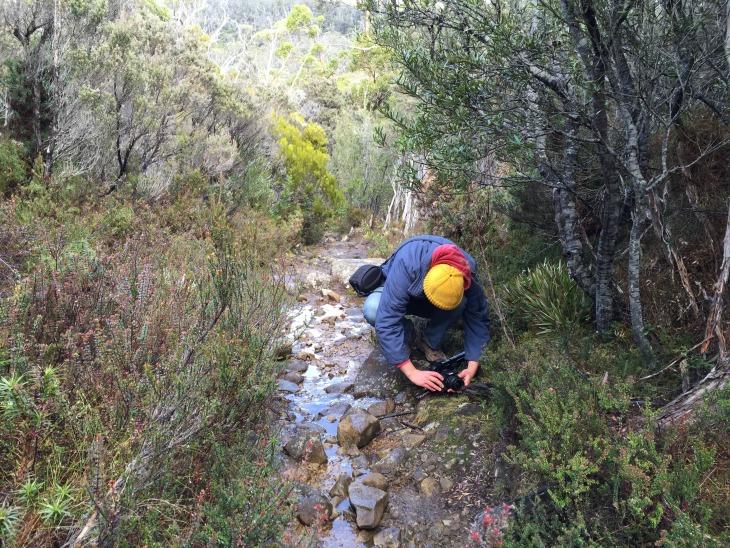
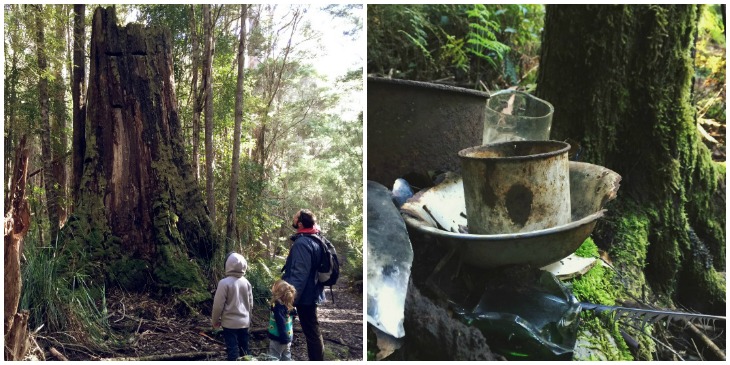
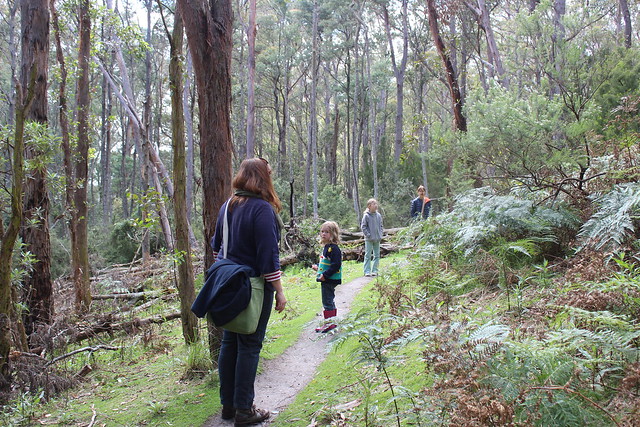
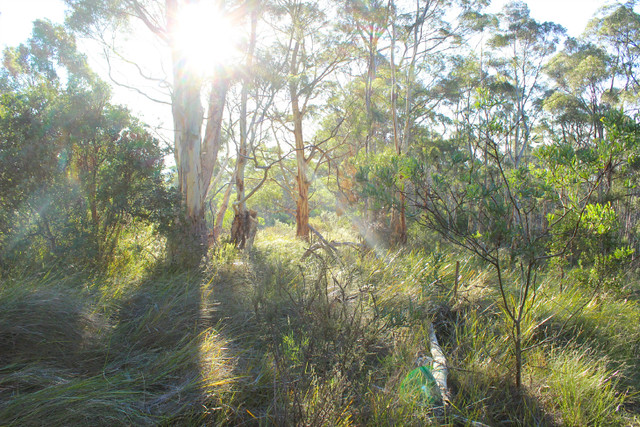
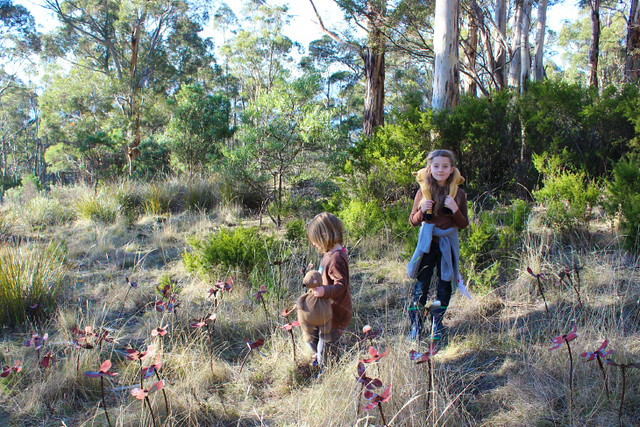
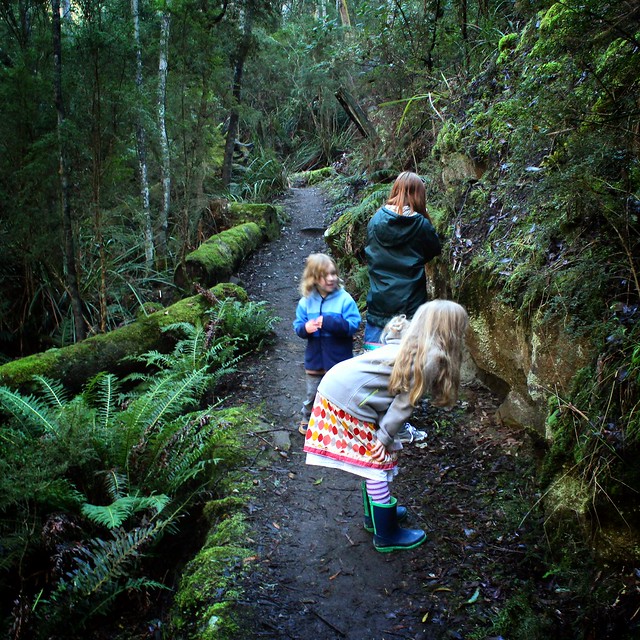
At least once a week, we like to go rambling. Sometimes it's just Huz and the Owlets while I'm working. Sometimes it's all of us. Sometimes it's hard and difficult, but it's always rewarding and educational and inspiring. Time away from our lives, where there is only earth, trees, sky and all the other amazing sights, sounds, smells and textures that make up a forest. Each of us sees something new. Each of us sees something different and in our own way.

ramble_photoguy
ramble_textures

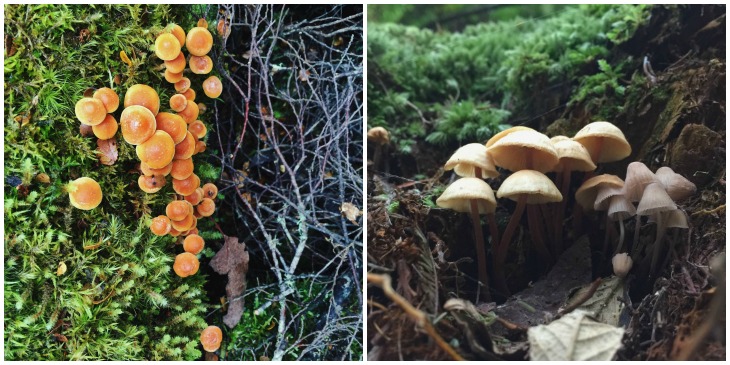
Huz, of course, is most taken by the fungi and their many forms. He wants to photograph them and call them all by name and study their functions and appreciate their many colours and stages of life.

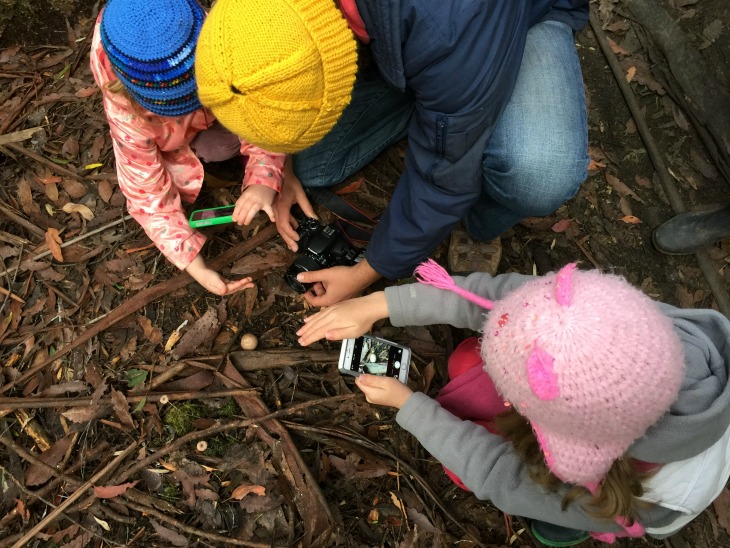
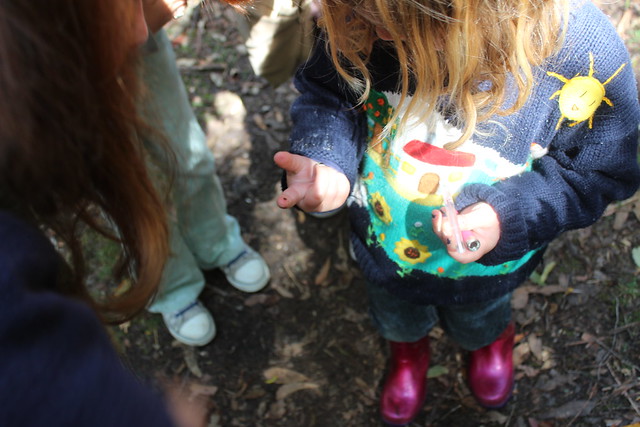
The Owlets enjoy the adventure and hunting for treasure - a new or beautiful fungi to photograph or a bird or animal. They love time spent together and learning new things.

Me, I'm all about texture, colour and pattern. Finding treasures to photograph and take home to use in a quiet moment. And spending time with my gang.

ramble_picnic

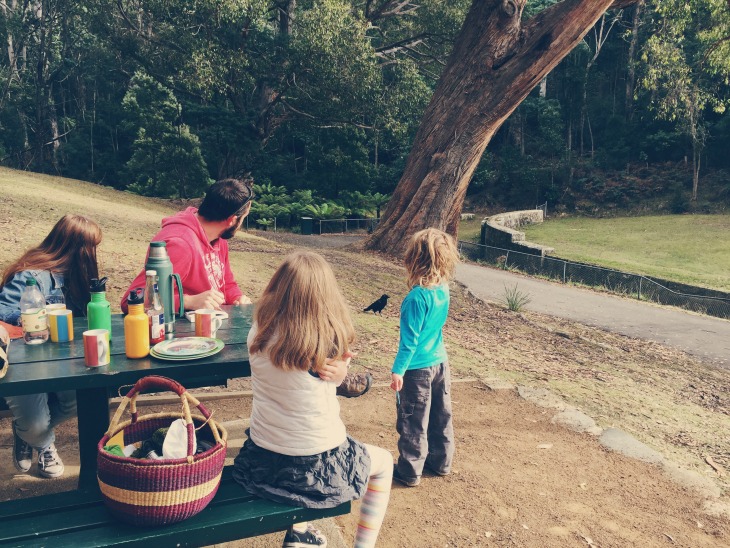
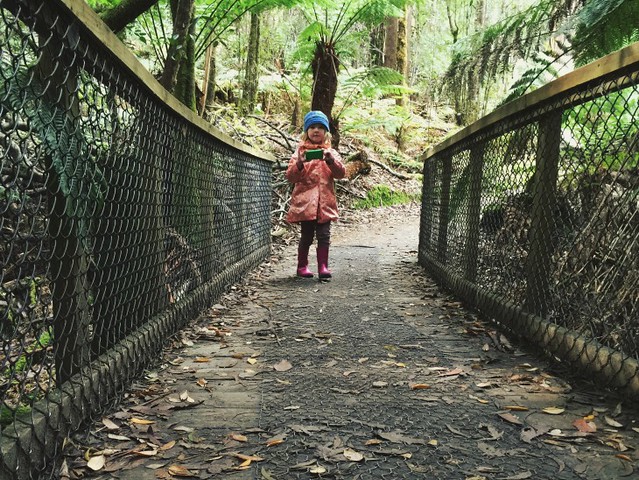
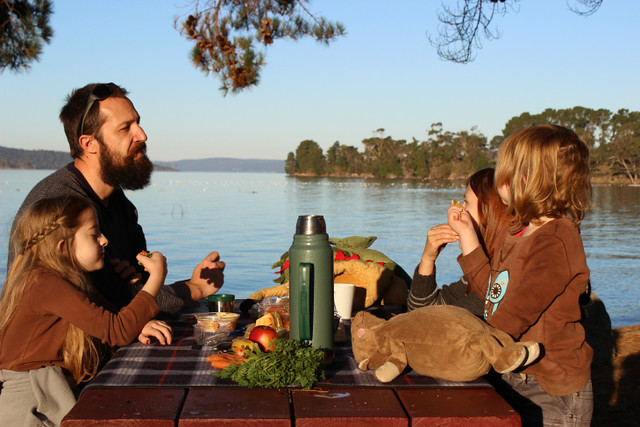
A typical ramble for us involves a hearty breakfast, up early and well rugged. We grab as many snacks as we can find and maybe fill a thermos. If we're lucky, the place we're going will have a fire or barbecue, so we go ready for that, stopping for supplies on the way if we need. We each grab a phone or camera and maybe some tools for viewing things up close or at a distance - magnifiers, telescopes… Then we pile into the car, drive to the end of the street and pick a direction.

ramble_rowdy

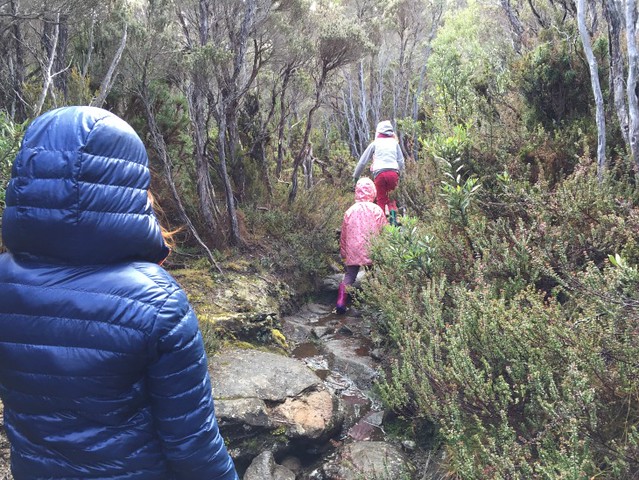
Once we're at the forest, we walk slowly, often loudly, and point out what we see along the way. Sometimes this comes in the form of "Dad! I found a fungi!" or "There's a leech on my shoe!!!" (thankfully this isn't often). There will most likely be arguments about who goes in front. And Little Owlet will be reluctant at the start. She feels small entering the deep dark forest, But once we're in the forest, walking, talking, breathing… Then the forest comes alive.

ramble_fernforest

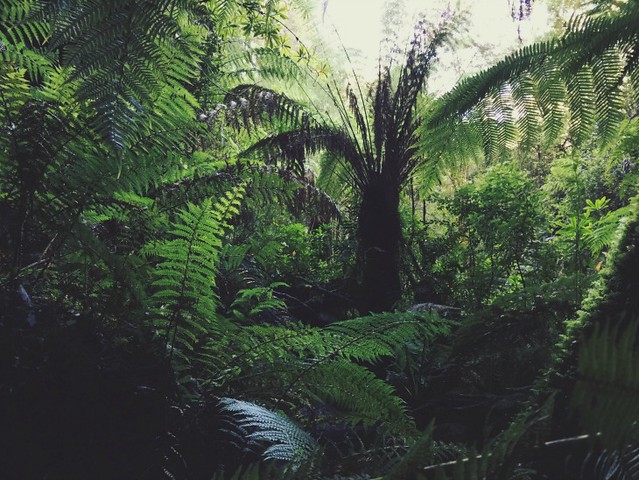
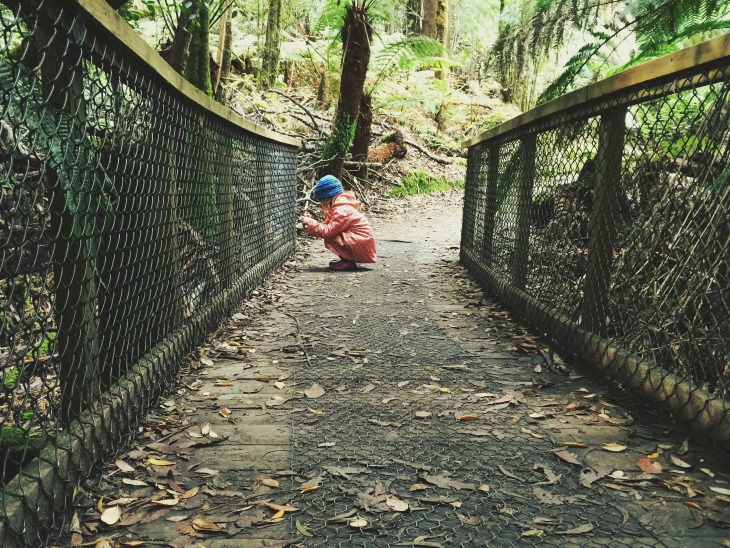
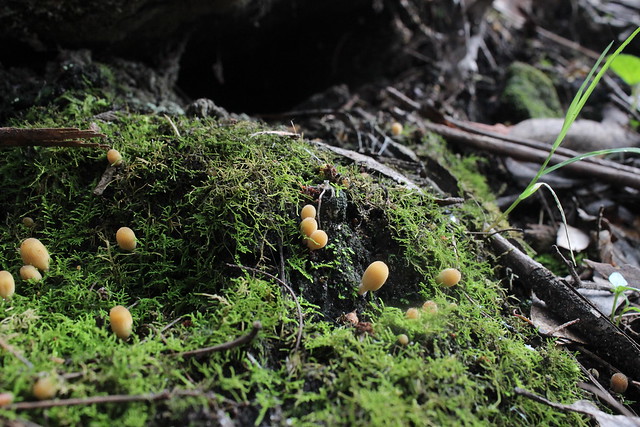
In the middle of the dark forest, we'll find ourselves in a little patch and if we pause, it's like time stops and tiny little lights switch on all around us. We notice an intricate city of organisms, all interconnected and doing what nature does. We observe fungi and humus, poo and pseudostipes, lichen and moss. We see snails and beetles and all manner of tiny interactions.

ramble_tiny
ramble_tinycamera

Suddenly we feel neither small, nor big, but part of it all. Passive observers, collecting and recording. Learning alongside each other. Witnessing nature's beauty on that particular day. We know next time we visit, the forest will look very different. We wonder at the interactions that come into play, and we're rather grateful to have an ecologist with mycological leanings on hand.

ramble_photographers
ramble_fungi

We'll marvel and wonder at the stories the forest has to tell. About the people here before us. And we make sure to leave it beautiful for the people after us.

ramble_stories

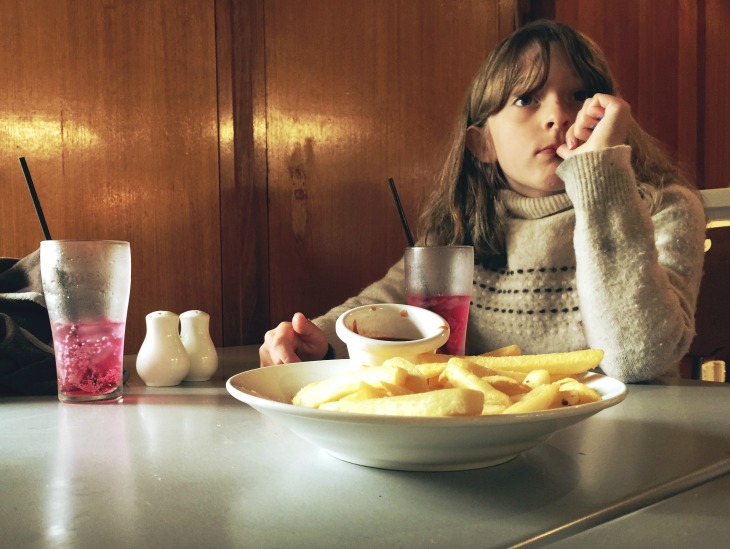
At some point we'll decide we've walked enough and turn around and head in search of warm drinks, snacks or dinner at home. Hot chips at the pub is our favourite, especially if the fire's burning. We'll look back through photos together, recounting where and what we saw. How the light was and whether we caught the shapes as we intended. We'll have a laugh over one of Tiny's hilarious up-the-nose selfies and wonder how it arrived on my camera. And we'll talk some more about the forest and what we found in it. Eager to return again.

ramble_pub

If you happen to be in Hobart next weekend and you'd like to join us for a fungi ramble, you're most welcome. Huz is hosting his inaugural fungi ramble at Ferntree, along one of our favourite walks. You can see us rambling on it in more summery times in this video below. Huz will be sharing tips on how to photograph fungi, their ecology and more. We'll have a special little fungi spotting challenge for little fungi enthusiasts too. It's going to be heaps of fun! Book here if it sounds like something you'd like to do! 


.

~ Lauren xx


27 April 2015

10 life lessons learned through fungi

I reckon I can pinpoint the shift in my perception back to this day one year ago, when we took a walk through a patch of rainforest in the Florentine Valley, northwest of Hobart. I'd seen rainforest before, and as someone with botanical leanings. Sure, I saw rainforest to be lush and peaceful but a little dull and simplistic, botanically speaking. You see, I was the kind of guy whose juices tended to flow at the sight of species-rich, dry sandy heathland or grassland, with their grand display of wild flowers in Spring.

But on this particular April day in the rainforest, the forest floor was awash with colour, not from plants, but, you guessed it, fungi! All colours of the rainbow, alien forms and configurations. I had previously read a little about fungi and their role in ecosystems as decomposers of dead organic matter and taken the odd passing snap with my camera. But there was a lot more going in this forest than I had previously noticed, and it was sparking my brain and my heart. I was filled with questions about their ecology, but was also struck by their beauty and diversity. All manner of mushroom, jelly, bracket, earth ball, and cup fungi! I took a bunch of photos and starting reading about these curious organisms...

These Mycena viscidocruenta were spotted on that pivotal bush walk exactly one year ago.


Since that eye-opening bushwalk exactly one year ago, we have been on about sixty dedicated fungi walks. The owlets have accompanied me on all but a few of these, and as a result they have developed keen fungi-spotting goggles and even learned the names of many! It's pretty awesome. 

And whilst I can't speak for the wisdom gained by the owlets during these walks, I can list with confidence some of my own insights. Lessons learned, if you will. Here goes:

1. Perception of the natural world is limited by ones attitudes to it and time spent in it.


On my walks sometimes strangers would see me crouched awkwardly with my camera and ask me what I was looking at. When I explained or showed people the fungi, often the response would be along the lines of "Oh I walk along here all the time, I've never noticed them!" I think there are many things I see, but treat as background noise to perception. It takes focus to see past that which we see easily. This can translate into our modern society, for example, it's is quite easy to ignore the under-privileged, the down-trodden and the minorities, unless we intentionally open our hearts and focus attention. Empathy can really open the minds-eye.

2. There really are worlds within world's but most humans will see only one. 

These jelly fungi are reminiscent of a galaxy of stars - tiny worlds on a log.


When looking closely at a fungus, you will often see small animals scuttling around its surface. Some tiny insects called springtails spend their whole life cycle within the gills on the underside of a mushroom! Planet earth may be the "world" as humans know it, but for many species their world is much smaller.

Also, some fungi cluster in ways that are reminiscent of galaxies or complex networks. You will often see the  intricate dendritic pattern of mycelial threads at the base of a fungus, reaching down into the soil. 

3. In intact nature, all living creatures are connected, but most connections are invisible.

Here you can see mycelial threads that connect this mushroom with the earth - what other connections do you see?


The pretty little mushrooms and other fungi that we see are not the whole organism, rather they might be considered as the fruit, whilst much of the species grows beneath the surface (of the wood or soil substrate). Those underground parts (called mycelium) often form associations with the roots of plants and these can extend throughout a forest. I think there is a lot still to learn about this phenomenon and the invisible ways that a forest communicates with itself and its environment.

Translating this to humans, whilst we can be physically connected, we are more often connected with others in invisible ways such as through our hearts or our shared thoughts and visions. Whilst I am not religious, I do feel my spiritual connection with nature is broadening over time. I feel like more of the connections in my life become visible or perceivable through observation of fungi. I feel less like my garden at home is completely disconnected from my favourite areas of native forest far away, and that these areas are connected through earth and water and fungal mycelium! Such thoughts only strengthen my affinity with natural areas. 

4. Science and art can be strong partners.

Zoom in close enough to a fungus and the colours and textures invoke an art piece as much as a scientific depiction!


Advances in digital photography and social media have provided great opportunities for fungi study. Mobile phone photography makes it easy to physically get the camera lens to point at harder-to-reach features of fungi. Increasingly I see fungi through both a scientific lens (what is its name, how does it work etc.) and an artistic one (look at the shape, the little bonsai-style setting, the patterns and texture!). I try to create images that provide enough information to identify the species, but I want them to be visually pleasing or interesting. This art part makes communicating the science part more effective, and thus I see the two disciplines as strong allies!

5. There is a stigma attached to fungi and related processes of death and decay and these inhibit human empathy towards nature.


Decaying fruiting body of Mycena cystidiosa, standing tall to the end.

In online discussions I've read many comments by others about how "gross" fungi and slime moulds are. I wonder if such disgust stems from a deeply-set avoidance instinct developed as a personal safety mechanism? I have a fear of big hairy spiders and I've seen other people carry massive tarantulas on their hands - this repulses me, but I'm sure my feelings stem from ignorance about those spiders as much as anything. Slimy or decaying fungi are not to be feared! Just wash your hands afterwards and all will be well!

6. Beauty can come from darkness.

Porpolomopsis lewelliniae, emerged from the darkness.


Many fungi grow in darkness; hundreds of microscopic fungi may reside in the woods of a single fallen log. Many larger mushrooms fruit on the dark underside of logs and branches, in deep dark leaf litter and in hollow logs. Despite the darkness of these places, many fungi thrive.

7. Even the very small can hold their head high.

Even amongst forest giants, this delicate mushroom holds its own.


In Tasmania we have trees that are nearly 100 metres tall making them the tall flowering plants in the world. Around the base of these trees, if you look closely, you're likely to find tiny mushrooms, maybe just a few centimetres tall. But here the height difference doesn't matter - every being holds their own space. Every individual is distinct but integrating as an effective community. 

8. We all have opportunity to reinvent ourselves by the choices we make each day.


Be your own earth star! 


When you see a mushroom and it has sagged into a decaying, goopy mess, the organism is still very much alive below ground. It might pop back up fresh nearby soon after, or it might wait until condition are suitable in future years. Translate this to humans and we can wake up each day a sagging goopy mess, bearing the burdens of yesterday, or we can wake up fresh and be whoever we choose to be!

9. Nature is much more than skin deep.

A family of springtails doing their thang on the jelly fungus, Tremella fuciformis.


One thing that I think really draws me into spending time in nature, is that it is not superficial. I think understanding of the more subtle or complex aspects of nature (e.g. All the small creatures and their interactions) increases with time spent immersed in it. The cool thing about fungi is that you're going to see different species and stages of fungi growth with each visit to an area. 


10. Learning is never complete.

The great thing about fungi books is that they are almost always pretty to look at! 


When I started learning names for fungi, I had aspirations to learn ALL the names! To learn ALL the things! But the reality is that our time to learn new things or follow any pursuit, is limited. So, I've come to realise that simple idea that "you can only do what you can do"! For example, I have dozens of books-to-read on my shelves, probably enough to last the next few decades - so many classic and amazing books I'll probably never get to read given a busy life - this is kinda sad, but it just encourages me to prioritise! Likewise with fungi, or any other activity really, I think it is important to focus on doing more of the stuff you really love. Learn for the sake of learning and share your knowledge with others and happiness will inevitably follow!

As you can see, these hitherto unseen organisms have had a profound effect on me - and it's only the been one year!

Have you had an equivalent hobby influence your world view? 

You can see more of my fungi photos on instagram @owletpapa. You can find a link in the sidebar. 
~ Oberon. 

8 April 2015

Finding Balance


2014-11-11 09.30.03
2014-11-11 09.28.27

Something I've often given thought to, over the years of home educating and running a small business, is balance. Over the years, others have asked me about it too. How do we do it? How do we find balance? Or rather, will we ever find balance? Is it even a thing? How do we manage to cram our lives so full of all the things we want so much to do?

The conclusion I've arrived at is no. Balance, in this particular life we're living, is and will most likely never be a thing. Not in the way we imagine.

2014-11-11 09.37.33
image2014-11-11 10.05.03

In a household of five creative and passionate individuals, following our passions means we completely immerse ourselves in them from time to time. And while we're following those passions, things get left by the wayside. Perhaps it isn't balance we really need to look for, so much as how to be ok with the chaos, or how to work with it.

For us, finding balance has been more about finding support. It's also been about finding space to wander more and work a little less. It's meant waking up and taking a day off to go exploring, rather than work. It's meant cancelling plans to spend the day in the garden. It's meant knuckling down to get the job done sometimes. It's meant making plans and throwing them out the window in an effort to do what feels best and right and fun. Finding balance has been about looking out for each other and making sure we each have time to indulge our passions.

image
image

Practically, Huz's shift from his full-time day job, to working four days per week, has meant an extra day for me to work. It's shifted the balance of things in our home in a much more equitable way. It also gives him time with the owlets, usually in nature, allowing him to get out and do what he loves best. On Fridays he always wakes with a grin. It's meant an extra day to play and spend time getting work done in the garden too - one of my favourite things to do. It's a much happier balance, but one that takes some tweaking as we learn to cover the financial gap that one day leaves us. Growing food and working more on our own business helps with that.

Owlets getting older helps a little too. I'm finding stolen snippets of time are getting longer and longer, so now, with a little focus, I can get to more of the stuff that needs doing. So with that, I'm attempting to return to blogging more regularly. In line with this fluid, messy life, where lines are blurred and one thing feeds and flows into the next, this blog will be where we document and perhaps attempt to bring some sort of order from it all. It has always been a space to reflect, document and define our dreams, these past eight years (yes, eight! Can you believe it?), but now it's time for a new Owlet chapter.
So Huz, Owletpapa, will be joining me to document the journey from here, as it becomes our blog. I'm looking forward to the words he'll share and the world of Owlets and the Spiral Garden and all it is and will be, with his insight. And in time, from the owlets' perspective too. We hope you'll join us for the adventure - it's bound to be messy and beautiful and all kinds of fun!
~ Owletmama. xo


PS. These photos were taken at the end of last year, on a day where we decided to take a day off from wrapping orders and ramble around the bush for a bit. We visited Waterworks reserve and Mt Wellington. Two gorgeous spots, just 20 minutes from our home, in Hobart. Much to my astonishment, the world didn't end and all the parcels arrived on time, despite skipping a day. 

8 July 2014

Our tree...

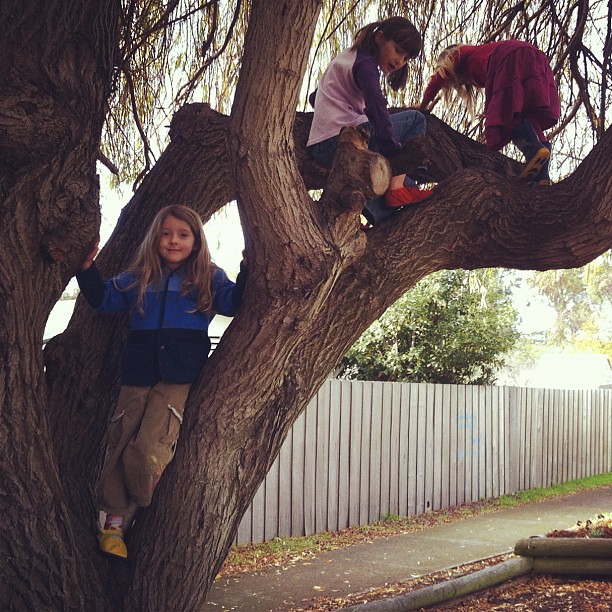
Up the tree at Co-op today #tree #unschooling
10155502_10152134872006137_7562052385901940666_n
10155914_10152110229121137_1864998896_n
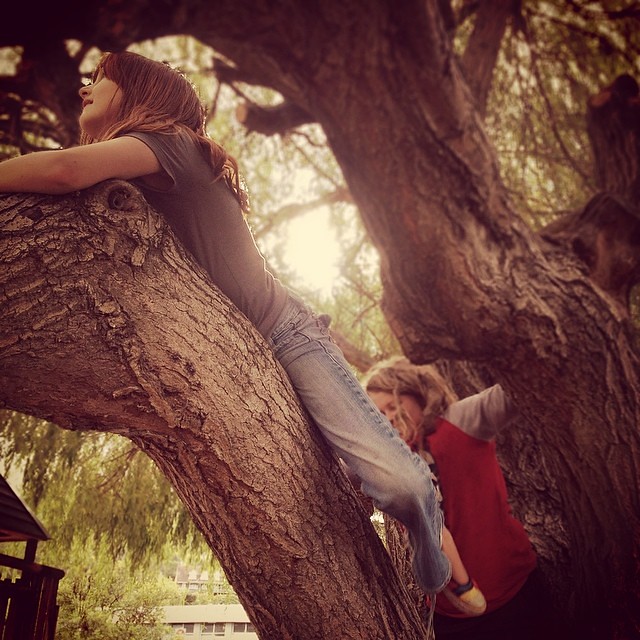
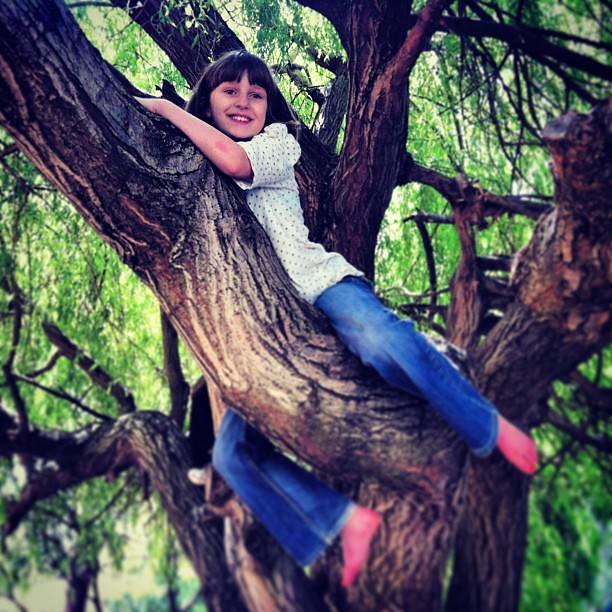
I've never climbed this high before! #climb #tree #climber
Bubbles at co-op
A little show before home time at co-op today #coop #hobartnaturallearners #homeschooling #unschooling #playmatters
Good mates hanging out #playmatters #hobartnaturallearners #coop
Another magical day at our co-op... pushing Tiny on the swing 'til my arms hurt! #happydays #strongarms  #coop #hobartnaturallearners

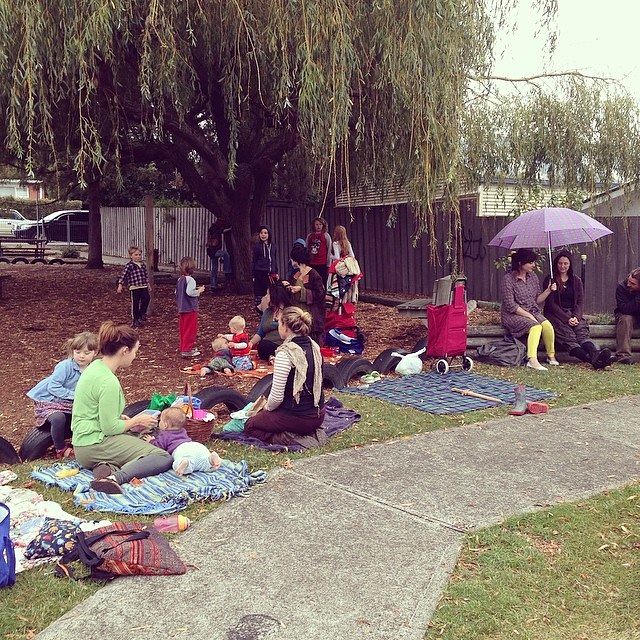
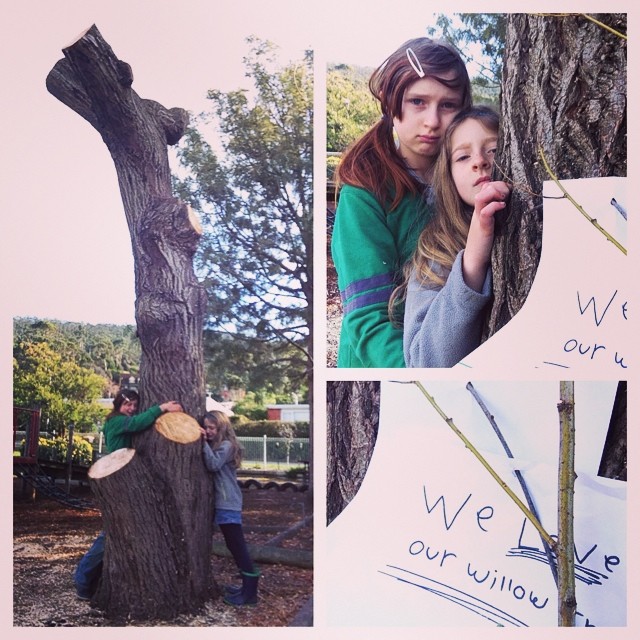
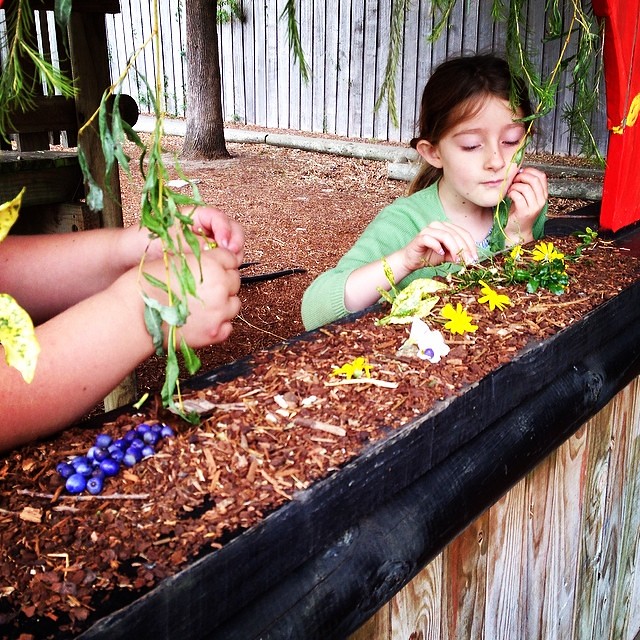
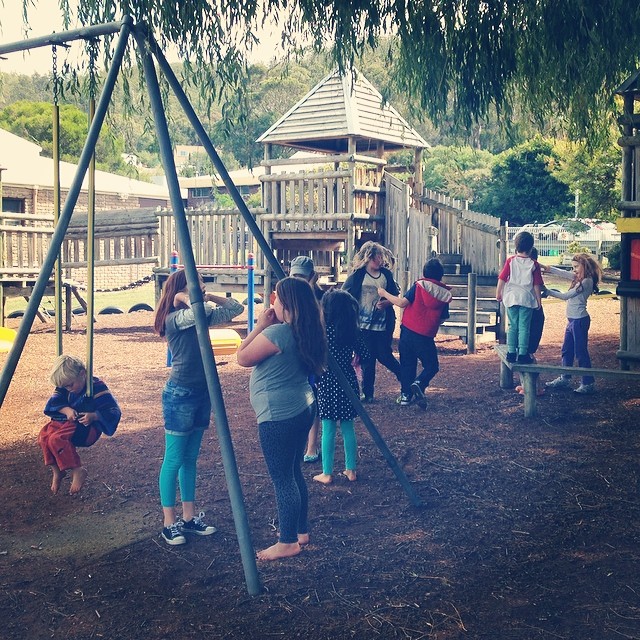
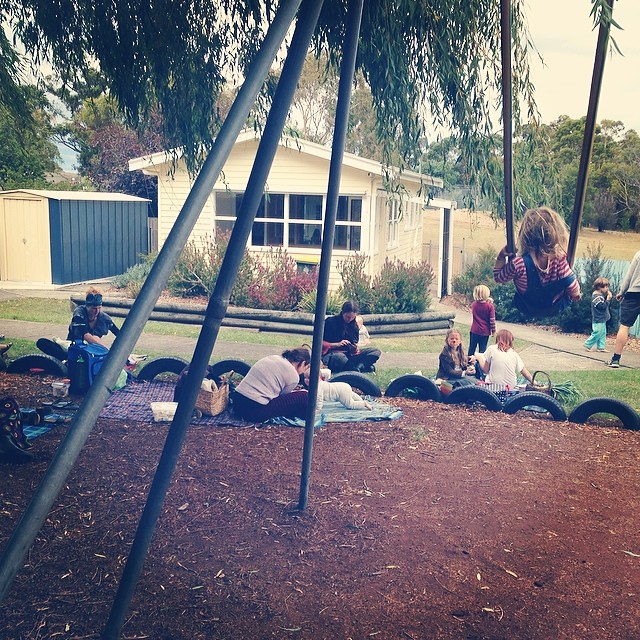
We've been meeting with friends at our co-op for almost three years now. In that time, much of the play  has been witnessed, supported and shaded by the branches of one very large and beautiful willow tree. Big Owlet and I had known the tree since her playgroup days in the big hall, when she was Tiny's age. She'd stand underneath and marvel at the shadows and light filtering through the leaves.

Since we began holding our Hobart Natural Learners Co-op meets in the playground, friendships have been forged, fought over and strengthened under that tree. The children learnt to co-operate and problem solve tying a rope swing on its branches. They climbed the larger branches gleefully, facing fears and observing nature around them. We've woven willow crowns and fashioned brooms and horse reigns from it's smalls branches. We've escaped the scorching Tasmanian summer sun and sheltered from light rain under that majestic tree.

Since she was a baby, Tiny has sat in the swing underneath, asking me to push her "higher and higher!" until her bare toes touched the leaves above… We've loved that tree. A beautiful regular fixture in our weeks.

So you can imagine our shock last week when…

10404478_10152312166676137_5554425921209901347_n

This happened.

The owlets immediately flew into hysterics and tears, greatly distressed at the loss of their tree. I must admit, I did too… We called Huz and asked him to contact the council to find out what was going on. He was put through to the head maintenance worker (let's call him gardening guy), who explained the situation to him and then marched over to us to explain further.

We were spoken to quite defensively and told "Shade sails are better than trees in children's playgrounds", and "Kids can climb trees in their own backyards". "What if you don't have a climbing tree in your backyard?" I asked. "Not my problem", said gardening guy. He also mentioned (I suspect it slipped out), that it was most likely a "financial matter" as "pruning the tree regularly to cut the branches is more expensive than pollarding." Uh huh. And therein lies the truth.

When we questioned the severity of the pruning, we were asked "Oh you're an arborist are you?" Not the most sensitive approach towards a group of people who were very clearly shaken and grieving. We were also told it'll grow back again, in a few years. Yeah.

It seemed to us that there was more to the story than a small amount of rot at the top of a couple of branches, despite the pictures we were shown of the tree before. Research tells us that pollarding perhaps isn't the best course of action for an old willow tree like this. It will shoot from the top, providing a light canopy in a few years time.

But the tree will never be climbable again, removing a potential liability risk for council, certainly. The look of recognition on the children's faces as they counted 35 rings on what was once their favourite climbing branch... They knew they'd never climb it again… "I'll bring my children here and they can climb it", said Big Owlet. I didn't have the heart to tell her that'll never happen.

The tree will be more susceptible to decay and disease now. Pollarding it will grow a smaller, light, maintainable canopy at the top, which will weep down if the council let it, but they'll not let any lower branches remain, as confirmed by gardening guy. And tiny toes will never reach for those leaves from the swing ever again.

The beautiful children who play in the playground every week, our gang, have felt a great sense of loss.  The playground is so stark now. It's beauty is lost forever. They picked flowers and branches (to stick into the tree in hopes they'd re-sprout) and drew pictures and left them for the tree before we headed off down the road for a fungi walk. When we returned an hour later, all of the gifts had been removed. We suspect  gardening guy was responsible for this too. Way to add to the grief of a bunch of small children, gardening guy…

The next morning, Little Owlet told me she woke up happy, and then she remembered. Our tree. Oh.

So we're feeling a spot of guerrilla gardening might be in order. Or yarn bombing. Or something that will honour our beautiful tree (and perhaps tick gardening guy off just a little). And make us feel a little less wobbly about being there now. And I'm considering exploring the realm of landscape design again, to provide access to natural play spaces for all. Watch this space…

Have you ever lost a tree you loved? 
What is the worth of a tree that provides shade and play for generations of people living in a neighbourhood, do you think? Should it outweigh maintenance budgets?
Do you think children should be able to climb trees in public places? 

Much love. xx


22 June 2014

Celebrating the Seasons :: Yule

Mail Attachment-1

Creating new traditions is something we love to do. A little ritual and seasonal nourishment help mark what's going on around us and put a little rhythm in our days… We tend to celebrate the biggest festivals at all the wrong times in the Southern Hemisphere and the meaning and tradition of them can be lost. Halloween and pumpkins when all around us are blossoms and berries… Or Easter eggs and spring chicks as we're harvesting pumpkins and apples. It just doesn't make sense and it feels so totally disconnected from nature. So, alongside the regular festivals, we take a leaf out of our pagan ancestors books and celebrate seasonally too. We figure you can never celebrate too much.

We've celebrated Beltane and Samhain before with great enthusiasm, but this year is the first time we've  properly celebrated Yule. 

So Yule totally makes sense in the middle of Winter! Who knew?!

Warming food, egg nog, fire, gifts and celebration when daylight hours have dwindled and it's cold outside and you need something to brighten the days… Totally logical. Yule in summer - not so much. But this weekend we had THE BEST Yule celebration. And it was so simple and fun and lovely. Here's how we do Yule - rather spontaneously I might add… we almost never plan ahead. I'll be referring back to this next year so we can do it all over again.

How to have a fabulous Southern Hemisphere Yule weekend:

Mail Attachment

1. Go to the Winter Feast at Dark Mofo. Get there early so as to avoid huge crowds. Eat all the food while bumping into everyone you know, warming by the fire and listening to music. Get home and snuggle into bed with hotties and cups of tea.

solstice bush
sculpture trail

2. The next morning, spend a little time tidying your nest and then go for a walk and look for fungi and art in the bush.

picnic
smooch

3. Have a picnic in the sunshine and a smooch with someone you love, as the sun goes down.

Winteralter
candle rolling

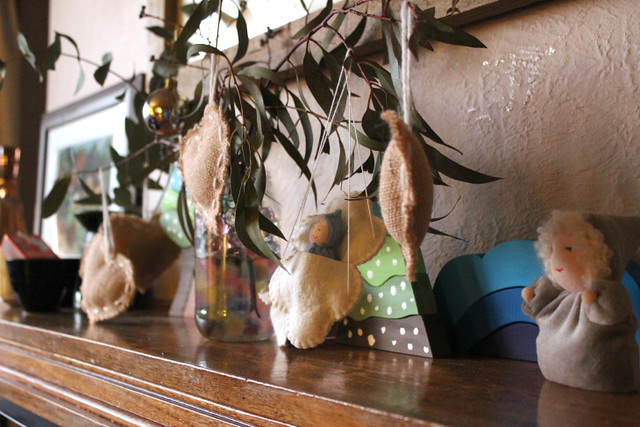
4. Back at home, make a little Winter alter. Bring in a tree branch or two and hang some simple decorations from them and little wintry reminders nearby.
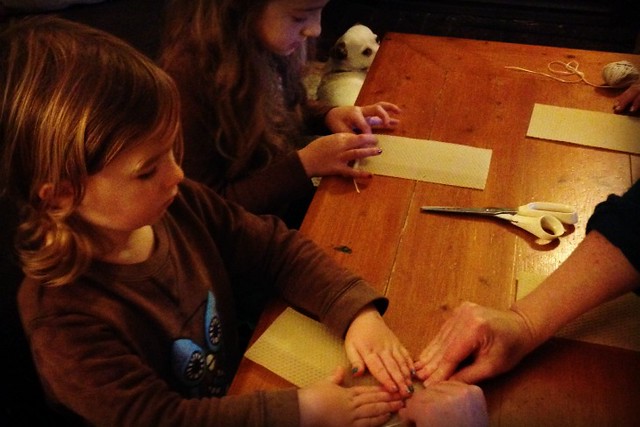
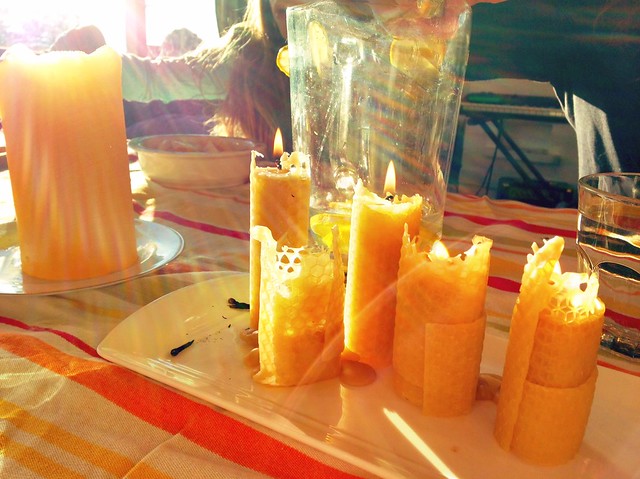
5. Hand roll some beeswax candles together

Spiral
candle maisie
candles

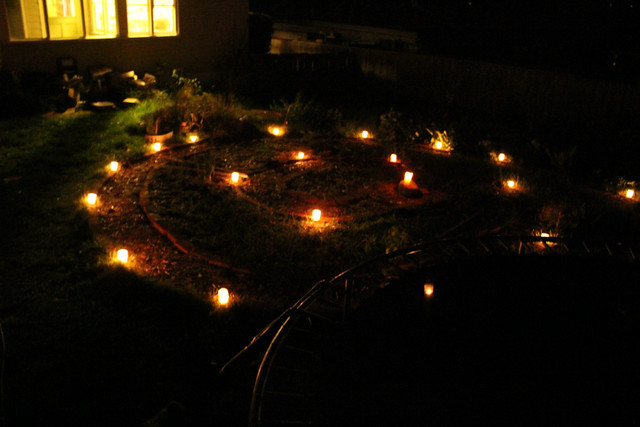
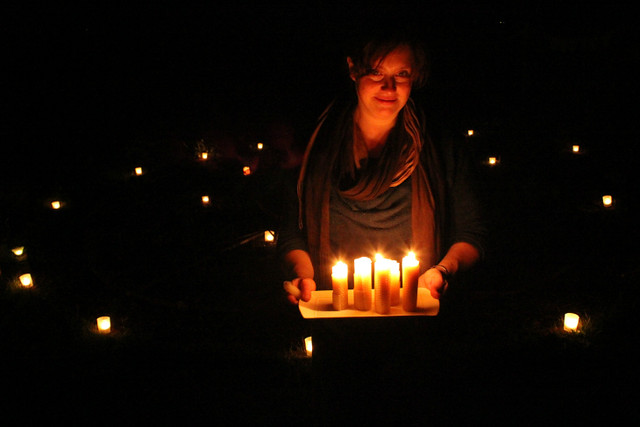
6. Light candles around a spiral in the garden (lucky we have one already!) Tea light candles in jars will do, with a special candle at the centre - we used the candle we light at our dinner table each night.
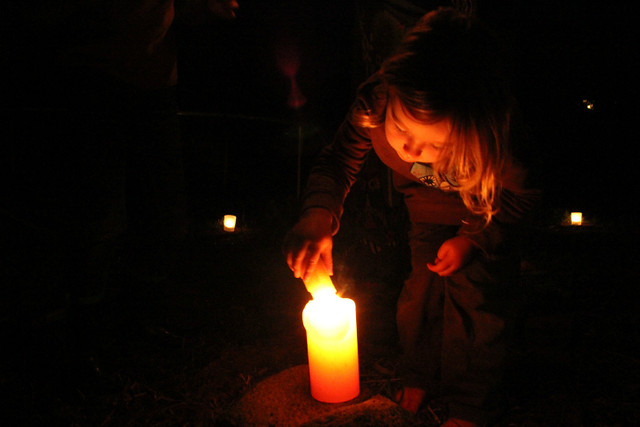
7. Walk to the centre of the spiral with hand-rolled candles and light them ceremoniously. Have a little chat about mid-winter and weathering winter's coldest days. Being a light in the darkness and that sort of thing.
8. Start a discussion about the stars and lights from Dark MOFO, then madly dash inside while the family carries on chatting and stargazing.

Skirts
meal

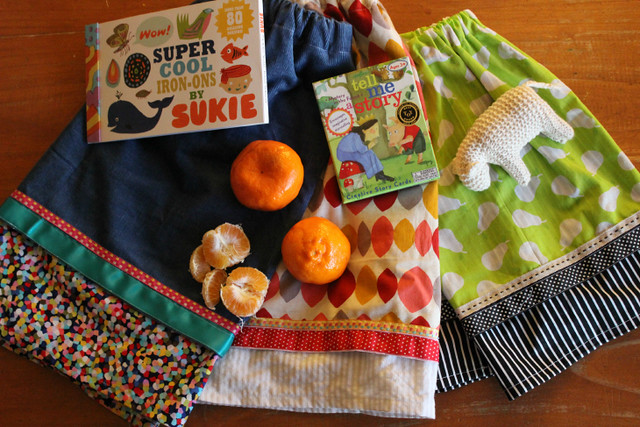
9. Sneak some handmade and simple gifts into everyone's Christmas stockings. Note that stockings  suddenly make so much sense, hanging by the fire place!
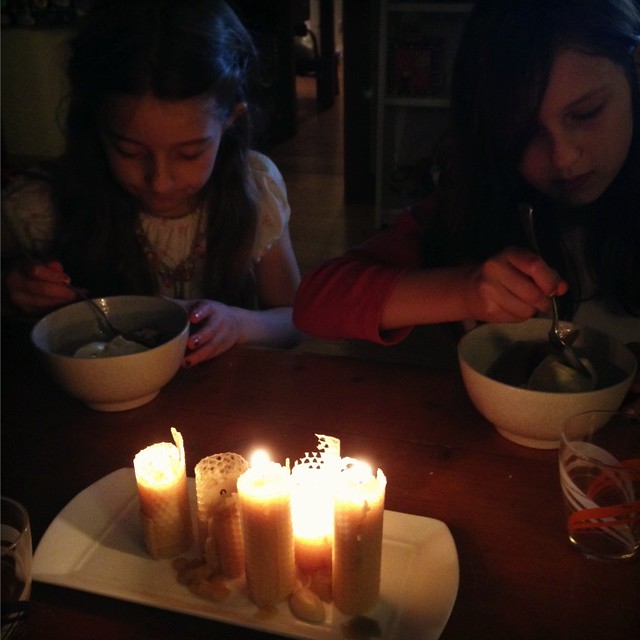
10. Invite everyone inside to open stockings and eat a hearty meal by the fire. We had a curried root vegetable pie and a pear and walnut salad with pomegranate juice, followed by fruit cake with vanilla bean ice cream and spiced, poached pears. And gingerbread and spicy apple cider before bed. Retire to bed with warm tummies and happy hearts.

photo 2
photo 3

11.Wake the next morning and welcome the morning sun with a family yoga session. Sun salutations are totally appropriate. Then set the table for a breakfast feast of sunshiny things -  We had oranges, bananas and yoghurt with lemon flavoured water.
12. Send the family off for adventures while sneaking a quiet afternoon at home - phew!
13. Welcome everyone home, light the fire, have sunshiny eggs for an early dinner and pineapple upside down cake for dessert.
14. Tuck happy and exhausted owlets into bed early and snuggle by the fire with a loved one and a cat or two… Look forward to bed and festivals to come.

Yuletide blessings, friends. I hope your weekend has been gorgeous too. xx