Showing posts with label frugal. Show all posts

10 June 2021

How one nappy can create positive change

It started with a folded pile of fluffy, white nappies. We remembered our mothers folding them for our siblings, back when disposables were new technology but not normalised yet. We considered the cost and the rubbish pile that would result from all the disposable nappies our baby would need, compared to our pile of fluffy white fabric squares. 

The parenting books warned us not to be martyrs about washing nappies, that we had bigger things to worry about and that the environmental harm probably wasn’t that big anyway. We researched and de-bunked this pretty quickly. New mums at the mothers group raised eyebrows. The health nurse worried that it’d be too much work. We set aside the free sample disposable nappy the hospital sent us home with and did what felt right. We hung those cloth nappies on the washing line, in the sunshine, all beaming and fresh, and knew we were on the right track.


One day, a work colleague handed us a big bag of baby clothes for our growing babe. Amongst the hand knits and grow suits was a nappy cover. I googled the name on the label and discovered the world of modern cloth nappies. Next came the parenting forums - such a great support in those isolated early-parenting days. Before long, we’d found a circle of supportive families who shared clothes, nappies, cups of tea and stories of other ways of doing things. Friends who also researched and questioned things, acknowledged (and sometimes rejected) what had become normalised in the industrial shift away from ecological processes. We felt encouraged to look into the home-birth and water birth we’d felt discouraged from last time. And so our next two babies were born at home, in water. Then we decided the industrial education model wasn’t right for our kids, and we embraced unschooling.

We realise now that we’d begun a lifelong process of research, analysis, taking responsibility for ourselves and doing what feels right for our children and the planet they’re going to inherit. We studied permaculture and realised we’d been implementing the permaculture principles in our home for some time. From there, waste-free living was a no-brainer. It felt straight forward and simple. To this day, we can’t imagine why it took us so long to arrive at living waste-free, but we’re glad we did as we can see that reducing our waste encapsulates climate solutions. Waste is an indicator of the work to do on climate.

Now, making choices that challenge norms seems much less daunting. We’ve avoided the waste of tens of thousands of disposable nappies. We’ve diverted tonnes of waste from landfill, avoided recycling waste, dispensed with education waste and transport emissions (all those trips commuting to kinder became long mornings at home and walks around the neighbourhood). We’ve converted our suburban lawn-filled backyard to food growing plants, and we’ve made ripples beyond our own home, encouraging others to make choices for positive impact. We’ve also normalised this way of thinking and feeling, and the practices that come with it, for our kids. 

Sometimes that one simple choice you make is just the beginning. It’s where you learn the value of following your own head and heart; exercising your decision-making muscle. It might seem benign, but it just might change the direction of your life, and your impact on the planet, for the better. Then the next time a choice presents itself, to do what’s right for the planet and the people you love, you can dive right in. 

With our own simple beginnings in mind, we’ve decided to join our friend Erin, The Rogue Ginger, in requesting our council introduce a rebate on cloth nappies and reusable menstrual products, for local residents. This has the potential to reduce at least 4% of landfill waste generated in our municipality, and clean up kerbside recycling streams. Once food and organic waste composting is implemented later this year, that percentage will rise. A rebate will mean babies born in our area won’t leave a legacy of waste, contaminating the soil where they live, for generations. It’ll also be much more affordable for more people to access reusable options, which will save the council and residents money in the longer term.  It’ll mean a clean, fresh start for all of us. Who can tell the positive ripples of change that will happen beyond that.

As for that pile of nappies of ours, we can report that 18 years later, they’re still in circulation, dusting and cleaning up spills, mopping the floor, cleaning up muddy puppy paws. As each cloth gradually wears out, we place it in the compost, or as sheet mulch in the garden and it finds a new use as worm food, enriching our soil and leaving a positive impact in more ways than one.

5 March 2021

Zucchini, Chocolate + Olive Oil Cake


Weve been knee-deep in zucchinis for a while now. The glut began before the tomatoes ripened, and it continues to surprise us with over-sized veggies most days. It’s a nice problem to have.
Only about half of us actually like eating zucchini on it’s own, so to stay on top of the glut, we’ve been experimenting with zucchini kasundi recipes - we’ve not found a total favourite yet, but have a couple that will clear your sinuses if you’re brave! And we’ve returned to old favourites like pickled zucchinis, spiced zucchini soup (fabulous with fresh bread on autumn evenings, and a great glut-buster), and our favourite, zucchini chocolate cake. 


This is our go-to zucchini chocolate cake recipe. Its a quick mix recipe that makes a large amount of cake to share for a group, or to supply hungry kids with snacks for up to a week (it may depend on how hungry!). The cake keeps moist in an air-tight container on the bench for a few days, or can be stored in the fridge for up to a week, or frozen if longer storage is needed.

The olive oil adds depth of flavour that prevents the cake from being overly sweet. If you prefer a milder flavour, another vegetable or seed oil like sunflower oil might be a good replacement. The cake is dairy free and can be made gluten free with the alternative mentioned below. We haven’t tried an egg replacement so it’s not vegan, but let us know if you find a method that works for you! You can also add your favourite nuts or seeds to the cake, and ice it if you like.

Like all our recipes, we recommend you experiment and have fun finding what works best for you! 

2 cups (250g) plain flour
1.5 cups organic raw sugar (coconut sugar or rapadura also work, but can change the texture slightly).
3/4 cup cocoa powder (or raw cacao) 
3 teaspoons baking powder 
1 teaspoon bicarb
1/2 teaspoon salt
1 teaspoon ground cinnamon
4 eggs, beaten
3/4 cup olive oil
2 cups grated zucchini, firmly packed

1. Preheat oven to 180°C
2. Grease and flour a lamington tin.
3. Place the flour, sugar, cocoa, bicarb, baking powder, salt and cinnamon together in a large bowl, then stir.
4. Add the eggs and oil to the bowl, and mix well.
5. Add the zucchini and mix together evenly.
6. Pour into the prepared lamington tin.
7. Bake in the preheated oven for one hour. 
8. Cool the cake and slice it into squares. 

Gluten free version: Use a gluten-free flour mix and add one extra egg. 

5 February 2021

Marvellous Mulberries :: Our favourite cordial recipe

Our very favourite garden tree is our mulberry. It's the biggest in the food forest, planted 9 or so years ago, over Tiny Owlet's placenta. It grows generous amounts of fruit, provides cooling shade, juice for ink-making, leaves for tea and silk worm fodder, and a stunning autumn display as it's leaves turn yellow where the sun lands on them. Actually, all the plants in our perennial food forest are wonderful. They’re super low maintenance, and feed us huge amounts of food each year. We’re so glad we planted them when we did. If you’re strapped for time, but have some space in your garden for perennial food plants, throw some in and feed your family (friends and neighbours), for years to come. It’s well worth the investment. But back to the mulberry.
Last year, we made the mistake of not throwing a net over our mulberry tree. The tree had grown so much in the year prior, it outgrew the nets we had, and we naively thought there would be enough fruit for us and the blackbirds to share. We didn’t pick a single ripe mulberry.

So, this year we were prepared. And the extra rain we’ve had meant mulberries as far as the eye can see. The laden tree’s heavy branches are sweeping the ground, and every leaf has berries waiting underneath to be picked. Unfortunately the combination of wind, rain and heavy fruit mean the tree is almost lying horizontal at this point. It won't be the same beautiful upright tree, and the food forest is somewhat changed, but that's the adventure of gardening and tending to an ever-changing ecosystem. We’ve still been sneaking out to the garden to scoff and slurp on juicy mulberries all month - bright magenta juice staining our fingers and toes... And, of course, we've been putting some aside for winter.

Bottled mulberries for the cupboards for winter guzzling. Fresh berries and mulberry cordial to enjoy right now. We'll make some cordial into jelly and some fruit into jam. We've been playing with mulberry cordial recipes for a few years now, and here's our ultra-simple favourite. We make a habit of simplifying things, because we find we're more likely to find time for an easy recipe we can remember by heart. Mulberry Cordial

1kg mulberries 1L water 750g sugar 2 lemons 1. Place the mulberries in a large saucepan, with the water and sugar. 2. Add the zest and juice of the lemons 3. Place the pot over a medium-high heat and bring to the boil, stirring occasionally. 4. Simmer for 10-15 minutes, continuing to stir when you remember. 5. Line a large bowl or jug with a fine mesh bag, cheesecloth or strainer while you wait for the pot to simmer. 6. Remove from the heat and pour into the mesh bag/strainer/cloth lined bowl.


7. Allow the liquid to drain from the fruit pulp. We like to use a mesh bag and suspend it from a kitchen cupboard handle over the bowl. Set the fruit pulp aside. 8. Use a funnel to pour the cordial into clean bottles. Sterilise the bottles first if you're going to store the cordial for a while. 9. Seal with lids and move to the fridge when cool if you're planning to enjoy the cordial over the next couple of weeks. Pasteurise the full bottles in a large pot of boiling water if you plan to store them for up to 12 months.

Enjoy your cordial mixed 1:4 parts water. Mulberry fizz is lovely if you have a Sodastream, and mulberry mixes well with alcoholic drinks, too. Use the fruit pulp (and lemon zest) in your favourite crumble, pie or muffin recipe. It's delicious added to an apple base filling. Alternatively, freeze it for smoothies or nice-cream, or for baking another day. 

Happiest Mulberry season! 

~ Lauren. xx

6 April 2020

25 Ways to Holiday at Home

This post appears in response to this week's theme for our #52climatesolutions series on Instagram. You can pop over there for more information on how holidaying at home can be a useful skill to learn for the future. 

It may seem a little strange to be sharing this list while none of us really have much choice but to be at home. Those of us who are fortunate to have a home, that is. We’re in the midst of a stressful situation that’s shifting our priorities, bringing forward anxieties and rewiring our brains and how we see ourselves moving forward. Business is anything but usual. Giving ourselves a little space to just be where we are and appreciate our surroundings (like we do on holidays), may be just the ticket. Particularly if you’re self isolating with kids (never was there a clearer oxymoron). Shifting to learning at home full-time isn’t easy, so focusing on spending time together and strengthening relationships can be very important. Perhaps the school holidays came just at the right time. 


When this period of time is behind us, will we go back to our old ways? Will we ignore the impacts travel has on the environment and holiday like there’s no tomorrow? Perhaps we’ll take some lessons from our period of time at home and holiday at home intentionally again. Whatever you choose in the future, here are some suggestions for now. We hope they help:
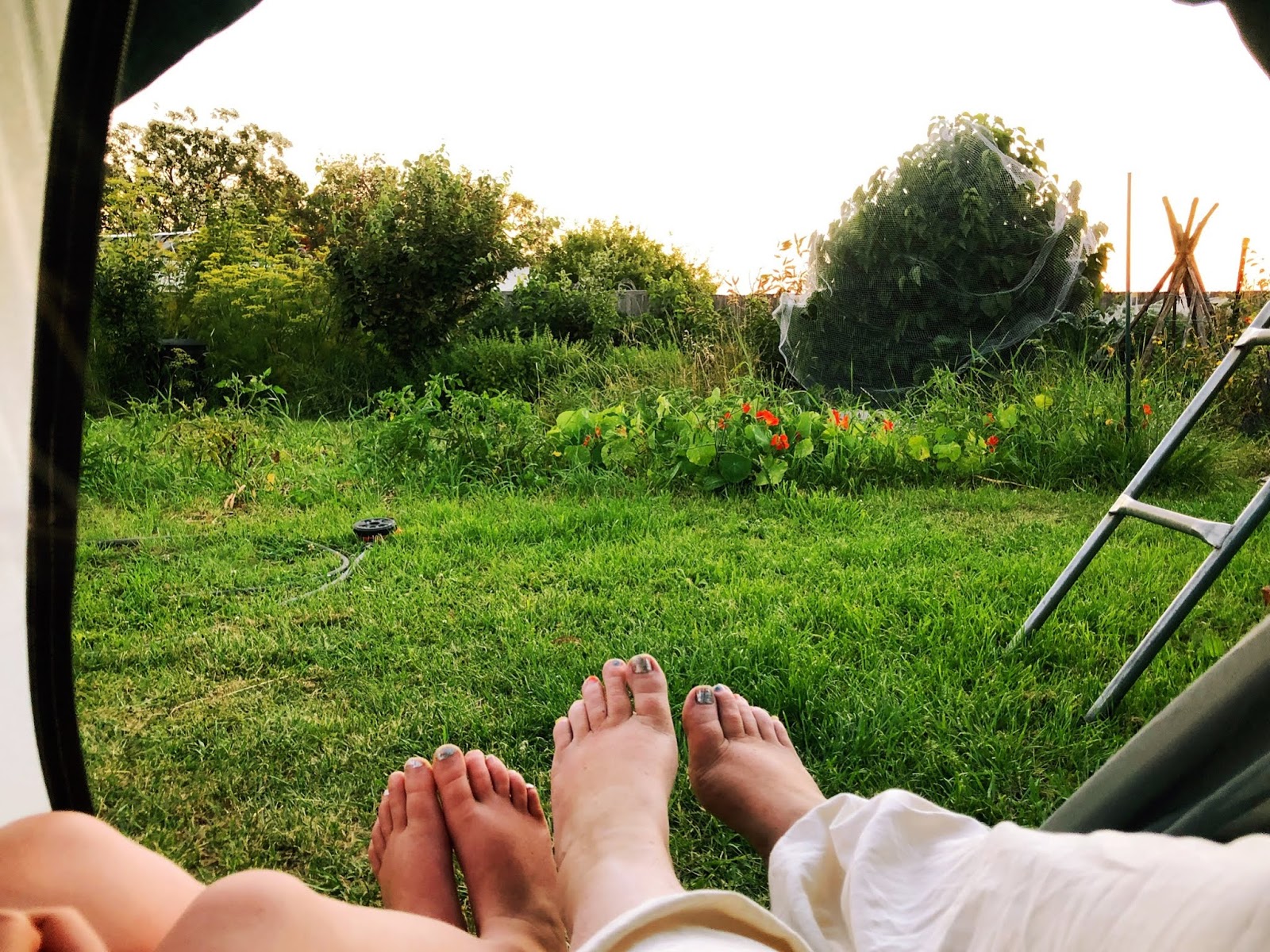
  • Camp out - in the backyard or your lounge room. Pitch a tent and sleep under the stars, or under twinkle lights by your tv. We can’t guarantee you a good night’s sleep but your kids (and pets) will love you all the more for it. 
  • Cook with fire - if you have a wood heater or space for a little outdoor campfire, toast some marshmallows, bake some damper, enjoy the warmth and gaze into the coals. 
  • Stargaze - If you have a backyard or a balcony, a little stargazing can be a wonderful way to connect with nature, and observe what’s happening around you. If you’re in the city and can’t see the stars to clearly, perhaps try an app like Sky Safari, or a sky map to help you work out where the constellations are. 
  • Nature walk in your street - what seasonal changes are you noticing? What sounds and scents? Try taking some photos and draw from them when you get home. For extra fun, go after dark, with torches and spot nocturnal wildlife. 
  • Start a holiday diary - perhaps a nature journal, or just daily observations of the world around you. 
  • Move your furniture around - Swap bedrooms, look at your home and how you use it, in different ways. A change is as good as a holiday!
  • Give your bedroom a deep clean - Change the sheets (there’s nothing better!) and put a chocolate on the pillow if you like!
  • Bring the outdoors in - Plant some pots up with herbs, indoor plants or flowers that make you happy, provide food or freshen the air a little. 
  • Send postcards or letters to the friends you’re missing - Tell them what you’ve been up to. There’s something special about receiving a note in the mail. 
  • Send a gift - whether it's a bunch of flowers or a favourite book you’ve been reading, find a small and local business to support and have them send a gift on your behalf, if you’re not able to attend the post office in person.
  • Learn a new skill - Learn to bake bread, knit, grow food, play an instrument. Emerge from your holiday at home with a skill you can share with your friends and family when you see them next. 
  • Find out about a different culture - learn the history, language and perhaps try the foods of the place you’d like to learn about. 
  • Visit museums, galleries and zoos, virtually - webcams and virtual tours are happening now in facilities all over the world. Go exploring and learn all the things! 
  • Write to a pen pal - reach out to people in other parts of the world and look for a pen pal (perhaps through friends of friends or someone you know online?). Send them a lovely message telling them about what it’s like where you are, and ask them to describe their day-to-day. There’s solidarity and connection to be found in the written word! 
  • Learn the history of where you live -  Find out about First Nations people, the geological formations, famous landmarks, favourite buildings. 
  • Read all the books! There’s never been a better time to catch up on the books you’ve been meaning to read. If you don’t have an unread stack and prefer not to buy books, you might try borrowing ebooks and audio books through your local library. Some subscription services are offering freebies now too. 
  • Splurge on a take-away meal - give yourself the night off and support a local hospitality business who makes great food. Many are struggling right now and have opened up take away and delivery meal options. Look for restaurants who cook using local ingredients and ask about compostable packaging! 
  • Eat local food - be a locavore and experience what your local diet really tastes like, whether it’s bought, foraged or both.
  • Go dancing - well, maybe just in your lounge room, but have a dance party and truly let your hair down. 
  • Initiate new routines - perhaps you’ve been meaning to maintain a sourdough starter and bake regularly, do a little yoga or walk each day, or you’ve been meaning to reduce your family’s waste output? Now’s a good time to start incorporating new things into your daily rhythm so they’ll be second nature when life’s feeling more normal. 
  • Get some sunshine - If you have a little sunny space to sit or stretch out, take time to rest in it and enjoy the sun's warmth and a bit of Vitamin D.
  • Catch up on watching old movies - or nature documentaries you haven’t had time for. You’ll have a family of film buffs and nature lovers in no time.
  • Play games - board games, card games, do the crossword.
  • Take a nap - The sign of any restful holiday. Nanas of the world will agree!
  • Slow down - Remember how to slow down and take each day at a time. Be gentle with yourself. These are unusual and uncertain times we're living through. Know that while you stay home, you're currently supporting front line workers and the broader community, and significantly reducing the impact your family has on our changing climate. 


And when the hardest of this is behind us… holidays at home might include visiting local museums, galleries, ecosystems, restaurants, and hotels. You might try camping not too far from home or bushwalking somewhere you’ve never been before. Support your local businesses, keep carbon emissions low, and your local community resilient.  


4 April 2018

Waste-free pillows (and sweeter dreams)


We'd been putting off the inevitable decision, and cost, around choosing a new pillow for quite some time. Huz and I bought curved foam pillows more than 12 years ago, and despite cleaning the cover and protector regularly, I'm sure that there were cities of dust mites living in them. Yuck. Probably not great for my dust-mite allergy, and possibly the reason I'd had recurrent sinus infections. And our pillows were starting to disintegrate, with tiny bits of foam flaking off. Gross. Apparently, you're supposed to change pillows every three years, or every six months if you have allergies, so we were well overdue! We started to look at what would be the best waste-free option for us.

Firstly, we wanted to find something home compostable, so we could avoid landfill. That discounted latex foam from our search. Organic cotton, bamboo, wool, and feather were all compostable options we considered. But, of course, there were ethical and environmental considerations to take into account with each option. Distance the materials would travel to reach us, water used in creating the fibre or filling, treatment of animals in animal-based fillings, treatment of fibres and chemicals used in production... And cost. These factors are going to be different for each person, depending on where you live, what you have access to, health considerations, and what you can afford, so one of these may already be right for you. But what was best for us?

Where we live, in Tasmania, we're always happy to try local options to avoid products travelling by air and sea. So, after a hunt around, we were happy to find Tasmanian grown buckwheat hulls. These are a by-product of buckwheat farming. They're also grown by a supplier of our favourite organic grocer, so we asked her to order us a sack with her next delivery, keeping carbon miles relatively low. And as they're not generally a highly sought-after product, the cost was pretty low too (ours was about $10 per pillow). Buckwheat hulls are often used to make yoga bolsters and cushions. They've been used for sleep support in Japan for over 600 years, and you can actually buy ready-made buckwheat pillows in a few places online, so we didn't feel like we were planning something completely eccentric!


We had the sack of hulls sitting in a corner of our lounge room for almost a year while we wrote our book, so it's taken a little while to get to making the actual pillows, but making them was super easy. I wish we'd done it sooner! Here's how we did it:

We already had zip-up pillow protectors, so we re-used those and filled them with a comfortable amount of hulls. I should add here that pillows are actually not a requirement for living and it may even be better for our bodies to sleep without them, but while we get our heads (and necks) around the concept of pillow-free living, we've started with about half a grain sack each of hulls. We will consider reducing the amount of hulls until we're sleeping comfortably without a pillow. Next we zipped up the pillow protectors and added a pillowcase. And that's it. So easy!

To clean the pillow, unzip the pillow protector and pour out the hulls. Then give the protector a wash, and if you can find somewhere to spread out the hulls and give them a little sunlight (perhaps a clean bedsheet or flyscreen away from breezes), that should help to keep the hulls fresh.

So, what are buckwheat hull pillows like to sleep on? Well, they're a little noisier than your average pillow! It's a bit like sleeping on a beanbag, or even a wheat bag/heat pack. They do take a little rearranging, and they're a bit firmer than we've been used to. But they're also super comfortable. The hulls are quite light and soft, hold their shape well, and when you get the right position, it's wonderful. They provide good neck support, and are low-allergy, chemical free, and unscented. The airflow through the hulls keeps them dry and, because they're non-nutritive, and the hulls have regular movement, they're not attractive to pests. I found the knot at the back of my neck disappeared overnight, and my allergies and sinus infection seemed to clear up right away. We did find initially that we tended to move more during the night, and even wriggle down the bed a little, but we actually felt better for that, and persisted. It took Huz a couple of nights to get used to the buckwheat hulls, but now he sleeps comfortably every night.


My favourite thing to try is turning buckwheat hull pillows into enormous dream pillows. Herbs that promote deep sleep and relaxation (such as lavender, rose petals and hops) are fab. The dried herbs can be added in a handmade sachet, or scattered through the buckwheat hulls, for a beautiful sleep.

When it's time for us to replace our buckwheat hulls (in about 10 years), we'll take them out to the garden and compost them and source some new hulls... Great for our garden, good for our bodies, and gentle on the planet.

~ Lauren. xx

9 February 2018

Educating without waste


Ahh it's back-to school time here in Tasmania. Growing up, I remember fondly those years of booklists, new stationary and contacting books. As a teenager, I made it my job to see if I could find cheaper options of the suggestions on my school book list. It was one of my favourite times of year! As I was gathering up all the materials the owlets have chosen to learn with this year, it struck me just how many of them are now second hand. How inexpensive quality learning materials can be if we seek them out. How little waste we create in our education journey. One of the ways we reduce waste is by educating the owlets at home.

As home educators, we receive no financial support from the government, and we sacrifice one full-time income to make the owlets' education possible. We're extremely fortunate to be in a position where we can make that happen, and we do supplement the full-time income I'm no longer making, with the teeny, part-time shop income we make through Spiral Garden. Huz now works four days per week, as a measure for both his sanity, and mine, as a means we get to get all the things done, and spend more time together. We're certainly not making what most would consider to be smart financial decisions here, but they're decisions that keep work and life in balance for us all. Especially while the owlets are young.

For all this, we've had to be super thrifty and a little extra creative about how we do things. One way we save money on educational equipment is to sell the things we love, through our shop, enabling us to access tools we need at wholesale prices - it's a lot of work and I'm not sure I'd recommend it if you're in it for that alone! But here are some of the other ways we's reduced waste and costs, while providing a quality education for our kids:

Borrow tools and curriculum: We've been super fortunate to have been loaned books and curriculum materials when we've needed, by very generous and trusting friends. We're gentle on the books we use, and store them well, so can hand them back at the end of the year with minimal wear. Ask family for any helpful books, games and materials they might be able to share in the short or long-term. They may have something useful in their home, or keep an eye out for something helpful in their travels.

Buy secondhand: We're big on searching out good quality second hand books, tools and materials. We've been lucky to have stumbled across gems we can use, for almost nothing. At present, the reader Tiny has chosen to work on her reading with, belonged to my Aunt when she was small. The book Little Owlet has next on her list came from the local community book exchange. One of the maths books Big Owlet is using came from a freebie trolley at the tip shop! And we always keep our eyes open at the tip shop, garage sales and op shops. Many home educating families I know have become expert second-hand buyers, through necessity. It's a wonderful skill and set of values they're passing on to their children. To look for second hand options when possible. To value the words and knowledge in older materials, and to care for belongings well so they'll last for generations. 


Use supplies that create minimal waste: This year we've switched to writing on loose leaf paper, filed in folders for the different subject areas and projects the owlets are working on. It means there's no paper left unused, like there was in the main lesson books or exercise books they used previously. It also keeps everything together neatly. For writing and drawing tools, we use organic beeswax crayons, and pencils which can be sharpened, and their shavings added to the compost or fire. We're about to invest in some fountain pens for the older owlets, too. These can be refilled to use as they need (watch out for these in the shop). We use sturdy watercolour paints in palettes with replaceable paint blocks. These will last a lifetime. We use brown paper masking tape when we need to stick things, and when I've figured out a favourite option for glue (and we've run out of the old stuff we're still using), I'll be sure to update that. We're also about to dip into making art materials by hand, with some brilliant guidance by The Organic Artist, Nick Neddo (we'll blog some of that too). Basically, if it's compostable or reusable, we're all about it. 

Keep it minimal, and avoid plastics: We look for plastic-free options for materials and resources. Have a think about whether you really need to print or laminate that material you're using. What will happen to it when it's no longer useful to you? Online resources can be a way to access what you need and print only what's useful, but if you do need to use a printer, look for one that requires fewer cartridges and less ink. Is there another way to explore that science project or craft activity without plastics? Or can you approach the concept in a different way? If you're going out for the day, pack a lunchbox and avoid buying plastic-wrapped convenience foods along the way.

Use the library: Libraries are such great resources. It's surprising to me how many home educators I've observed will prefer to buy new books rather than borrow them from the library. Having said that, the kids non-fiction section at our local libraries has dropped by 75% in the past year, so if that's happening across the board, I'm kind of getting why you'd buy new books. Most libraries will take requests for new books to buy, so if there's something you're keen to read, try asking for it at the library so others can enjoy it too. 


Learn in nature: Nature really is the best teacher. Spend time learning real-life lessons, through observation. You can learn everything you need to know about reducing waste, through observing ecosystems. Make sure to leave a light footprint and take everything with you when you're done. 

Explore it together: Work with your kids on ways to reduce waste in your home and include them in the process. Brainstorm solutions together. Use bulk foods shopping and cooking from scratch as an opportunity to explore mathematical concepts, social interaction, economics, science, geography, history... there's much to learn in the daily runnings of a household and the feeding of a family, and those real-life lessons are so important and valuable. Kids are often quite intuitive about this stuff, so you may learn a thing or two along the way, too!

If your kids are learning in a school environment, many of these same principles apply. Chat to your teacher or school and see if you can help create positive change in your school community. You can hear Huz, and our friend Robyn, talking about back-to-school waste on ABC radio here.


If you're keen to learn more about reducing your family's waste, whether you educate your kids inside or outside the home, you can find more information in our e-courses, Zero Waste Families, and Seedlings: Permaculture for Families. Both courses are self-paced, and ready for you to sign up at any time.

We've also written a book which covers all these things and so much more, and will be available at your local bookshop (eep!), later this year.

25 October 2015

Sustainably Challenged :: Waste Free


Last week we posted about the Sustainability Challenge we're taking part in. After a week full of reflection and research, this past (almost) two weeks, we've gone head on towards living a somewhat different life. The biggest challenge we set ourselves was to live waste free and although it has made us think LOTS, it hasn't been as difficult as we expected. And there have been some pretty awesome discoveries along the way.

What zero waste means to us

There are a few definitions out there of what zero waste means. For us, it means bringing nothing into our home that we can't consume, compost or repurpose. It means not contributing to landfill, or to giant floating islands of plastic. It means little to no recycling and refusing biodegradable plastics too.

Recycling can mean a portion of our waste is moved to local depots where it is sorted, often added back to landfill, or moved on and sold to companies who purchase and re-purpose it as a raw product. For plastics, this means a downgrade. So a milk bottle doesn't become a new milk bottle, it becomes something else and eventually ends up in our system as a single-use plastic item. That's a whole lot of plastic for the earth to digest. Biodegradable means the plastic breaks up into tiny particles, still floating around, polluting our water and soils.

So for us, this challenge means not being complacent about where our waste and recycling goes. It means thinking. Lots of thinking. And refusing what we can't put to good use. We want to take responsibility for everything we bring into our home.

But rather than focusing on the zero in the whole equation, the refusal, we're choosing to focus on what we can use, and how. Instead of asking is it landfill, or is it waste, we're asking "Is it compostable?" Earth is losing soil at a rapid rate, so anything we can do to help build it up is hugely valuable. Making choices that help us build up the soil in this little patch of land we're care-taking is important. And we've only scratched the surface.


Living without waste.

There are loads of simple choices everyone knows about, that we're making everyday. We're trying a little harder to remember them. Here's what we're doing:

Always carrying water bottles,
Remembering the shopping bags, stashing extras in our bags, pockets and car, just in case.
Shopping at bulk foods stores and taking our jars along.
Using lightweight cloth bags for produce.
Avoiding produce with stickers
Taking containers along to a butcher/fishmonger to place meat, poultry or fish in.


If we're caught short, paper bags are acceptable for us - we can compost them or use them for heat.
When eating out, taking our own chopsticks along and finding take away food available in paper or compostable packaging and bringing it home to compost.
Making our own toothpaste and cleaning products.
Using compostable, wooden toothbrushes and cleaning brushes.
Using cloth everything. From hankies, to family cloth (although guests have an ethical, recycled flushable toilet paper option!).
Knitting our own kitchen cloths. This one is made from an old t-shirt.
Composting everything we sweep up or vacuum. Compost heaps don't mind dust.
Remembering to compost the dog and cat poo in the special pet waste worm farm, rather than throw it out in a plastic bag into landfill - yuck!


Making our own pet food.
Making our own tea.
Getting our ferments happening again.
Getting our yoghurt and cheese making act together.
Using and making home made seaweed tea for the garden.
Learning more about the plants we grow and expanding our medicinal herb garden.
Re-evaluating the processes in our business.
Gardening more.
Sleeping better.


Things we've found challenging

Produce without stickers is hard to find! This is why growing our own is important.

Dairy is almost always packaged in plastic, foil, or coated cardboard. We're having to compromise by bringing home only what we can repurpose. We're allowing ourselves a maximum of 3L of fresh milk each week and repurposing the packaging to make things we can use in our garden, like seedling containers and plant tags. We have powdered organic milk as back-up too. Our dairy consumption has dropped dramatically, which is a good thing environmentally too as it takes about 1000L of water to make 1L of milk. When our beloved Elgaar dairy is back up and running in a few months, we'll be happily drinking ethically produced milk and using reusable glass instead.

Shop assistants may try to help, but not quite understand what we're doing here. Like the butcher who was happy to sell us a plastic-free chicken - once he'd removed it from the bag. Or the cheese seller who we suspect may have just removed the glad wrap, rather than cutting a fresh slice of parmesan for us. You need to be on the ball when shopping.

In Tasmania, we don't really have a one-stop shop where we can buy everything under one roof. We're travelling to the whole foods shop, the butcher, the farmer's market… We're using the car a little more and being conscious of fitting more into each car trip. We need to look into whether bike or bus travel are viable options for our whole family. At the moment, for a family of five, the car is coming out on top as the best use of energy, money and time.

Shopping in small whole foods shops with multiple children is challenging! We tend to all pile up on each other and cause traffic jams by the quinoa. We're thinking of frequenting a smaller shop with a garden where we can park the owlets for a moment while we shop. We're getting better each time we do it.

Carrying all the jars is pretty heavy and requires preparation. But once you've done it a few times, it gets easier.

Medicines, vitamins, bandaids, hardware, gardening products, postage products… even sustainable products like compostable tableware… are all wrapped in plastic. Even the food that we've bought at the whole foods shop has most likely been wrapped in plastic at some point. Our lives are so tangled up in it. So, we work harder to consume a diet that doesn't require supplementing or medicating. We take our own tableware along. We make our own and we find the very best alternatives we can, when we can. If we can't we're going to ask businesses to think about their practices and re-examine just as we are doing. Plastics and packaging create convenience that keeps a whole lot of industries in business, so  we can keep them accountable by asking them to change their practices, choosing alternatives or creating our own.


What are the benefits?

Traveling and frequenting different shops means we're engaging with our community a bit more. We're having conversations with real people and finding out more about where our food comes from. Which is a definite win.

We're more mindful of what comes into our home. There's no waste to deal with. We're saving time and life's getting simpler. Its feeding into other areas of our lives where we're thinking more minimally.

When we unpack the shopping, it's already in the jars we intend to keep it in for freshness, so we just pop it straight in the cupboard, fridge or on the bench. It saves time! Plus jars are kind of lovely food storage.

Food tends to be healthier. Even though we cooked mostly from scratch before and our diets haven't changed hugely, I'd say the way we value our food has changed and we're definitely focussed on the good stuff.

Shopping is more enjoyable. It's quicker. There are fewer choices and fewer decisions to make. There is no advertising or excess packaging to deal with. Once you've got it sussed, it saves you lots of time and it's generally more pleasant.

We thought shopping this way would be more expensive. We're still trying to tally all the exact sums on that, but so far it's not! We have managed to stick to budget and feed ourselves well. We've found there's actually savings to be made on certain items we've always bought. And we're not paying for packaging which makes up part of the cost of most pre-packaged foods. Awesome.

Our soils are improving! By focussing on what we can compost, we're staying mindful of things that feed and nourish the soils that nourish the plants that nourish us. Which may lead us to the final frontier of waste one day… humanure. Possibly the only way we can really, truly live waste free. Baby steps though, right? ;)


Where to from here? 

Well, before we began this challenge, we put all the items that came in non-refillable containers into lockdown. We were fortunate that it began at the end of a pay cycle, so the fridge and cupboards were absolutely empty, so much of our waste had already left the building. Things like shampoo bottles and tea bag packets remained unfinished. Things we could replace with a more ethical, compostable version. Now we've replaced them, and know it's easy enough to live without them, we'll phase them out completely.

So we'll be filling our rubbish and recycling bins one more time. We may even hire a small skip for some bits and pieces we really can't repurpose, sell or give away. Decisions we made earlier that we wouldn't make again now. And we'll be letting them go, learning and moving on. Now we know our version of zero-waste is totally achievable, and actually not as huge a leap as we first thought, we'll be continuing along this path from now on.

We'll be making changes to Spiral Garden, which remove the need for our customers to worry about this stuff, as much as we can. We'll be thinking about how Christmas and birthdays might look for our family over the next few months. We'll be composting and gardening and thinking about some of the other things we might change too, staying positive that every tiny change we make is a step in the right direction for our planet. It's all a bit of an adventure!

Here are some extra links you may like to look at: 
Zero Waste Home
Trash is for Tossers
The Story of Stuff
Put Down the Plastic

Have you ever given much thought to waste, or a zero-waste lifestyle? If you have any questions, we'd be happy to answer them. Have a gorgeous week, whatever adventures you're on! 

UPDATE! We've learnt so much more in our zero waste adventures since this post was written and we've decided to share lots of that information in a supportive and fun space in our new e-course at zerowastefamilies.com! Join us for four weeks as we help you move towards zero waste living. 

~Lauren. xx


15 May 2015

Apple Jelly


In amongst all our rambling, wandering adventures of late, we've kept an eye out for roadside treasures. Tasmania is full of gorgeous little farm gate stalls, but for the adventurous, there are also plentiful finds, growing wild along the roadside. A drive through the Huon Valley turns up baskets full of apples, haws, edible weeds and the occasional late berry, if you're lucky to find a spray-free patch. All that food, ready for the eating if we keep our eyes open, slow down and stop the car from time to time. 

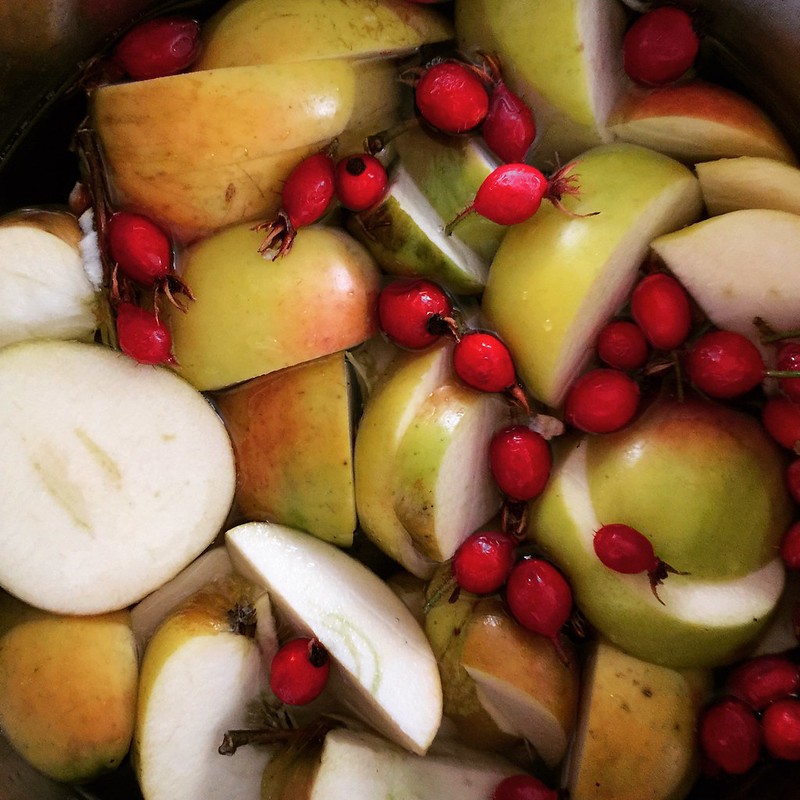
A lazy walk home from co-op one day left me with a bowl full of rosehips. The following day we took a huge drive down to the far south and pulled over from some apples from an ancient wild tree. The owlets offered to taste test the huge apples and, upon finding them rather tart, we decided to make some jelly. We're loving the delicate flavour of this batch and I think next year I'll aim for more rosehips to really boost that flavour. Jam and jelly aficionado, Little Owlet, tells me her favourite is the Quince and Orange Jelly we made last weekend, but she'll happily eat either with a spoon - and does! 

Untitled

Apple and Rosehip Jelly

1kg apples, or thereabouts
2 cups of rosehips 
Sugar - we used organic raw sugar, but rapadura, juice or honey or a mix of sweeteners would be fine. 
Water

Chop the apples up roughly , core, stems and all. Pop them in a large pot with the rosehips and cover with water. Bring to the boil and then simmer until the fruit is soft. Place a colander over bowl and place some muslin or old stocking over the colander. Strain the fruit - leave it overnight if necessary. Try not to squeeze the fruit as the jelly will be clearer if it drains naturally. 

Measure the amount of juice and add half the amount of sugar along with it to a pot. For example, for 4 cups of juice, add 2 cups of sugar. Most recipes will suggest you need to have an equal amount of sugar, but we find it just too sweet - this will also depend on what sweetener you choose. There is enough pectin in the fruit to set the jelly anyway. Simmer the juice and sugar until it becomes jelly. Scoop off any foam that forms on the surface. Place some clean jars in a pot of water on the stove and boil for a little while. 

Place a saucer in the freezer. Test the consistency of the jelly every now and then by dropping some onto the saucer. When the liquid thickens and holds it's shape a little when you run a finger through it, it is ready. Have your jars ready and ladle or pour the jelly into the jars and pop the lids on to seal. 


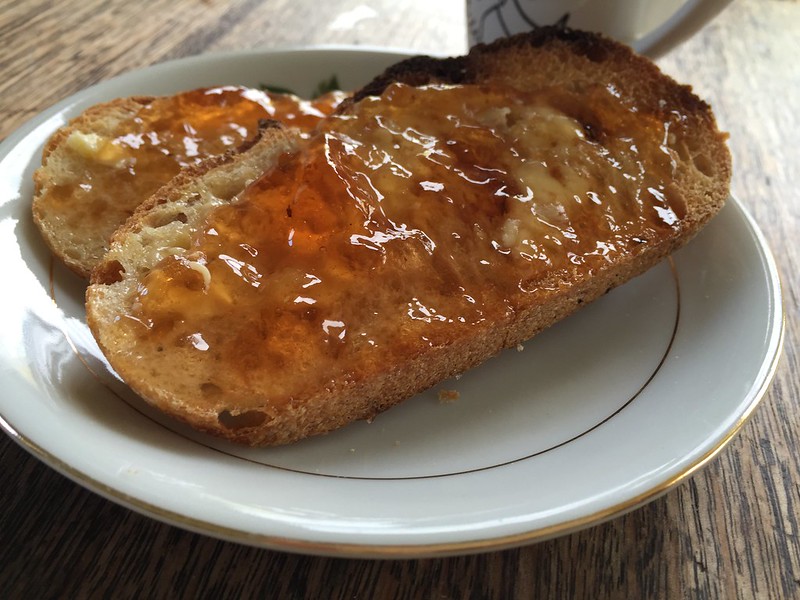
We enjoy eating our jelly on toast, in cakes and tarts, with cheese, or (if you're like Little Owlet), with a spoon. It tastes and looks so jewel-like and decadent, but it only cost us about 50c per jar, just for the sugar! It pays to keep those eyes open and go slow...

What's your favourite way to use fruit at this time of year?
Off on any foraging adventures of late? 
Have a gorgeous weekend! 

~ Lauren. xx
6 June 2014

Blooming where we're planted :: Tiny house thinking


The other morning I was standing at the kitchen sink, craning my neck to try and catch a glimpse of the two-doors-down neighbours' new extension. In the years since we've lived here, as we've planted trees and welcomed babies, we've watched the two-doors-down neighbours' children grow up. The youngest is driving with L-plates now and her once home-based mother is part of the morning commute. We've watched and imagined a time like that in our future, when owlets have grown and money's less tight and maybe that longed-for extension, that studio or parent's retreat or extra living space… 

We've imagined waking up and looking across the river as the sun rises and warms our bedroom, overlooking the garden. We've imagined a breakfast bar and sweeping deck, or double-glazed family room and extended kitchen. We've imagined the suburban standard bedroom each and a studio. Oh the extra space! It was one of the attractive thoughts painted to us, on that first day we set eyes on our little green house, by an eager real-estate agent, playing the dream-making game.

IMG_5666
IMG_5669
IMG_5665

Seven years in to our life here, we've begun building a garden that means the world to us. Our little nest is comfortable and well loved and lived in. We've spent happy nights with all our owlets squishing into our bedroom, sleeping on the floor if they must, just to be closer. Seriously, the amount of times we find ourselves in the same square meter of this nest is hilarious.We remember the large family who lived here before us and the childhood bedrooms we shared with siblings. The closeness, the company of shared quarters. How much space do we really need? 

Waking up in the morning, we sit up in our bed, overlooking the front garden and the river, as we watch the sun rise and start our day. We have a version of that dream already. And I'm back to craning my head to see the two-doors-down neighbours' extension and it dawns on me… 

We spend lots of time looking at and thinking about tiny houses. At life pared back to essentials and smart storage solutions aplenty. We imagine running away to an off-grid life and a tiny cabin in the woods. We think about it lots.  

Beautiful, quiet, winter morning. Just the owlets and me for a few days. Tiny has a cold. Endless hours of domestic chores beckon. This calls for a fire and umpteen cups of tea. #stillness #nestlife #owletnest
IMG_5663

And then we remember Huz's job and the opportunity and potential it brings to create change. We remember the convenience of being near people and things we need, like activities for growing owlets and friends… And this garden. This house by the beach and bush, where owlets have been born, lost and grown…

What if we just stop here now? 

What if instead of expanding this house and imagining more here, we imagine less? 
What if we apply tiny house philosophy to our medium-sized house and just improve it?
What if our cabin in the woods has been here all the time
What if a mansion in the suburbs wouldn't create the connection and life we want

IMG_5670
IMG_5674
IMG_5678

So we're creating for ourselves a tiny-house inspired nest. A little nest that we don't intend to grow, so much as improve. Slowly, we're refining and simplifying. The permaculture plan is slowly and steadily being implemented. The basic renovations we needed to do to improve the existing rooms are almost complete. A little touch-up here and there will see it feeling less tired. We just need to be smarter about how we fit us all in here. 

It means paring back. It means negotiations and long discussions with owlets about more and less and enough. It means simplifying. Giving away or selling whatever doesn't belong in our dream house. Because this is it. Here and now. We have what we need, now lets' make it what we want. Slowly. Steadily. This is home. 

*****************************

Inspiration… 
A Memoir About What Happens When You Get Rid Of All Your Stuff ~ by The Minimalists
The Tiny House Family
Tiny House Living
Tiny House Swoon
Rhonda's fabulous book which has a chapter on this very sort of thing. 


1 June 2014

One Chook...

image

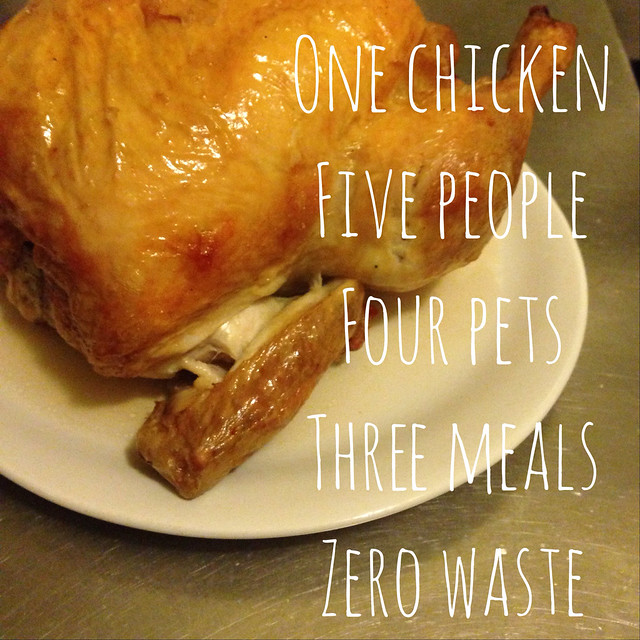
In our nest, we're all about trying to find ways to squeeze the absolute most from our money, food and time right now. If we can do it and produce zero waste, that increases the awesomeness factor x10. Our favourite way to do all of the above begins with one chicken.

Harking back to my childhood, where we'd have a roast every weekend, we've begun to do the same. It sets up our week with full happy bellies and a bunch of meals already begun for our week ahead. There are some wonderful people all over the place talking about how they do this (Gourmet Girlfriend is one), but here's our chook rhythm and how it all works...

So we start with roasting one chicken. I look for the biggest chook I can find, always free-range, preferably organic and pasture fed. I keep some of the juices for gravy and pour off some oil for cooking tomorrow. I also roast up a whole load of veggies (more than we need) to go with it and that's our first meal. Super yum.

Later, I remove all the remaining meat from the bone and pop it in the fridge for another meal. The bones go in the slow cooker with an onion, chopped in half (skin and all), some garlic, carrot, celery, pepper corns, a bay leaf, water and a slosh of apple cider vinegar. That bubbles away for 24hrs. So there's stock/bone broth good to go for meals during the week. I get about 2L which usually makes 2 serves for our family, enough for soup and to add to a casserole or something like that.

upload

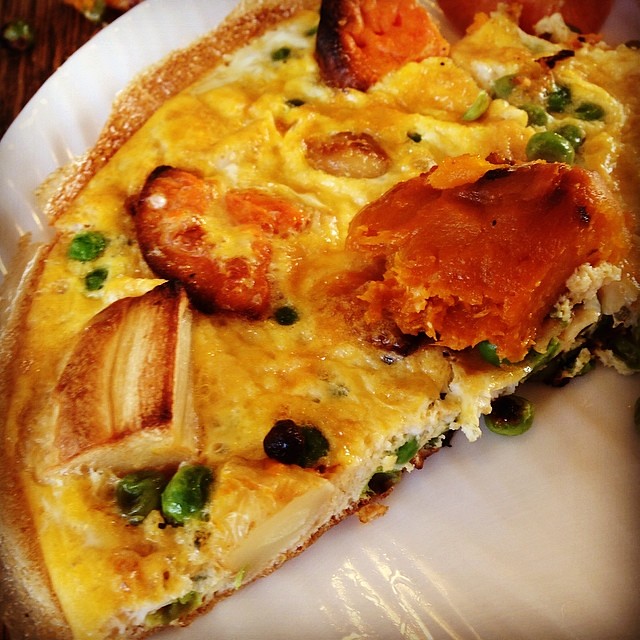
In the morning, the left-over veggies make a lovely simple frittata*…

If I was lucky and found a big chook, I'll have managed to have enough meat left over to add to the bone broth for soup. A big chook will do this. Otherwise we'll enjoy the broth with lots of veggies. There are a multitude of other ways I can use the meat too… chicken pies, quick stir-fry, curry, risotto… And of course, cold as is, or on a sanga.

image

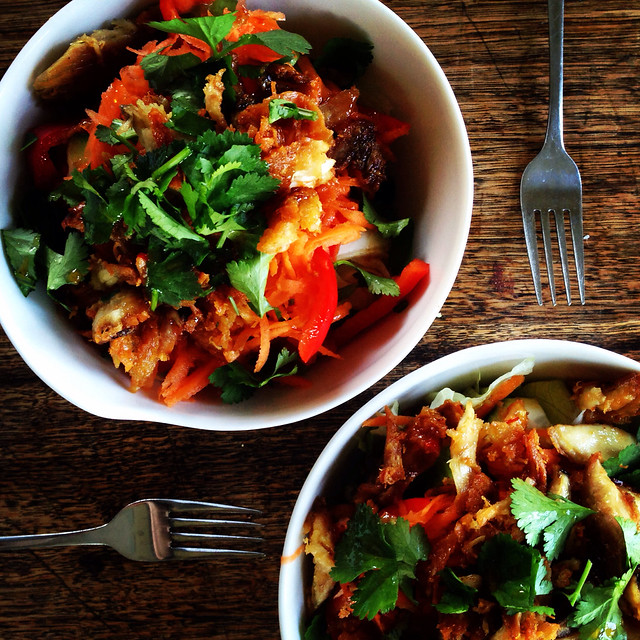
A favourite right now is what we've come to know as Crispy Chicken Salad. Lettuce and a bunch of other yum green veggies (whatever's seasonal and available), some grated carrot and some left-over chicken which has been shallow fried in left over chook fat/olive oil/coconut oil/ghee until it starts to go crispy. We throw a handful of fresh coriander from the garden on top and some homemade thai-style dressing. Sometimes we throw sesame seeds and kim-chi in the bowl too, just for yum and probiotic value.

upload

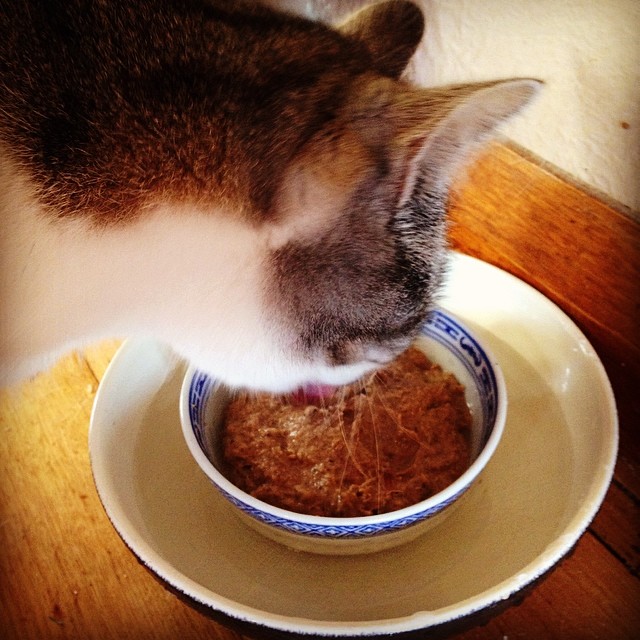
So what to do with the left over stock bits and bones? I pick out the onions and whiz what's left in the food processor. After 24hrs, the chicken bones are so brittle they crumble in your fingers. With the veggies in the stock, they make a super easy, nutritious food for our furry owlets. Full of minerals and good things. We feed the soft, whipped up left-overs to our three cats and chihuahua. It lasts about 3-4 meals. And best of all, it uses ALL the last of the waste. And saves us a HEAP of money - pets are expensive! Especially if you want to feed them good stuff, and we KNOW this food isn't full of preservatives and other yuck stuff they don't need.

So there's our week all set up. The rest of my meal plan fits in around that. Super easy and and affordable and helping to stretch everything a bit further. And some really great, healthy meals too!

What are your tips for stretching your meals and your budget a bit further?
Any great left-overs recipes?

Have a gorgeous week! xx


*Stay tuned for our super-quick breakky fritatta recipe next week. xx
17 May 2013

The Tooth Faerie :: marketing and magic

Shiny bright big girl #firsttooth #littleowlet #wheredidmybabygo #superexcited

There's been a bit of excitement in our house... Wobbly teeth all over and Little Owlet has finally been visited for the first time. The owlets have decided that instead of just one universal tooth faerie, each of them has their own dedicated personal tooth faerie, who happens to be a millionaire (or at least have enough money for a gold coin for each tooth - gosh!). You'll be pleased to know that Little Owlet's tooth faerie is named Marigold and she wears a dress spun from spider's silk. There's much talk of silvery moons, dew drops and faerie magic!

Just as we're watching Little Owlet's teeth with anticipation, we're watching Tiny's with a degree of trepidation and making sure the products we use for her and for her teeth are of the purest and gentlest, most nurturing form. Regular fluoride toothpaste bit the dust long ago. We look for products that support and truly clean her teeth with their antibacterial qualities, and we don't mind that we are ingesting them because they are so pure.

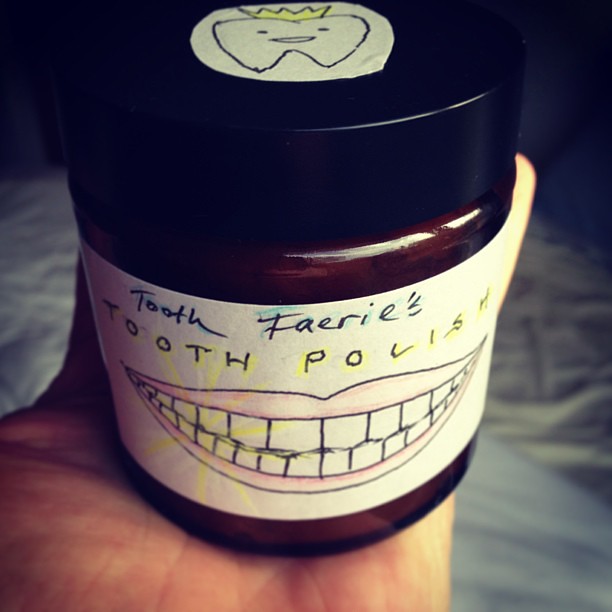
With little changes have come some occasional resistance from the owlets. Switching to homemade toothpaste brought doubts from all of us, but I decided it was all in the magic and the marketing...


Trialling a new home made toothpaste... It's all in the marketing #homemade #toothpaste #specialfairyrecipe #theycantwaittouseit


So I whipped this up:

2 x heaped tablespoons organic coconut oil
1 teaspoon bi-carb soda
10 drops peppermint oil

Mix it around in a small bowl, then pop in a jar and label appropriately. Use as you would regular toothpaste...

They loved it. At first the saltiness of the bi-carb shone through. You could tweak that if you fancied, adding as much coconut oil and peppermint as suits, and I believe you could add a natural sweetener like stevia, if sweetness was your thing. It doesn't bother us now.

Our teeth are cleaner than they've ever been before. And we're quietly surprised and pleased that we're saving money on expensive fluoride-free toothpastes that owlets eat like lollies.

There's also a buzz about having super shiny teeth ready for the tooth faerie's next visit. Yep. It's all in the marketing and in the magic. xx


29 January 2012

A is for awesome

New shoes

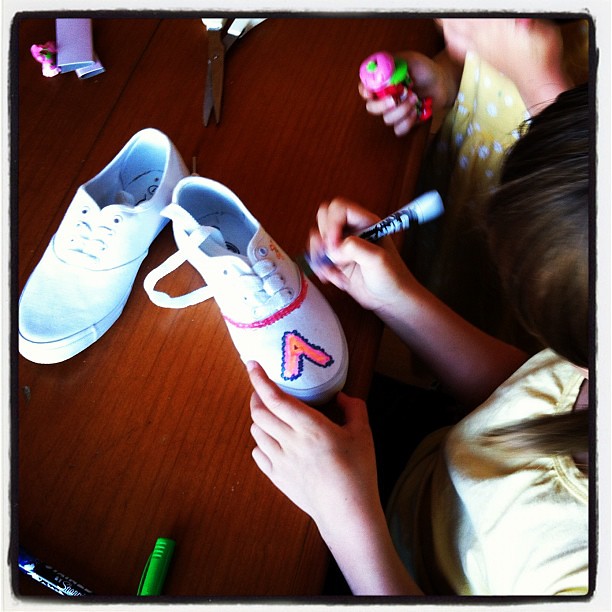
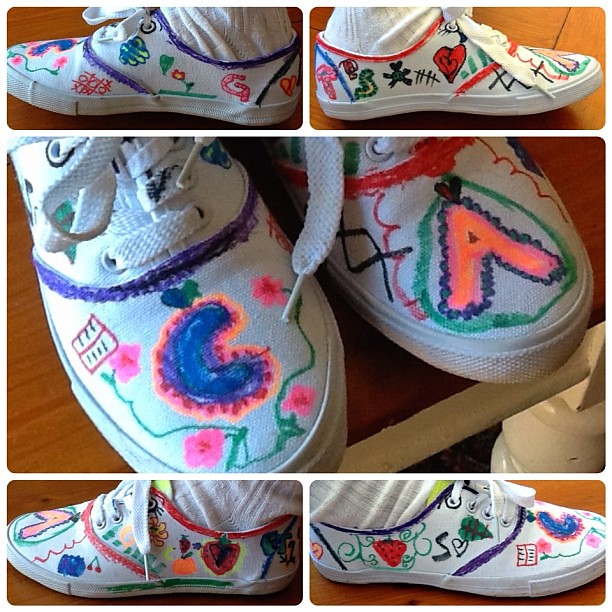
It seems Big Owlet has had a growth spurt and suddenly none of her shoes fit, aside from a pair of thongs. Unfortunately we can't afford the orange Converse she wants right at the minute and all the cheapy shoe places seem to think that it's pink or sparkly or nothing for girls like her... So we wandered down the boys aisle, as we usually do at times like this, and spied the super cheap plain white canvas runners... A-ha! DIY awesome shoes! She set to work, adding bits when the mood strikes, and they keep getting more awesome each day. Just like her :)

My 8 year-old daughter's new original tread! #shoes #handdrawn

pic above by Huz. 

10 January 2012

I made this...

Hibiscus skirt

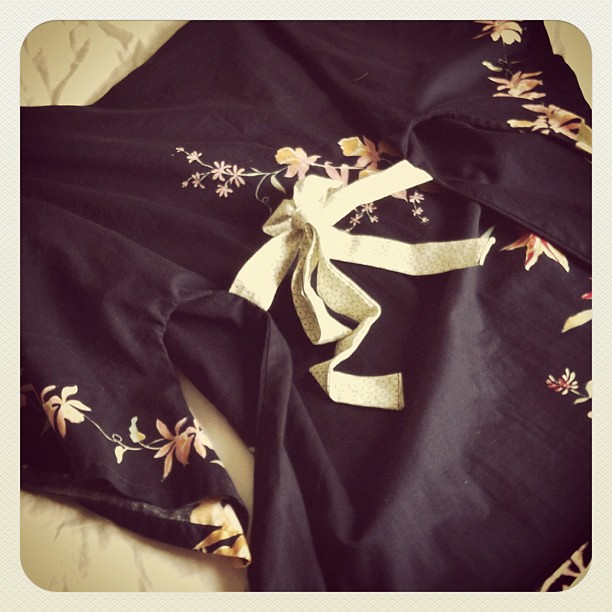
Around the middle of last week I realised I'm off to Melbourne soon and the weather there was very ridiculously hot. And I don't own any t-shirts. Or many pieces of clothing to wear at all when the weather creeps over 30°C, which doesn't happen all that often in Hobart... I raced off on a cheapy t-shirt hunt (did I mention we froze the credit cards?), and found nothing decent. Anywhere. Until I found the Red Cross shop where having a 2 for $10 sale. Yay! Anyhow, among the bits and pieces was this kaftan...

Kaftan

I liked the colours and even the flowers, but so did not fancy myself walking across the tarmac in a tent. Comfy? Yes. Flattering? On my shape? No. And I'm going to Melbourne, not a tropical resort where I might get away with it poolside.

So I chopped it in half.

Top

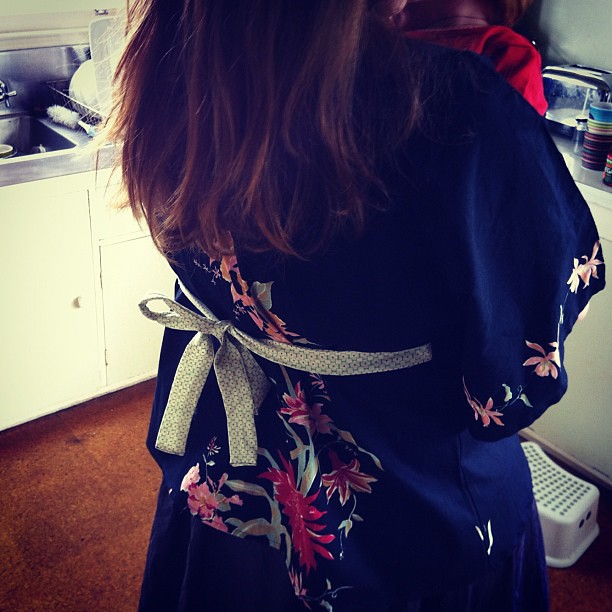
Today I had a moment or three to spare, so I sewed some fabric ties from some Japanese quilting fabric I had tucked away. I attached them just below the armpit by picking a little hole in the seam and re-sewing.  So the top half had instant shape and nice long, breezy sleeves.

Top

The bottom half quickly became a very light, breezy skirt. Super dooper comfy and great for the beach, or garden, or home... anything.

Skirt

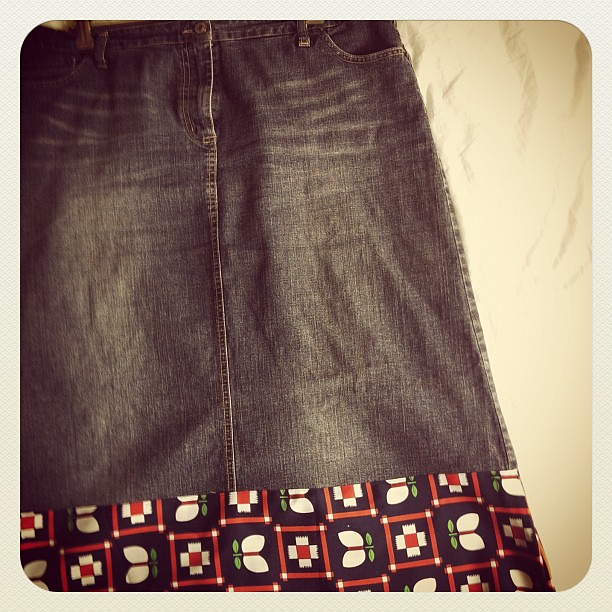
Then I glanced at the bottom of the pile at an old denim skirt I wore before owlet times. That almost makes it vintage... Really comfortable and the shape suits me well, but the length. Ugh. Ankle length denim skirt? Not so much.

So I chopped the bottom off it.

Skirt

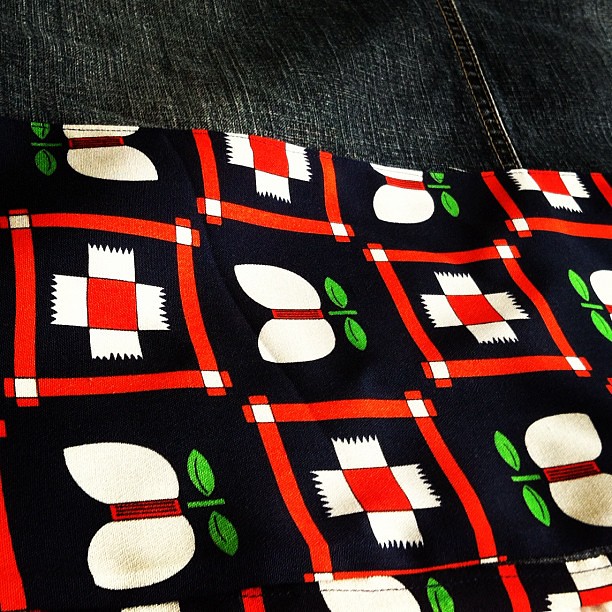
See the pattern here? Then I stood in front of my fabric shelf for a really long time. And I pulled out an old fave piece of vintage Japanese scrap fabric and played with it. I had just enough. Exactly. Amazing.

Border

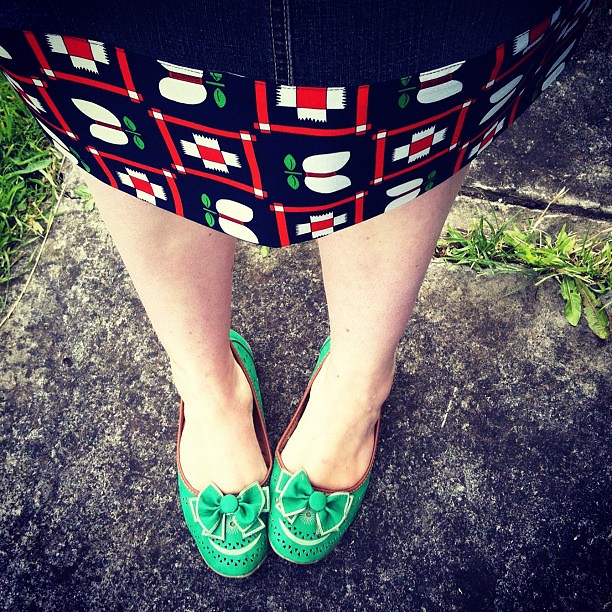
So I made a border and found it works with all my shoes and clothes and I rather like it.

Skirt

Brilliant stuff. I now have three extra pieces of clothing to play with. And all it cost me was $5. I'm going to attempt to post about more things I make, while I make them. I'll do a little Christmas catch up too. I'm also making a return to making things for the owlet shop and a return to markets! Yay! I'm really excited to be invited to participate in a revamped, beautiful local market, a couple of times this year. So there'll be lots of making going on. Watch this space...