Showing posts with label ranting. Show all posts

8 March 2019

Women and the mental load of waste-free living (+ a soap recipe)


There's an elephant in the room, when it comes to waste-free living. In the majority of households attempting to reduce their waste, it is still largely the work of women. Women often have the desire to make change in practical ways, and carry the burden of researching and strategising ways to implement waste-free shifts in their households. Women and children worldwide are also most likely to suffer the impacts of environmental issues and poor waste-management. It's been well documented that women are at the forefront of the actual day-to-day work of environmental change. Anecdotally, Oberon and I have seen it in the Facebook group we run (Zero Waste Tasmania), where more than 80% of members are women. And across social media, the majority of accounts devoted to the practical business of zero waste living are women. Women are the ones buying our book, although hopefully the men in their lives are reading it and trying things, too, and we've addressed this in the book. Waste-free living doesn't have to be burdensome. In fact, it can be joyful and enriching as you find a closer connection and care for nature. It's even fun! But in our home, it's fun, and not burdensome, because it's shared.

Women carry the mental and physical load of waste-free living, and we need to see that shifted. It has to shift for more of us to be able to make space to take more waste-free living practices on. It was the manufacturing of plastic packaged products and 'convenience' foods that simultaneously gave women freedom from their homes and created the huge environmental problem we face today. Meanwhile, men have, for the most part, carried on as usual, embracing 'convenience' products and being left somewhat off the hook. This has to change, for all our sakes, but especially for our children who will discover the full effect of choosing 'convenience' over responsibility.

But for today, on International Women's Day, I'm going to leave the mental load of pushing for that shift to the men-folk (thanks, Huz), and recognise and celebrate the women who have done so much practical work to care for their families, their homes and our planet. I'm often drawn to think, on such days, of the people who lived on the patch of land where I live, before me. First the muwinina women who cared for it so very well that only a midden and stone fish traps by the foreshore remain as evidence that they'd impacted this land. And then the farmer's wife, who possibly seldom made it to our patch of the orchard while she tended her home and garden. Or the housewife who lived here before us, who saw fit to install lots of small cupboards for their preserves, which inspired me to think about filling them with preserves of our own.

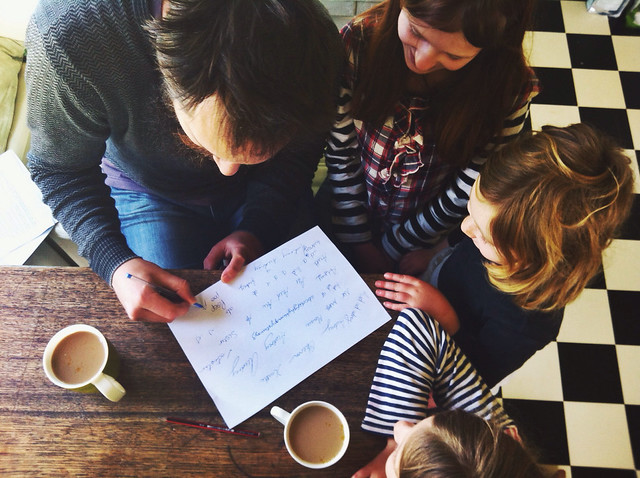
While we were in the process of compiling recipes for our book, I visited my Mum's place and she pulled out a couple of notebooks she'd had stored away. Simple notebooks featuring beautiful handwriting, on plain, lined paper, yellowed now from age. The pages were filled with recipes and notes, taken by my two grandmothers, who began them as young, newly married housewives. They began writing them towards the end, and immediately after WW2, and both notebooks reflect how they were striving to stretch their resources further when they were required to keep their homes running, and families fed, on very little. It was a time when food was rationed, Victory gardens were encouraged, and wasting food was illegal or very much frowned upon. And women bore the brunt of that work.


As I turned the pages of hints & tips, so often shared by friends or in newspaper articles, government publications and magazines in a time before Google, I found many that looked like the handy hints we've come to know and love, in our waste-free living travels. But one of my favourites as I flicked through, was my maternal grandmother's method of using up all the old soap ends to make new soap. I snapped a photo so I could bring it home to try. I never met Doris, my mum's Mum. So having a little routine of hers in our own family rhythm seemed like a wonderful idea. So we saved up the soap ends, and gave it a try.


I had to do a little tweaking and estimating to quantify things like how many soap ends a family might make in 3 months, or how big a small cup or her pie dish might be. But we got there in the end. I was delighted to share the making of it with Little Owlet, and I'm happy to say it worked well. And so we have olive oil scrap soap in our home, stretching our resources further, and creating a beautiful product from old, as my grandmother did. Here we've shared the recipe, as you can find it in our book. It's one that's dear to our hearts. 

MAKE THIS :: Olive Oil Scrap Soap

What you'll need:
1 cup soap ends
1/2 cup olive oil, plus extra for oiling 
soap mould - a small glass baking dish works nicely
1 cup water

STEP 1
Grate the soap ends and place them in a
saucepan with water. Make sure the water just covers the soap. 
STEP 2
Place over a medium heat and stir well until
the soap fragments have dissolved.
STEP 3
Remove from the stove and add olive oil,
stirring well.
STEP 4
Beat well with a whisk and, while the
mixture is still warm, pour it into an oiled
dish or mould.
STEP 5
When the soap block is completely cold,
turn it out onto a board and cut it into
squares.
STEP 6
Leave your new soap bars to harden for
a few days before using. 

........ 

Our book 'A Family Guide to Waste-Free Living' is available in all good bookshops (including ours!), and libraries now. Published by Plum Books and featuring photographs by Natalie Mendham, who also took the first picture in this blog post. 

~ Lauren. xx

20 April 2018

Live well, without recycling


Once a fortnight in my street, and in many streets around the country, people roll out their recycling bins for collection. Kerbside recycling is now the norm for many people, despite only being introduced in most areas during the 1980s or later. People are generally well accustomed to paying attention to what materials their waste is made from, and sorting into the appropriate bin. But situations change, and I think it is time to rethink our attitudes and approaches to recycling.

You may have heard that from Jan 1st 2018, China stopped accepting a range of recyclable materials from Australia. This means that an estimated 619,000 tonnes of stuff that used to be shipped away for China to deal with (e.g. China would recycle plastic into things like rubbish bins), now has to be managed in some other way. Under the previous process, recyclable material would have made a chunk of money for those in the recycling industry – around $500 million dollars a year (for 600,000 tonnes). But now the recycling industry and people within local councils (who collect, sort and manage waste collection) are scrambling to figure out what to do next.

One of the consequences of China’s import ban is that some municipalities might start sending the contents of kerbside recycling bins straight to landfill. Blergh. What a waste. All those jars, cans, bottles, paper and other recyclables that were rinsed, sorted and put in the recycling bin by YOU – now sent to landfill with the rest of the waste from regular waste bins. So far, Ipswich City Council, southwest of Brisbane, has stopped kerbside recycling (although the latest news is that they may have reversed this decision). There is a risk that other councils will retract their kerbside recycling if costs become untenable (in the absence of the cheap, send-to-China option). 

Many councils are stockpiling; hoping and waiting for a local solution to recycle or manage recyclables in a way that avoids landfill. But stockpiling can get expensive and hazardous, and local recycling solutions are few and far between. Councils might start increasing household rate prices to deal with the increased quantity of recyclable material that has to be managed locally. Others might beg the state and federal governments for money to fill the gap. But that won’t solve the longer-term issue of what to do with all the recyclable waste material generated by people in Australia each year.

There have also been whispers of new ‘waste to energy’ schemes being established in Australia to deal with ‘residual waste’ (i.e. waste left over after recyclable material is sorted out). Even the national environment minister is keen on the idea. This might follow along lines of waste to energy plants in Europe and elsewhere. But these, are, in my view, not sustainable long-term solutions. Waste-to-energy plants do little to discourage consumption of harmful plastics and other materials, because those materials are what keep the power plant operating. Waste-to-energy systems do not reflect a closed-loop system, but rather, a slightly elongated linear one. And they still produce waste (approximately 25% of the volume of waste inputs are outputted as a toxic ash, for landfill). We need to do better.

We CAN do better!

The solutions are already all around us. Zero waste solutions, particularly those that provide ways to refuse or reduce quantities of certain types of packaging and waste, can empower you to avoid all this recycling (and landfill) malarkey altogether. And you can start now.

You don’t have to wait for your local council to act. You don’t have to ‘wait and see’ if new recycling plants will be built in Australia, or wait for waste-to-energy plants to be built to deal with all your waste. You don’t even have to wait for some magic plastic-eating enzyme product to hit the shelves. There are actions that can be taken immediately to address the problem of the millions of tonnes of waste going to landfill and recycling. Try these:

  •           Make that decision to commit to avoiding waste. Not just for straws or plastic bags, but for all the things you consume, including those items whose packaging you were normally put to recycling. It’s not as difficult as you might think. Once you’ve made that conscious decision to actively avoid waste (including excess recycling), then many of the other answers you need are out there!
  •           Get informed! Join your local zero waste group. And if you don’t have a local group, Zero Waste Tasmania (which we run), accepts people from all over.
  •       Scout around for alternatives. Think hard about what foods and ‘stuff’ you really need to keep you well-fed and happy. Can you find packaging-free alternatives? Or if you can’t find packaging free options, can you use your own packaging, or only buy compostable packaging.
  •       Get composting – for many people, more than half of their waste comes from food scraps and organic matter. If you can nail a good composting system that suits your home context, then you might be able to halve your waste!
  •       Get talking! The solutions that work for one person don’t necessarily work for everyone. So, talk with your family and friends, your local shop keepers, your social network, and help each other problem solve ways to reduce or avoid certain types of packaging. Think of refillable options instead of single-use, look for home-compostable packaging over plastic, and consider home-made snacks and sweets (or bulk bought ones in your own bags) over plastic-wrapped ones. If you’re stuck, ask online – and the hive mind of your zero waste group will respond, often with more ideas than you can poke a stick at!
  •       Get activisty! Speak up and write to government representatives, businesses and product manufacturers and tell them what changes you'd like to see that help to reduce waste. What products do you think should be better regulated or banned, and what packaging needs to be replaced or eliminated? What other positive actions can you encourage?

The previous situation (sending our recycling to China) was not environmentally sustainable. I mean really, how many plastic rubbish bins do we need in the world? The current post-import-ban situation is also not good, but it is prompting Australia to take more responsibility for its own waste – its own mess. Let us not fall back on harmful, out-of-sight-out-of-mind solutions such as stockpiling and waste-to-energy. Let us use this as a flag to pay more attention to our own waste, and to look for ways to avoid it in the first place. We live in such a geographically large country that recycling is inevitably limited in its efficiency, due to long transport distances and hence, fossil fuel inputs, involved. All the more reason to reduce and avoid waste in the first place.

Oh, and the photo above, shows our little owlet holding the sum total of one year of our recycling. What is more significant is what you don't see - 26 recycling bins of recycling avoided, for each year that we have lived waste-free. This waste-free lifestyle has proven to be quite easy for us, and so we think it is totally doable for many other people in Australia to live similarly, by applying solutions that work for their own circumstances.   


This Sunday is Earth Day! This year’s campaign is around the mission to end plastic pollution. To support this initiative, we are offering our Zero Waste Families e-course for only $10 (which is more than 50% off RRP) between now and midnight Sunday. The course is designed for you to do over a four-week period (or at whatever pace suits you), and aims to provide many solutions for living without waste. Use the coupon code EARTHDAY2018 at checkout, to claim your discount on our e-course.

~ Oberon.

1 April 2018

Should I leave my plastic at the counter?


The other day, a few friends shared with me (Oberon) a UK viral video about plastic, and it got me thinking. In the video, a group of supermarket shoppers collectively do their grocery shopping, but when they get to checkout they all remove the plastic packaging from the bought items and leave it on the counter as a sort of plastic protest. The video describes how the group wants supermarkets to take more responsibility for the overuse of plastic packaging in the products they sell. I find it interesting to think about the issue of ‘who takes responsibility’ when it comes to packaging waste. So, who is responsible for single-use waste plastic packaging? I thought I’d ‘unpack’ (pun intended) the issue a little.

There are four main players (probably more) to consider – governments, producers, retailers, and individual shoppers. You could also add other players – media, insurance companies, packaging designers (note the saying ‘Waste is a design choice’), oil companies, plastics manufacturers, waste and recycling managers, industry regulators, and more – but I’ll set these others aside for now.

Let’s look at each of the first four players I mentioned:

GOVERNMENTS

Each level of government (local, state, federal, plus international obligations) has different responsibilities and capacity to influence single-use plastic packaging. The Australian Government regulates and manages waste at a national level and administers the Australian Packaging Covenant, which is a sort of ‘soft’ regulation, requiring big businesses to report on the steps they are taking to reduce and better manage packaging.

State Governments have responsibilities around pollution and managing all sorts of aspects of community health and well-being (and waste), but regulation around plastic packaging is not generally offered, unless there is lots of pressure from elsewhere (e.g. peer pressure from other states, or strong lobbying from individuals/communities/local govts). State governments do have the potential to enact fantastic positive change around single-use plastic packaging, but they have to have the will.  

Local government is where (I believe) the greatest in-roads can be made in terms of regulating use or sale of certain types of plastics, but the sphere of influence is limited, to the municipality, and also to limited certain business contexts – e.g. Hobart City Council are banning single-use plastic packaging for takeaway food, but are unlikely to be able to ban all the single-use plastic packaging that lines every aisle of a supermarket.

PRODUCERS

Producers (the people who grow the food and make the supermarket products) vary greatly – some give attention to environmental impacts, whilst others completely avoid them. Some will give the impression of addressing environmental concerns, such as by calling something ‘eco’ or ‘natural’, whilst continuing to sell harmful products. Producers often sit between a rock and a hard place – they are bound by governmental regulation (e.g. food packaging laws) as well as retailer contracts that may demand certain products be packaged in plastic (e.g. spinach leaves or strawberries), in order for the product to work within the long supply chain of a supermarket. Many foods in Australian supermarkets have had to travel long distances, and with that comes additional requirements for certain types of packaging to keep food fresh and undamaged. Whilst producers can look for ways to avoid plastic packaging of their products, the alternatives may be cost-prohibitive or a legal nightmare – just look at the struggle Elgaar Dairy (both a producer and a market retailer) have had to go through to provide milk in returnable glass bottles.  

RETAILERS

Retailers also vary enormously, from the massive multinational corporations, down to little Jimmy selling lemonade on the nature strip. But all retailers choose which products they want to sell, and this includes choosing which items they will sell that are wrapped in single-use plastic. Plastic is cheap, and so many retailers are reluctant to avoid its prevalent use. Big retailers will run the argument that customers demand certain items be wrapped in plastic, or they will say that they are simply offering customers the variety of options that they desire. They have control over packaging of home-brand lines, but rarely do anything to reduce the plastic in them.

Big supermarkets now have automatic electronic checkouts, (which, as an aside, cuts jobs), and (say they) require additional plastic packaging to appropriately use the automated checkout system. This is partly why you’ll often see the organic produce in supermarkets is plastic-wrapped. Big supermarket chains will continue to sell what the customer buys, and are strongly driven by their profit margin, with only tokenistic attention given to things like waste and environmental impacts. They will continue to respond to the dollar signs, and rarely to complaints to their social media walls. A couple of years ago, I initiated and worked on a #PlasticFreeProduce campaign to encourage supermarkets to reduce the plastic packaging of their fruit and veggies – but it was like water on rock, as the supermarkets have strong bureaucratic defences, sending out a lowly customer support person to respond to our concerns, offering the same stock standard (weak) responses, and demonstrating very little to no positive change at their end.  

Fortunately, there are some retailers who prioritise packaging and waste – these businesses deserve higher support and their business models encouraged. They are not the focus of the viral video I mentioned above, but they are relevant to the solutions to the problem.

INDIVIDUAL SHOPPERS

Individuals have more power than they know. Whilst we each appear to be a mere drop in the ocean of customers that frequent big retail stores, our influence (including our absence from those stores) is apparent. When you abstain from buying a certain plastic-wrapped product from a major chain supermarket, and choose instead to grow your own or support a small, ethical and local producer, then you are sending multiple positive messages. You will both reduce the sales of harmful items from supermarkets (which can lead them to discontinue items or consider alternatives) and also promote local businesses to flourish, or (if you grow your own) demonstrate self-reliance – which is a fantastic way to reduce waste.

But what about the fact that it is still just a drop in the ocean? Well, my family have limited out waste over the last two and a half years to little more than would fill a medium-sized glass jar. We’ve also stopped shopping at supermarkets and now source food from local, ethical businesses, grow our own, and barter. The (roughly) $250 per week that we used to spend at the supermarket each week is now supporting a healthy local economy. That equates to around $30,000 that we have taken from the sales of major supermarkets, and divested into businesses that prioritise or support zero-waste approaches. Doing this helps to those smaller ethically-driven businesses to offer items at more competitive prices. Also, supporting local is also great, because it is generally easier to open up a dialogue about waste and improved waste-management, because you can speak directly to the person who can influence production and sales.

That is not to mention the 5 tonnes or so of landfill that we have avoided (compared to the average household over 2.5 years), and the numerous tonnes that would have previously gone to recycling (which we now avoid, compost or burn for heat). And then there is the influence of this ‘passive’ activism – others have been prompted to make changes in their habits, upon seeing that living with much less waste can be possible, cheaper and more convenient that the supermarket trawl. There are now around 7000 people in Zero Waste Tasmania, and other zero waste groups that have started in response to this group. Many others are enacting positive change in their area and discussing ways to reduce waste. Maybe it’s not a drop after all – maybe it’s the start of a wave.

It should be mentioned that neither individuals, producers, retailers or governments, hold all responsibility for waste. But each group have things that they have high influence over, that they could be doing more about, especially when they are informed about the harmful impacts of existing practices. I will also add that none of these four players act completely independently – there is an interplay within and between all four – and I believe that effective, positive outcomes are more likely if the dialogue remains open, informed and courteous. But remember, governments don’t have to keep single-use packaging legal, producers don’t have to keep wrapping everything in plastic, retailers don’t have to keep buying plastic-wrapped goods, and individuals don’t have to buy plastic-wrapped stuff. The responsibility is indeed shared amongst all these groups.

So, back to the viral video mentioned at the beginning of this rant. Those shoppers who bought plastic-wrapped items, only to remove the packaging at checkout? They want to absolve themselves of responsibility for the packaging and put the onus back onto the retailer. My problem is that those customers are still choosing to buy the plastic-wrapped products in the first place. The retailer’s bottom line is unaffected. The cost to remove the discarded plastic packaging is minimal (whether they landfill it or recycle it). Mountains more plastic is used in the bundling up of goods on pallets at the back of the store, and during other steps in production and transport. The plastic around the product is merely the tip of the waste iceberg for most items in a supermarket. And the customers have the option to simply not buy those plastic-wrapped items. Most fruits and vegetables can be bought unwrapped at supermarkets, and basic needs met by buying items elsewhere, from local grocers, shops, bulk food stores, markets, community gardens, co-ops, butchers, delis, etc.

The viral video does not offer solutions, nor does it demonstrate willingness by those customers to actually change their own behaviours. But many people CAN change how they shop, get their food, and meet their own needs. The viral video shows does have the effect of showing off just how much plastic is wrapped around items that supermarkets sell. But just filming items on the shelves will do that, right? – you don’t need to buy and remove the packaging to see what it is made from.

We can’t keep hand-balling responsibility around. Seeing supermarkets argue that they are merely responding to customer demand (by offering plastic options), whilst ignoring those who argue to remove plastic, is simply exhausting. Conversely, demanding change from supermarkets when there are perfectly valid and do-able ways to live without them (e.g. see our book ‘Bountiful: A family guide to waste-free living’ to be released later this year! *nudge, nudge, wink, wink*) by following any number of ‘zero-waste approaches’. The short- and long-term solution is for individuals and local communities (including businesses and governments) to adopt new, and environmentally-much-less-harmful paradigms – ones that do not rely on multi-national corporations who demonstrate little care for environmental impacts. If they did care, the supermarkets would have stopped selling single-use plastic products decades ago.

Good in-roads to broad, positive change (e.g. community level and bigger) can be made in various ways. But first, we should take a little time for self-reflection – what can we do as individuals and households to reduce our own waste? Once we are informed about the waste we produce, and take steps to reduce it, then the barriers to further waste-reduction becomes more apparent. You may find that you can live without supermarkets, but that you hit waste barriers when you start focusing on the waste associated with clothing, electrical goods, or travel. For each wasteful item, there can be a number of ways to address it. If you have the time, learn about their production system, business ethics, supply chain, and their organizational context. It may be worth writing to them to highlight a concern, but if you do this, offer solutions as well. Refer them to other businesses who are leading the way on a particular issue, so that they may aspire to improve practices.

Also, write letters and emails to your local government aldermen or members of parliament – people who are in positions to vote on motions for positive change. If you’re in the know on and issue and you think the council member is not, then inform them!
You may also want to let retailers know why you’re opting out of their products, but in the case of big multi-national corporations, don’t expect to see much more than a scripted, copy and paste response from them. In the case of the viral ‘plastic protest’ video, the customers aren’t really opting-out of the products, so the argument for leaving the packaging on the counter is confused.  

Leaving plastic product packaging at the counter is, in my opinion, akin to leaving a big steaming turd on someone’s doorstep – it is only going to incite annoyance and anger, but does not offer any solutions to the waste problem. It is an act of despair, of waving hands in the air and saying ‘What can we do, it’s all your fault!’ At best, such action might prompt discussion, albeit confused discussion.

Activism can be a useful strategy to push for broader shifts towards low-waste lifestyles and processes, but such actions will be more effective if they are solutions focused and not simply buck-passing. A great example the sort of positive activism that I mean, can be seen in Plastic Wise Taroona, who approached local, medium-sized supermarkets and negotiated for them to ditch plastic shopping bags, whilst offering reusable cloth bags instead. This action was collaborative, co-operative and mutually beneficial to businesses, customers and the local environment. I’d love to see similar, innovative solutions and cooperative approaches put in place to address waste problems elsewhere.  

As parents, Lauren and I encourage our children to take responsibility for themselves, and for their waste. We don’t want them to feel helpless in the world, or to constantly pass the buck on issues that they can actively control. We’d rather they problem-solve, and we encourage them to be self-reliant. The goal posts of this planet are constantly changing and so we want to equip our children such that they can adapt to changing times, with novel solutions.

~ Oberon

12 May 2016

Zero Waste is impossible. But it's worth striving for, anyway.

We've been living waste free for over eight months now and although it's brought challenges, we're really happy with it as our way of life. The natural changes that have come to our life by focussing on this one permaculture principle, "Produce No Waste", are astounding. Aiming for zero waste is a shift towards a simpler, more minimal life. It's a shift towards working with the seasons and deepening our understanding of food and how it grows.  It's a shift towards building connections with the community, through engaging in conversations and being resourceful through bartering, sharing and swapping. It's a shift towards actually making a difference to the planet we inhabit and creating a new normal for our children. 

The term "zero" is, of course, a misnomer. Through the manufacture and production of most things in our waste-free home, there is inevitably waste. We visit the bulk food shop where products have been transported in large plastic bags which go on to be repurposed or recycled. There's less packaging and only purchasing exactly what we need. But there's still waste. When household items break beyond repair and have outlived their usefulness, if they're not compostable they are recycled, or worse. There's still waste. There's inevitably some degree of waste in the connection between us and our food and the things we need. But does that mean we shouldn't strive for zero? 


With zero as the goal, there's a quantifiable amount of waste we can keep in mind when shopping or disposing of things. Zero can be quite unforgiving, but it makes sure the most important of R's, Refuse and Reduce, are at the forefront. It avoids complacency. It makes us think about each and every item we bring into our home and question how essential or truly wanted it is. Is it worth the waste? 

Zero-waste living is a mindfulness practice. One of Huz's favourite analogies is that buddhists practice meditation even though they may never reach enlightenment. Another is that we might never be Beyonce, but that doesn't mean we shouldn't sing or dance. There's value in the process. Zero keeps us honest and accountable and even though we probably can't meet that absolute target of zero, it's a wonderful optimistic goal to strive for. And what the world surely needs now is some optimism. 


What are you feeling optimistic about right now? 

Have you ever aimed for something you knew you'd never absolutely reach, but went for it anyway?

Have you seen our latest e-course offering? Zero Waste Families begins on June 1st and we're taking enrolments now. It's filling fast! 

~ Lauren. xx

6 October 2014

Unschool Monday :: Privilege

image

It's one of those tricky questions that comes up… Education is, to some, a privilege that many over the world go without. Especially girls. Shouldn't we feel grateful for it? Without formalised education, how will they find their place in society as adults?

When we were talking with Big Owlet about Malala Yousafzai,  she asked us "But why would she fight so hard for something that we don't need?" And so began a lengthy discussion of the privileges of living in a small, peaceful island at the bottom of the world, with access to clean air and water and food and education. Of two parents who have spent long enough within the education system to pass on a large portion of our own formal learnings, should they be required. And with the freedom to give the owlets the kind of education and childhood they desire. And how so many don't have what we have. We are SO lucky.

image

But then we spend time talking about permaculture and then traditional or lost ways of doing things. About survival and living in the real world and what that might mean. About nature and what we can learn from just observing it… The irony that we're rejecting mainstream schooling and embracing life learning through permaculture, while less commercially developed nations reach for formal education with open arms,  isn't lost on us. And I can understand Big Owlet's confusion. The truth is, we're conflicted about the concept of formal education for everyone too, when we don't choose it for ourselves, and explaining the complexity of it to our owlets feels confusing, even for us adults.

Last week I finally sat down to watch the film Schooling the World: The White Man's Last Burden. I re-watched it with Huz yesterday morning and I may watch it with Big Owlet when I think she'll fully grasp it. I was a little gobsmacked watching it the first time. It cleared up a few conflicts for me and tapped away a little more at that deschooling process we've been going through for over 5 years now.

The film raised questions around the mass loss of culture and language across the world, brought on by the western education movement of the last 200 years. The fate of people educated in the school system worldwide. The ushering of people towards a consumer society and away from a sustainable one. Westernised education has moved quickly and with a defined purpose. Are people better off with it, or without? Lots of food for thought and although we don't have answers for Big Owlet yet, it does make us question our position on the supposed privilege we choose to opt out of. And the privilege we have to ponder such things.

If you have a chance to watch it, do. And let me know what you think, won't you?

Have a gorgeous week. xx

8 July 2014

Our tree...

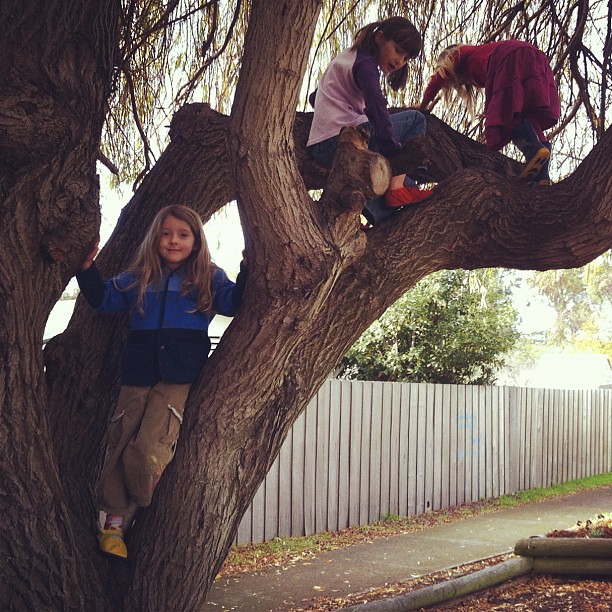
Up the tree at Co-op today #tree #unschooling
10155502_10152134872006137_7562052385901940666_n
10155914_10152110229121137_1864998896_n
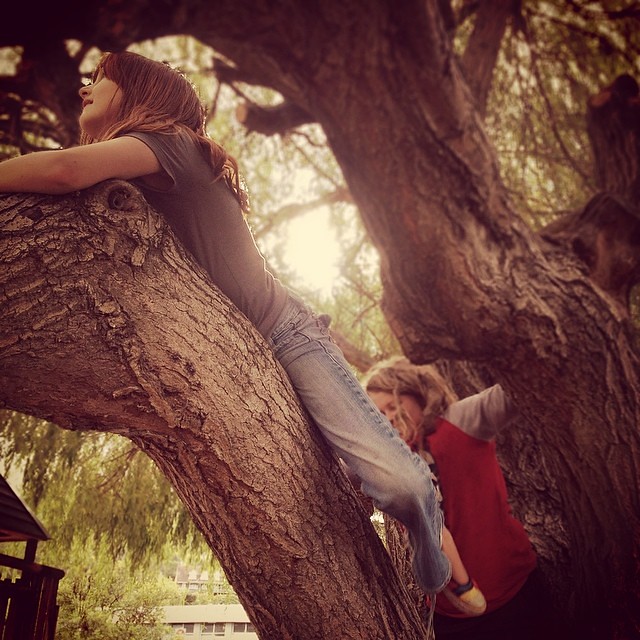
I've never climbed this high before! #climb #tree #climber
Bubbles at co-op
A little show before home time at co-op today #coop #hobartnaturallearners #homeschooling #unschooling #playmatters
Good mates hanging out #playmatters #hobartnaturallearners #coop
Another magical day at our co-op... pushing Tiny on the swing 'til my arms hurt! #happydays #strongarms  #coop #hobartnaturallearners

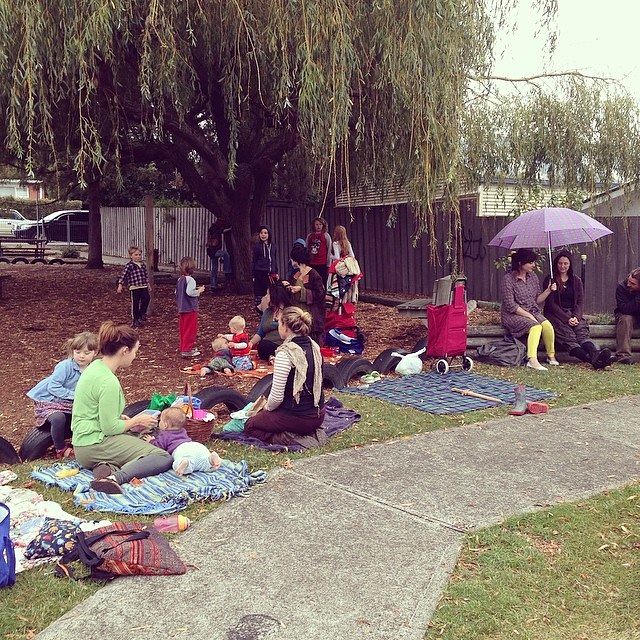
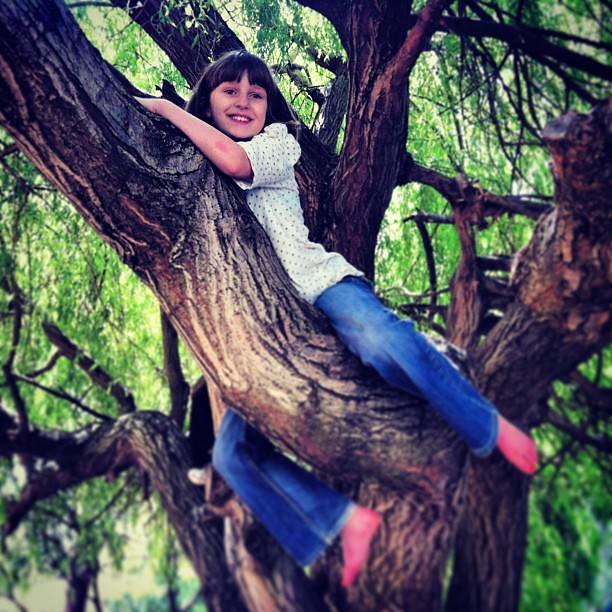
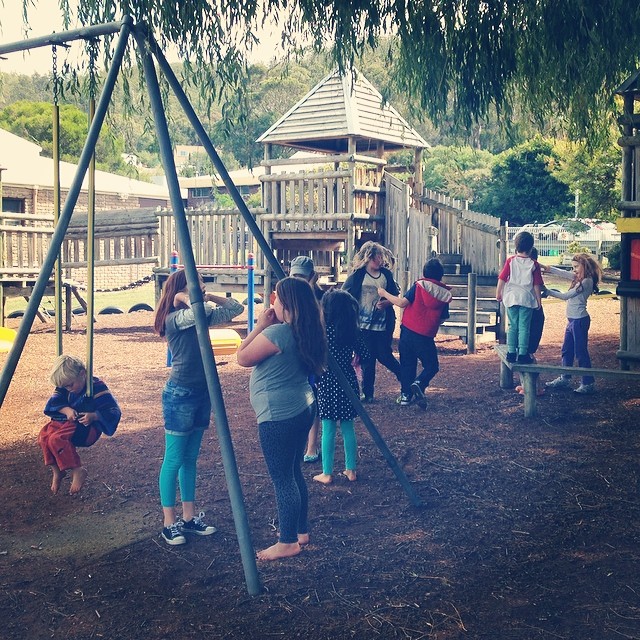
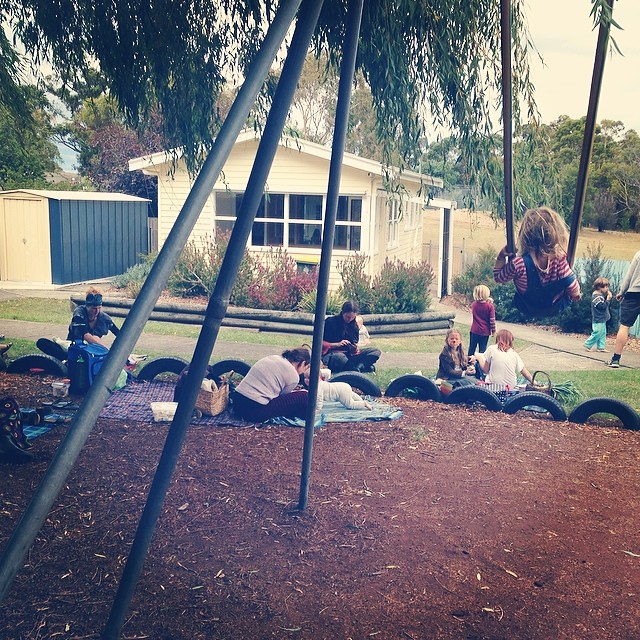
We've been meeting with friends at our co-op for almost three years now. In that time, much of the play  has been witnessed, supported and shaded by the branches of one very large and beautiful willow tree. Big Owlet and I had known the tree since her playgroup days in the big hall, when she was Tiny's age. She'd stand underneath and marvel at the shadows and light filtering through the leaves.

Since we began holding our Hobart Natural Learners Co-op meets in the playground, friendships have been forged, fought over and strengthened under that tree. The children learnt to co-operate and problem solve tying a rope swing on its branches. They climbed the larger branches gleefully, facing fears and observing nature around them. We've woven willow crowns and fashioned brooms and horse reigns from it's smalls branches. We've escaped the scorching Tasmanian summer sun and sheltered from light rain under that majestic tree.

Since she was a baby, Tiny has sat in the swing underneath, asking me to push her "higher and higher!" until her bare toes touched the leaves above… We've loved that tree. A beautiful regular fixture in our weeks.

So you can imagine our shock last week when…

10404478_10152312166676137_5554425921209901347_n

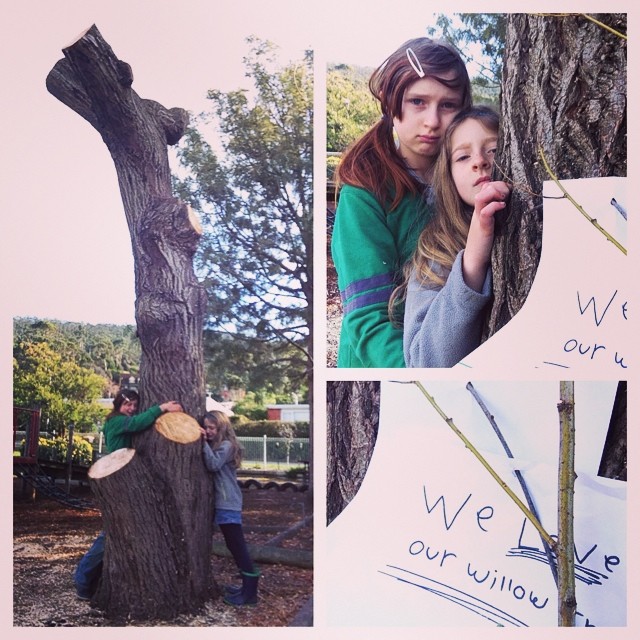
This happened.

The owlets immediately flew into hysterics and tears, greatly distressed at the loss of their tree. I must admit, I did too… We called Huz and asked him to contact the council to find out what was going on. He was put through to the head maintenance worker (let's call him gardening guy), who explained the situation to him and then marched over to us to explain further.

We were spoken to quite defensively and told "Shade sails are better than trees in children's playgrounds", and "Kids can climb trees in their own backyards". "What if you don't have a climbing tree in your backyard?" I asked. "Not my problem", said gardening guy. He also mentioned (I suspect it slipped out), that it was most likely a "financial matter" as "pruning the tree regularly to cut the branches is more expensive than pollarding." Uh huh. And therein lies the truth.

When we questioned the severity of the pruning, we were asked "Oh you're an arborist are you?" Not the most sensitive approach towards a group of people who were very clearly shaken and grieving. We were also told it'll grow back again, in a few years. Yeah.

It seemed to us that there was more to the story than a small amount of rot at the top of a couple of branches, despite the pictures we were shown of the tree before. Research tells us that pollarding perhaps isn't the best course of action for an old willow tree like this. It will shoot from the top, providing a light canopy in a few years time.

But the tree will never be climbable again, removing a potential liability risk for council, certainly. The look of recognition on the children's faces as they counted 35 rings on what was once their favourite climbing branch... They knew they'd never climb it again… "I'll bring my children here and they can climb it", said Big Owlet. I didn't have the heart to tell her that'll never happen.

The tree will be more susceptible to decay and disease now. Pollarding it will grow a smaller, light, maintainable canopy at the top, which will weep down if the council let it, but they'll not let any lower branches remain, as confirmed by gardening guy. And tiny toes will never reach for those leaves from the swing ever again.

The beautiful children who play in the playground every week, our gang, have felt a great sense of loss.  The playground is so stark now. It's beauty is lost forever. They picked flowers and branches (to stick into the tree in hopes they'd re-sprout) and drew pictures and left them for the tree before we headed off down the road for a fungi walk. When we returned an hour later, all of the gifts had been removed. We suspect  gardening guy was responsible for this too. Way to add to the grief of a bunch of small children, gardening guy…

The next morning, Little Owlet told me she woke up happy, and then she remembered. Our tree. Oh.

So we're feeling a spot of guerrilla gardening might be in order. Or yarn bombing. Or something that will honour our beautiful tree (and perhaps tick gardening guy off just a little). And make us feel a little less wobbly about being there now. And I'm considering exploring the realm of landscape design again, to provide access to natural play spaces for all. Watch this space…

Have you ever lost a tree you loved? 
What is the worth of a tree that provides shade and play for generations of people living in a neighbourhood, do you think? Should it outweigh maintenance budgets?
Do you think children should be able to climb trees in public places? 

Much love. xx


17 March 2014

Unschool Monday :: Social Awareness

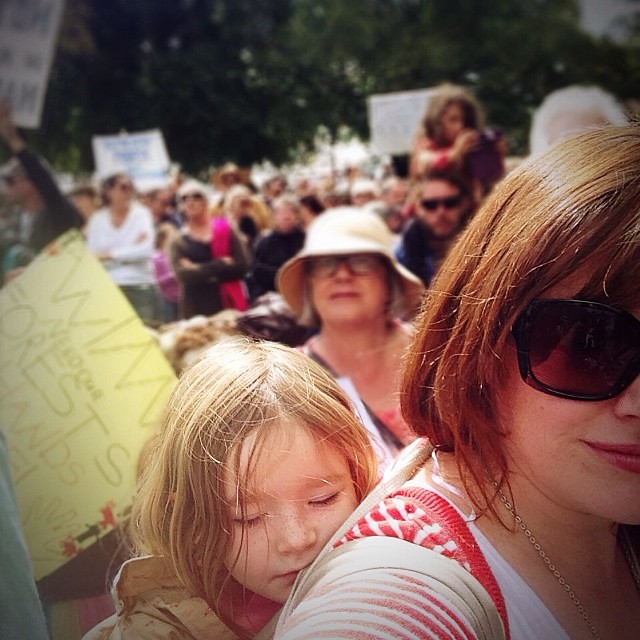
Sleepy protester #owletwearing #marchinmarch

It's a wonderful thing to watch an owlet grow into an awareness of people and things going on around them. To see their thoughts develop and change on issues involving others and how they might help.

At first it might be a response to an issue that affects someone they care about. Tiny Owlet, in her own way, gets why mining and dredging in the Great Barrier Reef, for example, might not be desirable…

"We have to go because they want to put mulch on Nemo's home" #3yoactivist #marchinmarch
"We have to go because they want to put mulch on Nemo's home." 
They might go through a phase of understanding issues, but not totally grasping why they are important, or that people as small as them can make a real difference. So they help those in their immediate surroundings. Little Owlet does this by cooking for her sisters everyday.
And then they gain an understanding of their emerging place in the world. They want to do something and look for ways to help.

Not in her name #notinmyname #marchinmarch #bigowlet

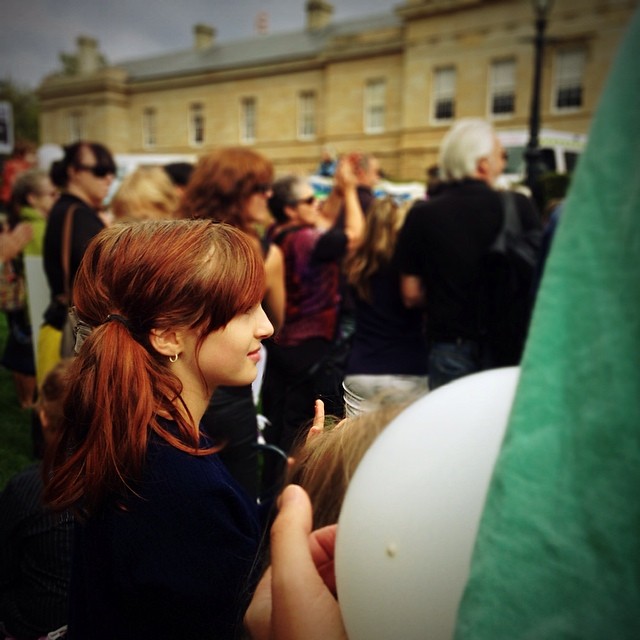
Yesterday was eye opening for Big Owlet. Over breakfast, we talked about the new state government coming in and how their policies affect our way of life. We also talked about the national protests happening over the past three days. The March in March, a motion of no-confidence in the current federal government. We talked about many of the issues under discussion; Tasmanian forests under threat, treatment of asylum seekers, cuts to the ABC… The list goes on and on, but those were the three that stood out for Big Owlet.

We read the owlets the children's book, Ziba Came on a Boat, for some perspective on asylum seekers. Then we discussed the reality of what might happen to Ziba as she neared Australia. Big Owlet stood, with tear in her eyes, and asked why children weren't allowed to vote. "Aren't we people too?" Then she demanded to go to the march.

It wasn't her first protest rally either, but the first that she cared about. And for the first time she saw she
could get involved and do something. A very empowering feeling for an owlet.

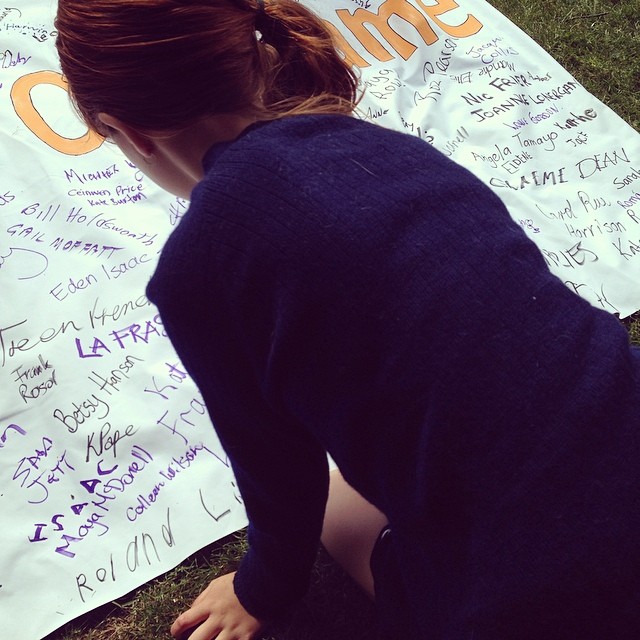
She signed her name to the big banner that said "not in my name". She stood there, clapping until her hands were sore, while the speakers spoke. She cast her vote. She cared.

Big Owlet cried real tears today when we told her about the rally and why it was happening. Frustrated that she can't vote, she really wanted to go. And she clapped 'til her hands hurt. Rallies always make me teary. All that passion among so many good hea

We listened to Tasmanian Asylum Seeker Support's Emily Conlan make an inspiring speech and and one point read a diary excerpt that claimed the people who make and support these rules, that we were there to protest, are made by people who were raised to be "obedient children". "May I never have an obedient child", she proclaimed… And we couldn't have agreed more as we clapped and marvelled at our own disobedient children rolling around on the grass at our feet.

We came away with a bunch of ideas for getting involved further. Letters to write, volunteering to be done, people to speak to, new friends to make. And so unfolds the beauty of this unschooling path.

Unschooling is, for us, about providing discussion and opportunity for owlets to develop an awareness of the world around them. I really can't think of a better place to do that than in the real world here, with real people, hearing real stories and finding ways every day to cast our vote, make a difference and care for each other and the world around us. There isn't a NAPLAN test for social awareness. But really, it should be one of the key things that all our owlets grow up with, don't you think?

How do you talk to your owlets about the hard stuff?
What do you do to help raise their social awareness?
Do you think social awareness is important for your owlets? Or not at all? Not yet?

Have a gorgeous week. xx


2 February 2014

Judgement

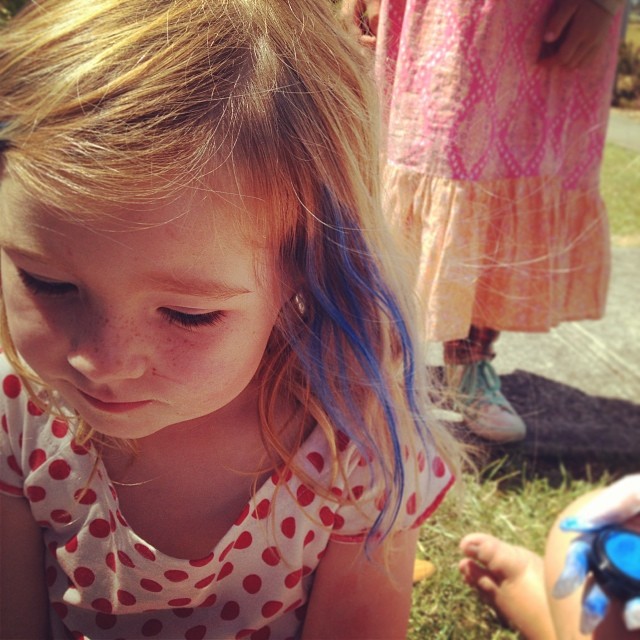
Tiny gets her tinted in her favourite colour at co-op #blue #hairchalk #latergram #coop

So I've been giving a little thought over the past while about judgement, being judged, judging others. Here's what I think...

It isn't helpful. 

This is where my dislike for labels comes into play. They allow us to quickly categorise so we can arrive at a judgement of a person or a thing sooner. So we can work out if they are for us.

It can feel hurtful to be misunderstood. Misjudged. And, especially on the internet, we humans can jump to conclusions and misjudgements rather quickly. We have a lot to learn about this still-so-new method of communicating and sharing thoughts. We get it wrong. Often.

This space here, where I write my observations of my family life and often through my owlets' eyes has, on a few occasions, been seen as judgmental. Perhaps you've felt it too? The mind can play tricks like that. It can make one's exclamation of joy seem like a personal attack on one's own character or choice of lifestyle. It can make us feel defensive. A happy owlet at my house can mean your owlet is somehow deprived. Which we both know isn't really true. Reading about another's happiness or choices can lead to reflection on your own, for sure. But is it a judgement of your situation? Most likely not. Usually it's just me soothing my own soul and remembering to take note of the good things...

A couple of weeks back, I ventured onto a local Facebook chat group. I've been and left before for various reasons; mostly I'm just too busy to have it constantly in my feed. This time it seems I was there to figure out my thoughts on judgement. One member posted a fairly provocative article. It had slightly  defensive undertones from an author who had likely been judged for her position. It was an opinion piece on bodily autonomy and kids. I happened to mostly agree with it. It was about hair. Just hair. No life and death thing. Unsurprisingly, many of the comments responding to the post were fairly judgmental and leaping to rather ridiculous conclusions. There was no real person to converse with, so it was all in, in that special one-sided way that happens on the internet... Anyhow, I felt uncomfortable about it. And not because it felt like judgement of me - it could have, given the state of Tiny's hair these days, but this wasn't particularly bothering me. What I felt most uncomfortable about was the assumption and statement that anything on the internet is up for scrutiny and judgement. If you put it out there, you're asking for it. I disagree.

Using one's judgement to figure out the right path forward in life is a helpful thing. Passing judgement on others is often hurtful. Instead of reacting in a defensive way, instead of feeling like the other person's way of life is threatening yours... Instead of feeling like you need to poke a heap of holes in the other person's argument/lifestyle/beliefs, maybe stop and think about it a bit... Sure, let them know it challenges you. Perhaps do some work on that yourself. Listen. Talk it through if you can. Let them know you disagree if you must. Maybe provide some insight on why you might think that and some information on why. Hopefully they'll understand it as helpful rather than judgmental...

But try not to belittle and try not to judge them to be bad people. And most certainly don't expect that they are judging you back. Probably they're just happily doing their own thing, getting on with living. Maybe they're letting you know that they think it's great just incase you might too. The internet can be a wonderful place for learning and communication, especially if we don't let judgement get in the way.

Have you ever felt judged?
Have you ever read a blog and felt self-concious about your life?
Have you ever felt a bit judgmental about something that challenged you? 

How'd you move through that? 

Happy week, lovely ones. xo


4 March 2013

unschool monday :: back to co-op

Besties #hangingatcoop #unschooling #love

The past month has seen us back to building our community around us, the owlets and me. It's been a difficult, long learning journey. We've had lots of ups and downs with it in previous years, but managed to get through with some supportive, genuine mates who make the days and weeks full of colour and fun at our little homeschool co-op.

Mama selfie #hangingatcoop #picnic #latergram

We look forward to the time to relax, play and share conversation and food among friends... nourishing in so many ways.

Tiny selfie #polkadots #selfie #gianttoddler

Tiny loves having the time to wander among the big kids, following their play and getting involved when she can. And the way they accept her as part of the gang... Actually, she doesn't give them much choice - haha!

Art and raindrops at co-op today. #rainyday #art #unschooling

This year our natural learners' co-op has moved from meeting fortnightly to weekly, meaning regular, familiar play and what feels like family building around us. The older children in the group tend to dictate the direction of play and what activities we participate in, while families bring along things that might be of interest... strewing their path, if you will ;)

Our group has gone from huge to tiny, and occasionally big, depending on whether we provide a workshop or not. People like the certainty of a planned activity and in those weeks, our numbers grow exponentially and people come and go at other times, keeping it interesting. For the most part, we plan not to plan too much, following the energy of the group and relying on members to suggest and organise things if the inspiration strikes. What we've learnt is that it requires effort to maintain a constant organised enthusiasm and regular organised workshops for the sake of attendance... It becomes overwhelming, for everyone, and unsustainable. Somehow it doesn't feel co-operative.

It also takes a bit to let go and get over the feeling that your type of community is not what everyone is after, when for you it is the best thing! Throwing your heart out there and welcoming people, friends and strangers, who then decide whether they fit, hoping they do... Somehow organised activities, entertainment and educational workshops take the pressure off people needing to examine whether your community is for them. It removes the responsibility of active participation and co-operation. Whether they want to muck in and be part of it all.

In groups, people assess whether there are enough children of the right age and sex, whether they'll be bored or shy, or challenged. The concept of a co-operative collective is challenging and people often miss the point that there's an opportunity, by contribution, to bring what they want to the group. That the group is as fulfilling, exciting and enriching as they want it to be.

Sometimes I've wondered if one of our teething issues might be because the concept of community and unschooling is not for everyone, and an unschooling co-op might be what this thing actually is... Sometimes I think this has been a de-schooling process for me. Learning to let go and relax. Sometimes I think that others might view the social structure of schools and same-age grouping as important for them -  a valid choice, but not so important for us... Sometimes I wonder if people persisted, the others they are looking for might join in too. Community grows from participation... Sometimes we've just scratched our heads and wondered at it... But right now, this easy go-with-the-flow attitude seems to be working and there's a strong growing bond among families who come weekly, or just when it feels right.

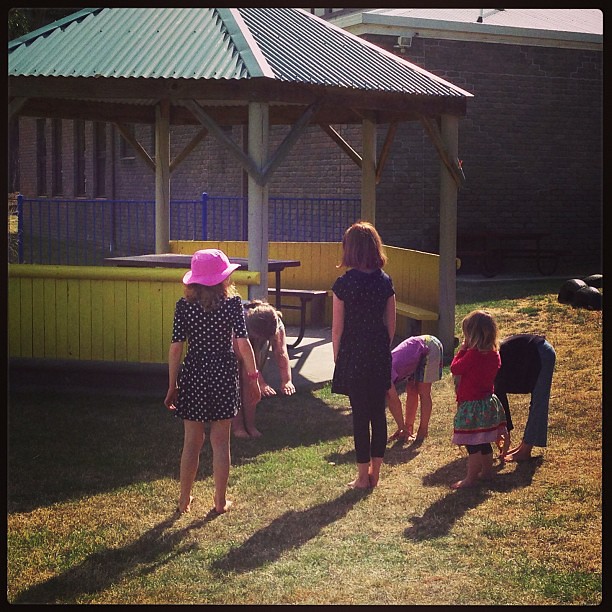
Cooling down and stretching it out after a hard day of play at co-op #kidsarefunny #unschooling
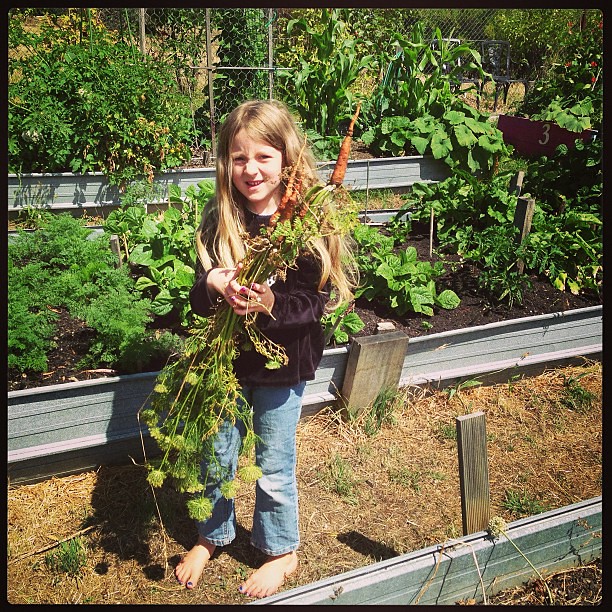
Carrots! #oldweedyones #unschooling #community

For us, the important part is the time spent together, getting to know one another. Mucking in and growing something slowly, organically, with hope and fun and enjoyment in mind.

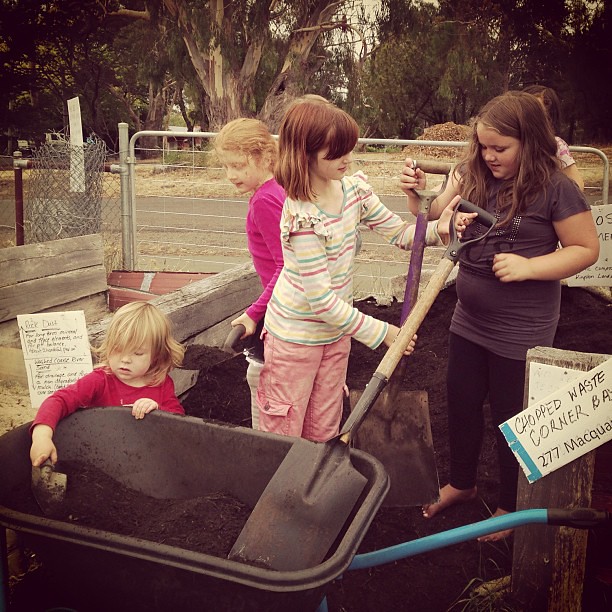
Working together at co-op #gardening #unschooling #naturallearning #kitchengarden
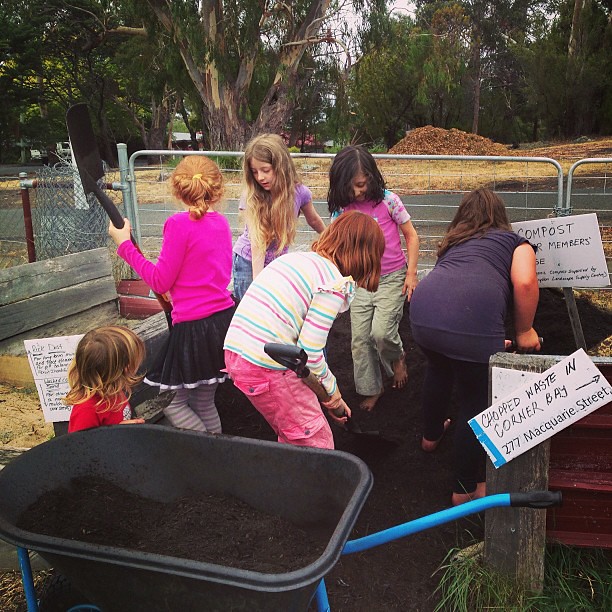
"Why is the compost warm?"... And other observations and topics of discussion among our barefoot co-op gardeners #naturallearning #unschooling #gardening #kitchengarden #coop

Sometimes the weeks where nothing is planned at all, where we trust in the spontaneity and dynamics of a group of kids to dictate the days and the direction they follow, are the best. The easiest. The most organic and the ones where we all learn together. Discoveries are made, social structures are worked through, problems are solved and experiences are shared just by sharing a space and sharing our interests... Those days set the direction for the weeks to come and by trusting in the group that we are growing together, this learning journey, these unschooling days, become so full and nourishing. I'm excited for what's to come for our tiny group and hopeful that it continues to grow and flourish.

Are you part of a homeschooling/unschooling co-op?
Do you help run a group of people? Have you found it challenging?
Is community important to you?
How have you made it work?

Add your link below if you'd like to join in and linkup with unschool monday and reflect on your unschooling journey, or week or anything you fancy! xx


5 April 2012

Thankful Thursday :: Trusting Birth

birth

My heart hurts when I read or see most forms of news media these days. I actually just can't watch or read it much anymore. Most weeks it seems there's something pointing out why the choices I make for my family are wrong. That they make me selfish or militant or that I'm risking my child's health, or their life. It's a very personal decision, deciding how and where you do so many things when it comes to parenting, but one of the first huge decisions we make revolves around where we give birth.

From my own experience, when I became pregnant the first time and went to ask for options and advice, I was only given one choice. "Which hospital? Which Obstetrician will you be seeing?" I wasn't informed of my options. I was asked to pick a name off a list and hope that I got in because they all book out so quickly and if I wanted the hospital with the great food, I'd need to get in super fast. So I did and I felt so grateful. I put my trust in my care provider, as she urged me to do, and happily counted down days until birth. I was asked not to worry too much about the details, to just go with the flow, trust her, she knew what she was doing. As each appointment rolled around, I was trained to be used to hands inside me, a loss of dignity. "It's all part of it", she said. I was told to not worry about water birth, "the statistics show that it leads to a higher rate of epidural". A concept I've since found to be proven incorrect. But still, I trusted.

When my time came to birth my babe, it was at a time chosen by my care provider. It suited her schedule, fitting in around scheduled surgeries and before the weekend. My labour was induced, painful, difficult and quite without dignity, but still it was a fairly positive experience, so I trusted it was right. It was the best I could expect. But it had unlocked a hidden power within me. It was a defining moment for me and I felt like I'd triumphed, despite the odds being stacked against me.  I started to gather more information for myself. I read and talked and asked... I'm so thankful there were people to talk to and help me find the information I needed! I found there were other approaches and what had been so uncomfortable, what had gone against my instinct, was no longer an option for me. I learnt that to choose a birth that supported me did not make me selfish, for the mother and babe are so intertwined for those first moments and months, their health and survival depends on the respect shown them as a unit. I began to trust in birth and the process and that it could exist without all the technology and chemicals and machines that go ping! Birth works better where there is trust. No fear.

Photo 16

By the time I came to birth my third full-term babe, I trusted in birth and my own body so much that I was comfortable to birth my babe into my own hands, with my midwife in the next room, behind a curtain. She was there for moral support more than anything, her wise-woman presence providing the energy I needed. I also trusted that my babe could find her way to my breast in her own time and latch on without assistance. I trusted that our bond would be strong from the beginning. It was. Unlike her oldest sister, who spent her first minutes in the hands of strangers and was handed to me as a small, tight bundle, like a loaf of bread with a red, squooshed face and a hungry, confused mouth.  There had been moments in the hospital that showed glimmers, but until we were home, that primal instinct was suppressed. I was to expect that, and to trust that the midwives knew more than I did. It took me and Big Owlet until we were at home, in our own space, five days later, to really begin to connect. It took a good few weeks of processing and learning on my own, getting informed in my own way, that I learnt to trust in body, my baby, in myself.

So often we are trained to fear birth, to fear death and fear the messy bits in-between. We prepare for the worst case scenario. And even though there are so many natural processes that we don't have full grasp of yet, we are asked to trust the experts, because they know better than we do. But the truth is, we each have a power to know, to listen and hear what is right for us. Whatever our choice, we know when we need assistance and when we don't. If we put aside fear and trust in our primal instinct, we know. And when we are fully informed, we take responsibility for our choices, because we trust.

When things don't go to plan, that is where questioning comes in. Even if we trust in birth, life and death, it can be soul rattling. There is always grief and pain in loss. And there are always people who know better. Experts who believe they could have saved the day if given the chance. This week, a friend of mine listened as people told her they'd have saved her baby. That they knew better. They questioned how much she loved her baby, ignoring the obvious grief. Until she stood up and gave them a little insight into her journey. Into her unwavering trust in birth, life, death... and love. I'm so thankful that she gave so much of herself through this process, but it is a whole lot more than one person should have to take on and I think we, as a society, need to take responsibility for that. If her baby had been stillborn in a hospital, it would have, most certainly, been just one of those things... There'd have been no coronial inquest. In-fact, the coroner wouldn't have even been called, for stillbirth is more common than you'd think. It is part of life and what we accept when we create new life from love.

We need to trust that people make choices based on what they believe is right and that those choices are is going to be different for each and every person. There is no black and white. No absolute right and wrong when it comes to life and death and birth and all the messy bits in-between. It is organic and although hindsight might provide us with answers, in the moment there is only love and trust. My wish is that we'd learn to trust each other to make the correct, informed decisions for ourselves. That we'd learn to love, despite and because of difference, and not hate. That the internet was only full of support, rather than trolls. More information, less opinion. And that we'd not need to feel defensive when others talk about their happiness with their choices.

Tonight, I'm thankful for the people out there talking about their choices, even in the face of ridicule and hate. I'm thankful that they fight for the choices of all of us, and I happily stand alongside them. I'm thankful for the people out there informing us and helping us remember our own primal power. I'm thankful that they work to help us come from a place of love, rather than fear. Because in the end, life, love, death... it's all about love and trust.

Here's a snippet of an upcoming film that works to offer just that...


The fabulous women making the film could do with a little extra support to get it finished, but I hope you'll have a look, visit their site and give them a hand to do just that and share their labour of love. xx


I'm joining in with Thankful Thursday at Kate Says Stuff.

30 October 2011

Homebirth Awareness Week :: the sequel

IMG_4098_2

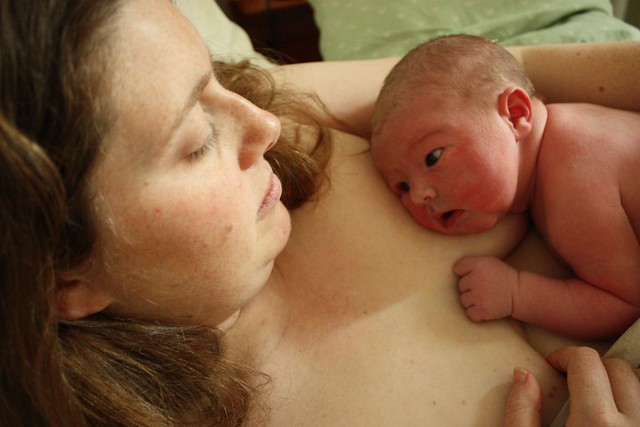
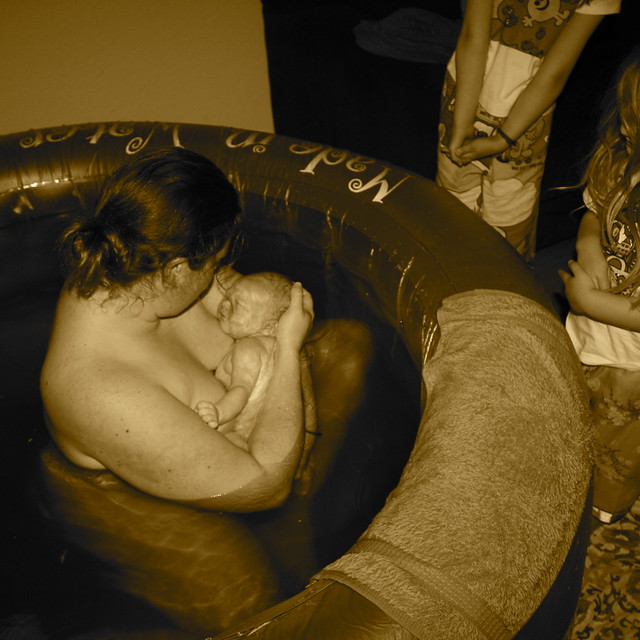
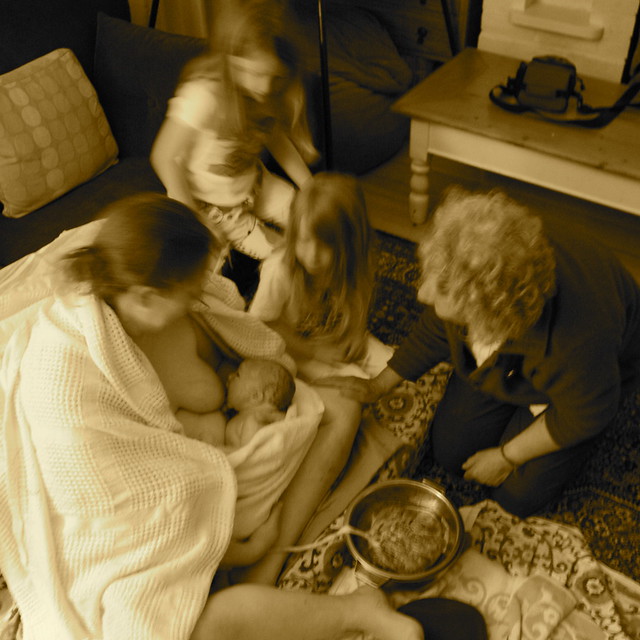
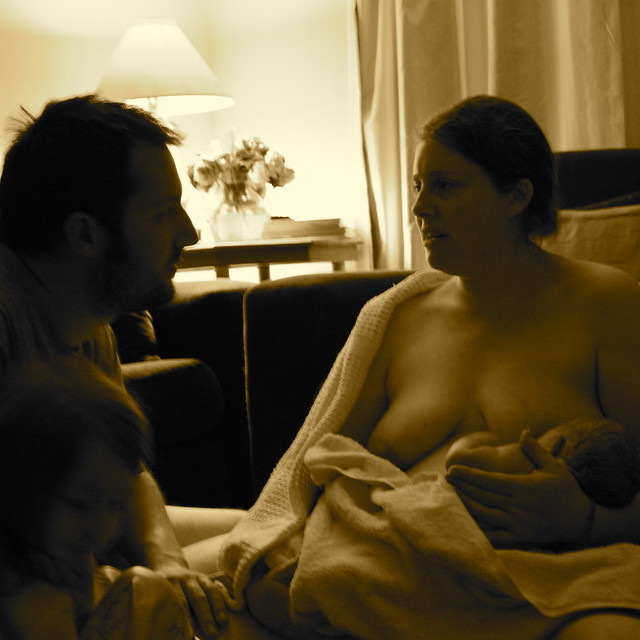
Things still aren't looking great for accessibility of homebirth to a great many Australian women. Its getting ugly in some places as people spin hate and fear. The losers in this, of course, are women. All women, who lose out as their choices and bodily autonomy diminish... *sigh* I worry for my owlets and what it'll all be like when their turn comes. But rather than focus on all that, I'm going to think about what homebirth has made ME aware of...

IMG_4107_2

I'm aware that a woman's birth is her own and she needs to own it. 
I'm aware that if a woman chooses care providers, they must trust her, follow her lead, support her fully. 
I'm aware that there is no place around a birthing woman for fear. 
I'm aware that the language used around a birthing woman is so influential to her birthing experience*.
I'm aware that unhindered pregnancy and undisturbed birth can mean instinct takes over and perceived risk diminishes.
I'm aware that I'm the best judge of what is going on with my body and my baby. 
I'm aware that undisturbed birth is unlikely in a hospital setting, although hospital is a fantastic back-up, should I need to access it. 
I'm aware that a strong, patient, experienced female presence can be so reassuring. 
I'm aware that I have everything I need to birth my baby safely into my own hands.
I'm aware that my body does all the hard work for me. I just need to go with the flow. 

IMG_4115_2

I'm aware that space to support each other unhindered, good communication and shared effort can be a wonderful thing for a relationship.
I'm aware that Huz makes a fantastic doula.
I'm aware that I birth loudly, despite wanting to be a nice, quiet birther... And my neighbours are either very polite or heavy sleepers.

IMG_4125_2


I'm aware that babies really do just find their own way to the breast and this happens much easier if left alone.
I'm aware that having my children nearby helps the smooth transition to a larger family happen for all of us.
I'm aware that its sooo good to hop in your own shower and your own bed in your own time and directly after birthing. 
I'm aware that being where the kitchen is always open and where your comfort food is always on hand is ideal after birthing... And that first meal is sooo good.
I'm aware that a birth helps make a house a home.

You can read last year's Homebirth Awareness Week post here. And read about Tiny Owlet's birth here


* For example, after Little Owlet's birth, my midwife spoke to me sternly; "If you don't empty your bladder in the next half hour, I'm going to put a catheter in". I felt like a naughty girl... After Tiny's birth, my midwife (a different one), suggested; "you might like to empty your bladder, because you'll feel so much relief and it'll be great for your uterus..." That's much better ;)

11 October 2011

super easy brownies :: day 11 :: sugarfree

Photo

My sometimes friend, Anonymous, popped in to say hi earlier and asked about rapadura and other sugars. Although, I suspect Anonymous knows a thing or two about it already and may have been having a dig... Anonymous can get like that sometimes. Anyhow, it's a valid question. We claim to be going sugarfree, here. I suspect Anonymous may have missed my first sugarfree post, and other posts of mine on rapadura. So I'll have another go at clarifying this particular sugarfree journey.

We have removed all REFINED sugar from our diet. When cane sugar is refined, every nutrient, vitamin and mineral is stripped away until all you are left with is a product that is sweet and cheap. And highly addictive. And in EVERYTHING. Even most savoury food contains it. There is a reason for this. Peeps love sweet. Breastmilk is sweet. Fruits and berries that are ok for us to eat (not poisonous) are sweet. Its programmed into our DNA to love a little bit of sweet. It's not programmed into us to love the refined stuff though. So where we're at now with refined food sees us consuming sweet stuff that's just no good for us. Fructose is also not so super good for us. High fructose corn syrup is really not great and is often in foods that refined cane sugar is not. And even ones that it is. We choose to avoid that too.
Photo A pre-sugarfree afternoon tea... hold the green spider!

So, what sweeteners do we allow ourselves, and why? On our list are honey, maple syrup and rapadura. At a pinch, we might use agave or concentrated fruit juice for a special occasion, if a recipe calls for it - although I prefer not to due to the super high fructose levels.  The reason we choose these products is because they are natural sugars, whole foods, or much closer to wholefood products than a highly refined product. They retain the minerals and vitamins and can actually be quite nutritive. Rapadura is dehydrated cane sugar juice. It hasn't gone through  huge refining or extraction process. Used in India for thousands of years, it keeps all its good stuff, is low GI and tastes good. We use it sparingly and find no negative body reaction in doing so. Honey (preferably raw) and maple syrup are similarly more of a whole food, so much better for us. We eat fruits with gay abandon too because we love fruit.

The reason why we choose to consume them at this point is because we are aiming to eat a healthier, whole food diet.  One that doesn't involve deprivation and seriously sad owlets. And a similarly sad Huz who would previously have eaten about 1kg of sugary food per day just to get through. We'd like this to be a lasting thing, so its baby steps. I also find that if we limit ourselves to natural sugars, we end up eating less sugar overall because its more of a hassle to prepare it. We have to make sweet treats, rather than buy a packet of bikkies. So we think it through more. And hey, everything in moderation... This approach may not be the ideal of everyone. There are loads of authorities on the subject who will tell you all sugar is evil. Or that some sweeteners are better than the ones we've chosen (and we may try others in the future). For us, a little bit of the right kind of natural sweeteners is having a huge effect. Huz's orb, for one, but in my own body I've noticed yeast infections disappear and hormones balance out. This moderate approach is one that suits our family well and maintains a balance.

Photo Lunchtime at ours these days...

So in going sugar free (or our definition of it), we removed all refined sugar and products containing it, from our house. Gradually using them up, or just throwing them all out at once this latest time. Then comes the healthy shop. Being conscious about our food choices. Feeling good about them. Then cooking. Staples at first and on occasion, a treat. Sweet treats through the day consist of fruit, fresh or dried. Usually with nuts too. A friend of ours put us onto hazelnut butter, which is a winner for cravings and dips in blood sugar level. Then about once or twice a week, we might have something home baked, containing one of the natural sweeteners mentioned above. I mostly fiddle with old favourite recipes, substituting where possible. Rapadura can dry things out a smidge, so a dash of maple syrup or honey can balance things out.

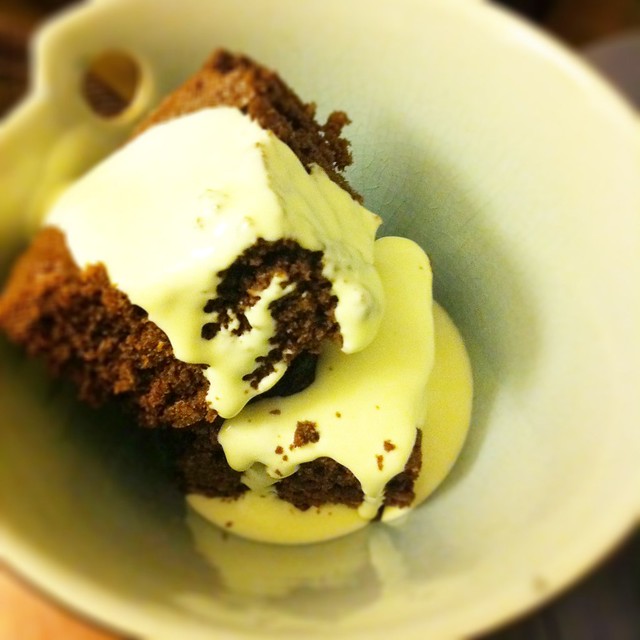
With that in mind, here's Sunday night's dessert. An old fave I've modified. Not the best brownies ever, but easy and super chocolatey when there's no actual chocolate in the house. My sister and I used to make this one after school and sometimes we even baked it...

Super Easy Brownies


Preheat the oven to 150 degrees, then melt...
125g butter, with...
1/2 cup cocoa, in a saucepan...
Add 1 cup of rapadura (I added less because it's quite sweet!)
and two beaten eggs.
Add 1tsp vanilla essence or maple syrup.
Add some walnuts if you like (we don't)
Add 3/4 cup of wholemeal SR flour
Add 1 pinch salt


Mix together in the pot, then put in a small baking tray. I use a square cake tin. Then bake for 25-30 mins. Eat warm and gooey, with cream.


******************


We've found the following resources helpful in researching the kinds of natural sweeteners we've chosen...
Sweet Sustenance by Joanne Hay
Nourishing Traditions by Sally Fallon and Mary Enig
My Years Without Sugar Blog