Showing posts with label learning. Show all posts

27 February 2020

80 Life Skills for Kids to Learn


We've spoken before about how the way we've educated our children over the years (at their request!),  has shifted to incorporate more of the practical. The life skills they'll need in the future, whatever that future might look like. Skills for resilience so they can care for themselves and their community. We're also educating them for the present, so that they can contribute to household life, but also so they have the skills they need to help avert climate change right now.

Over a year ago, we all sat down together and wrote up a list of skills we wanted our kids to have, or that they wanted to have, and some us adults  needed to work on ourselves - because we reckon learning and sharing skills is important for everyone, and there's always more to learn!


Our list has columns for each of us to tick off as we get to doing each task, or mastering each skill. There were 80 skills listed originally, and the kids have added more as they've thought of them. The list is now pinned to the fridge, and we've slowly ticked of skills as we've completed them after the list was hung - so there are some skills us adults have learned in pre-list days, but we're not ticking them off until we've done them again since hanging the list. It's proving motivating for all of us, and interesting to see how many are covered in our day-to-day. And it's been lots of fun learning and sharing skills!


After a few requests on our Instagram last week, we've shared our list, with blank columns for family members, here. You might like to use it for a base list for your own family, adding and removing skills as you like. Let us know how you go!


18 June 2019

Educating our kids for the future they'll inherit.


One month ago, we wandered around the corner for a democracy sausage and to choose the government to take us forward into an uncertain future. Voting that day, it felt like choosing the world our kids would inherit. We were full of hope. It felt like so much depended on it, in terms of our response to the climate emergency, and how we care for each other as a community. We were hopeful there would be at least a glimmer of positive change. But for most people I know, the results that day were hugely disappointing. Even my own mum, an eternal optimist, was quite distraught. Friends began looking for ways to create positive change, at a personal and local level. Something we’re all about, because we know the positive impact such changes can make.

For us, it meant taking a moment to think about what more we can do. And explaining to our kids what had been chosen for them. Re-evaluating how we’re living and fighting harder to protect this beautiful planet. But also making sure our kids are prepared for what may come. For us, that also meant examining our home education program and making sure it addresses climate emergency and the consumption crisis. And suddenly the curriculum resources we’d been utilising didn’t seem so necessary any more.

In the same year we began to live waste-free, and after many years unschooling, the owlets asked for a plan. Something mapped out that they could use semi-independently, that would tell them exactly what they “should” be learning. We chose a secular curriculum, and loosely followed it. For the most part they’ve enjoyed it. The history and science learnings reinforcing some things they already knew, and they felt comforted that they were learning the "right things", what their schooled peers were learning. But that shifted for us all last month.


Suddenly, how to write an essay didn’t seem quite as important as how to write a letter to the local MP. Learning things by rote didn’t seem as important as learning from experience. Keeping up academically seemed less important than creative and entrepreneurial thinking and being good humans. Learning about events of the past seemed less important than how to live in the future. We talked about whether university education would be relevant for them and the knowledge and skills they'll need. They're undecided. And although it may seem like a dramatic response, as a family, we decided to let go again and embrace the way of learning we started out with. To trust and keep talking, and working on our passions, and keep learning about nature and how to live as part of an ecosystem, with less harm. But also a long list of practical skills needed now and into the future.

So far, our list is full of skills like baking bread, chopping wood, mending holes in clothes, fixing things, pruning fruit trees, learning how government works, learning about local indigenous plants, animals and people, catching the bus, and finding out about alternative currencies. Each of the owlets has popped their own ideas down and they’ll all be working towards doing each these things independently. Some of them they’ve already mastered. Some of them are in our book! Some are in our Seedlings eCourse, which we're doing again. Some of them we adults are yet to master, so we’ll be working on them too, and adding to this list as we go on. This sits alongside their individual interests and passions, all the books they like to read, the things we like to do and learn about for fun or necessity. We’re making the most of every minute, but also slowing down where we can. Learning what matters, together. Learning from life, and for our lives, now and into the future.

~ Lauren. x


9 February 2018

Educating without waste


Ahh it's back-to school time here in Tasmania. Growing up, I remember fondly those years of booklists, new stationary and contacting books. As a teenager, I made it my job to see if I could find cheaper options of the suggestions on my school book list. It was one of my favourite times of year! As I was gathering up all the materials the owlets have chosen to learn with this year, it struck me just how many of them are now second hand. How inexpensive quality learning materials can be if we seek them out. How little waste we create in our education journey. One of the ways we reduce waste is by educating the owlets at home.

As home educators, we receive no financial support from the government, and we sacrifice one full-time income to make the owlets' education possible. We're extremely fortunate to be in a position where we can make that happen, and we do supplement the full-time income I'm no longer making, with the teeny, part-time shop income we make through Spiral Garden. Huz now works four days per week, as a measure for both his sanity, and mine, as a means we get to get all the things done, and spend more time together. We're certainly not making what most would consider to be smart financial decisions here, but they're decisions that keep work and life in balance for us all. Especially while the owlets are young.

For all this, we've had to be super thrifty and a little extra creative about how we do things. One way we save money on educational equipment is to sell the things we love, through our shop, enabling us to access tools we need at wholesale prices - it's a lot of work and I'm not sure I'd recommend it if you're in it for that alone! But here are some of the other ways we's reduced waste and costs, while providing a quality education for our kids:

Borrow tools and curriculum: We've been super fortunate to have been loaned books and curriculum materials when we've needed, by very generous and trusting friends. We're gentle on the books we use, and store them well, so can hand them back at the end of the year with minimal wear. Ask family for any helpful books, games and materials they might be able to share in the short or long-term. They may have something useful in their home, or keep an eye out for something helpful in their travels.

Buy secondhand: We're big on searching out good quality second hand books, tools and materials. We've been lucky to have stumbled across gems we can use, for almost nothing. At present, the reader Tiny has chosen to work on her reading with, belonged to my Aunt when she was small. The book Little Owlet has next on her list came from the local community book exchange. One of the maths books Big Owlet is using came from a freebie trolley at the tip shop! And we always keep our eyes open at the tip shop, garage sales and op shops. Many home educating families I know have become expert second-hand buyers, through necessity. It's a wonderful skill and set of values they're passing on to their children. To look for second hand options when possible. To value the words and knowledge in older materials, and to care for belongings well so they'll last for generations. 


Use supplies that create minimal waste: This year we've switched to writing on loose leaf paper, filed in folders for the different subject areas and projects the owlets are working on. It means there's no paper left unused, like there was in the main lesson books or exercise books they used previously. It also keeps everything together neatly. For writing and drawing tools, we use organic beeswax crayons, and pencils which can be sharpened, and their shavings added to the compost or fire. We're about to invest in some fountain pens for the older owlets, too. These can be refilled to use as they need (watch out for these in the shop). We use sturdy watercolour paints in palettes with replaceable paint blocks. These will last a lifetime. We use brown paper masking tape when we need to stick things, and when I've figured out a favourite option for glue (and we've run out of the old stuff we're still using), I'll be sure to update that. We're also about to dip into making art materials by hand, with some brilliant guidance by The Organic Artist, Nick Neddo (we'll blog some of that too). Basically, if it's compostable or reusable, we're all about it. 

Keep it minimal, and avoid plastics: We look for plastic-free options for materials and resources. Have a think about whether you really need to print or laminate that material you're using. What will happen to it when it's no longer useful to you? Online resources can be a way to access what you need and print only what's useful, but if you do need to use a printer, look for one that requires fewer cartridges and less ink. Is there another way to explore that science project or craft activity without plastics? Or can you approach the concept in a different way? If you're going out for the day, pack a lunchbox and avoid buying plastic-wrapped convenience foods along the way.

Use the library: Libraries are such great resources. It's surprising to me how many home educators I've observed will prefer to buy new books rather than borrow them from the library. Having said that, the kids non-fiction section at our local libraries has dropped by 75% in the past year, so if that's happening across the board, I'm kind of getting why you'd buy new books. Most libraries will take requests for new books to buy, so if there's something you're keen to read, try asking for it at the library so others can enjoy it too. 


Learn in nature: Nature really is the best teacher. Spend time learning real-life lessons, through observation. You can learn everything you need to know about reducing waste, through observing ecosystems. Make sure to leave a light footprint and take everything with you when you're done. 

Explore it together: Work with your kids on ways to reduce waste in your home and include them in the process. Brainstorm solutions together. Use bulk foods shopping and cooking from scratch as an opportunity to explore mathematical concepts, social interaction, economics, science, geography, history... there's much to learn in the daily runnings of a household and the feeding of a family, and those real-life lessons are so important and valuable. Kids are often quite intuitive about this stuff, so you may learn a thing or two along the way, too!

If your kids are learning in a school environment, many of these same principles apply. Chat to your teacher or school and see if you can help create positive change in your school community. You can hear Huz, and our friend Robyn, talking about back-to-school waste on ABC radio here.


If you're keen to learn more about reducing your family's waste, whether you educate your kids inside or outside the home, you can find more information in our e-courses, Zero Waste Families, and Seedlings: Permaculture for Families. Both courses are self-paced, and ready for you to sign up at any time.

We've also written a book which covers all these things and so much more, and will be available at your local bookshop (eep!), later this year.

13 February 2017

Beyond Unschooling


If you've been a reader of this blog for some time, you'll know that our main approach to owlet learning and living has been through unschooling. We've always followed their lead, since they were very small. Aside from that little moment of Steiner kindergarten for Big Owlet, we've just lived life and helped the owlets learn what they needed, when the needed. It's been beautiful and amazing, and a huge learning curve for us in observing and letting go and trusting that they will learn when and what they need. We wouldn't have it any other way.

As we stepped into last year, however, the owlets asked for more. They felt they wanted a plan mapped out for them. They wanted to learn more, explore more. And they wanted to work. Big Owlet was particularly keen to see where she was at and if she was on par with the peers that she knew at that Steiner kindy so many moons ago. But she was also adamant that she didn't want to go to school. She loves the freedom we have at home. Loves the ease and convenience of being where everything she loves and needs is, all day. All the owlets do - who doesn't?

So we set about finding structure and work, but balancing it with freedom. And we arrived at Oak Meadow. We've been using the Oak Meadow curriculum for Big Owlet for almost a year now. Little Owlet has also darted around the grades, then taken some time to focus on gardening, and she's now back on board and into her third week of a new year. Tiny began puddling around with her own "special books" (Oakmeadow Kindergarten) half-way through last year and is now into week three of Grade One.  I spent the first three weeks of this year planning and finding extra resources and mapping out our year. We're all in and we have a daily rhythm and we're working hard on all the things every day. Who even are we? Essentially we're still following the owlets' lead... Unschooling with book guides? Haha! It feels like the same life, but with different hashtags.


So how did the owlets measure up? Well, there were a few new concepts that curriculum based learning introduced. We found that the writing component of the program was challenging - there's so much writing! So we've been working through slowly, picking and choosing. We began at a level that covered much of the history learning Big Owlet was after and she's now at exactly the same place as those Steiner kindy peers. Little Owlet needed a little extra time with hands on work before she felt like settling down to bookwork. Her spelling needed some help, so using a formal program has done wonders for her confidence. Both bigger owlets can read very well, despite very little input from us. It really has just happened with time, patience, lots of reading aloud on our part, and effort on their part. Maths… well there are quite a few concepts which the owlets hadn't encountered yet. But they learn new maths concepts extremely quickly, so with Khan academy and extra time chatting it through with Huz, we've got them covered. Science - well, the Owlets find all those unschooling years and the way we live, observing and exploring, mean they have a great grasp on nature and science.

The beauty of the Oak Meadow program is that from Grade 4 onward, it is written to the student, so the owlets can work somewhat autonomously. The program is rather extensive, so they pick and choose the projects that really appeal to them and we supplement with extra outings, books, films and performances. And some days we put it all aside because it's a perfect beach day and there's so much learning and living to be done there.


I'm so glad for our unschooling years. They mean we learn creatively and resourcefully. They mean that I don't stress over skipped days or push things that the Owlets don't find interesting or essential. They mean that I know we'll get to where we need to be eventually, trusting the process of living and learning, together in partnership. Whichever approach you take, and whatever you decide to call it, that's really what it should all be about, after all. That's where the real learning is.


How's your year going?
I'll be sharing a little more of our learning adventures, past and present, in weeks to come. 
Have a gorgeous week.

Much love, 

~ Lauren. xx


26 February 2016

A new rhythm: Finding the beat x 3


Over the years, I've talked about rhythm so much, I know. Even in unschooling days, I think there's rhythm. We wake with the sun, eat when we feel hungry, sleep when we're tired… mostly. There are also rhythms to the seasons and by looking back at posts I've made over the years, I can see very clearly how rhythms affect our family and our days.

This year saw us implement a totally different approach to our home education. We're trying something a bit new. A side-step from our unschooling life to something a little bit different. Although, depending on your definition of the term, and are if labels are important to you, unschooling would possibly still define our days in some way. If we're going by school years, we have owlets in Grade 7, Grade 4 and Prep. All school age! One high school age! And, despite knocks and blows of the recent six months,  adamantly and passionately still choosing to be at home. So now to find a way to meet everyone's needs…


At Big Owlet's request, we've experimented and researched a curriculum for her. She adores a steady rhythm and to feel like she's accomplishing things, which is pretty important to her and where she's at. She's ready to knuckle down and work, and also find out where she measures up against her peers, which I hear is a 12yo thing. It's like a little light switched on one day and the desire was there. She wants to be kept busy and loves some external input for prompts to explore. So we're going with that and a curriculum we have. Back to our Waldorf/Steiner-inspired days, which has always been a fallback for her, we're using the Oak Meadow curriculum as a guide, which is written in such a way that she can take responsibility for her work. It's equal parts scary and wonderful. It's challenging and weird and super fun and should give her the mix of structure and freedom she works with best.


Little Owlet? Well… she just wants to work with her hands. But she wants a little bit of the structure that her older sister has. So we started out experimenting with various curriculums for her too, but none seemed a perfect fit for right now. So we're carving a seasonal year for her, using Laura Ingalls Wilder's "Little House" series as a starting point. She adores the first book of the series and she's keen to read more and take practical cues as we read on. She loves preserving and baking and all things old-fashioned, so it's a perfect fit. At her request, we'll be sure to compare and contrast to Australian history as we read, and fit a little form drawing and research about animals and the Dreamtime too.


As for Tiny? I'd say she's our radical unschooler. Totally moving to the beat of her own drum in every way, her own body clock determines what she does and when and she's super decisive in everything she does. She's learning in her own time and she's totally got this. She climbs up to the table to join in, or she wanders off on her own to play. Connection is all she needs right now. And patience. And to feel useful. So we keep her busy, get outside, cook, move, read and play and she's happy in her days. She writes letters, draws pictures, loves "Mafsh" (maths), and will only do anything if it was her idea first. Classic Tiny.


Things are settling a little now and I'm excited to see where we end up. Where this new rhythm and these new choices lead us. Perhaps just continuing on and finding the best fit for each of our owlets as we go. There's drama, cello, choir, girl guides and gymnastics in each week's mix too, so busy they are. And so grateful we are for our little shop, which miraculously (although not without effort) provides opportunity for owlets and helps meet their needs, with just the right amount of freedom. Now to add an extra 24hrs per day and all the rest will fit in too! But that's another post entirely….

How's your year going so far?
Is it as you expected?
How do you go about meeting everyone's needs?
Are there enough hours in your day? 

~ Lauren. xx


21 September 2015

Unschool Monday :: What Happened Next


So we left you hanging there a bit, hey? Winter was long and difficult and rather awful. In the garden, we were unprepared for the repeated frosts that kept our plants from growing and providing much yield - it seemed to mirror everything else. Things got worse. It was ugly and heavy and heart breaking. The school forms were filled out with lumps in our throats and we very nearly did go ahead with Plan B. But we didn't.

It turns out we love what we do and the way we do it so much that the Owlets decided that school isn't the answer, for now. So we're putting some extra effort into keeping things bubbling along. Which is so much easier now that Spring is here. I don't think I've looked forward to a change of seasons so much in all my life! We've re-connected with some super lovely people who've brought so much positivity. Our connection with the Owlets has strengthened as they've appreciated our complete honesty and open arms. We've all learnt a whole lot.


Choosing to see a world full of opportunities, we've begun learning new skills, trying new things and redefining ourselves a bit. As good permies do, we're backing up our major functions. It's all a bit exciting and new again. We're working extra hard to hone the budget to accommodate a choir, and cello lessons - a long-time wish of Big Owlet's and just at the perfect time for Little Owlet, who has always adored music. We're trying our hands at making baskets and mosaics. We're visiting the Marine Discovery Centre, planning trips, hanging out at the beach…


We've been super lucky to have friends come to visit from the mainland, at just the right time, with children for Owlets to connect with. We've reached out to new friends. We've celebrated 10 years since we first arrived to build a life here. And our much-missed mainland family have booked in a couple of weeks down here for Christmas, which just feels like a huge hug.


We shook things up in our nest too, by moving ALL the furniture around and throwing out what we no longer need. And right now the garden is in a state of flux while we dig up our beautiful spiral to make way for some serious veggie production - part budgetary measure and part personal challenge. The Owlets are on board with that more than ever and we're reconnecting with the earth, the soil we're taking care of, and each other, as we move into our 11th year on this beautiful island. It's just about the biggest spring clean of our lives! The energy is good and positive and we continue on as unschoolers and life learners, as we always were.

Hugest thanks to the kind words and supportive shoulders that have been around these past few weeks. They've been so very needed and treasured. 

How's your spring shaping up? 
Have you been doing some spring cleaning?

Have a beautiful week!

~ Lauren. xx

8 September 2015

10 reasons why you should do a Permaculture Design Certificate.

IMG_5286

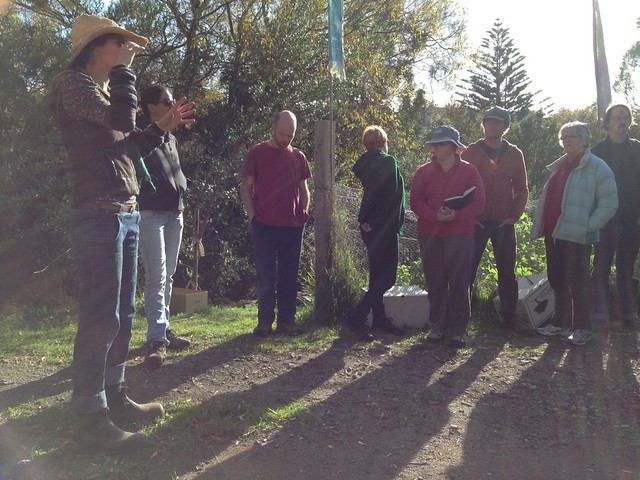
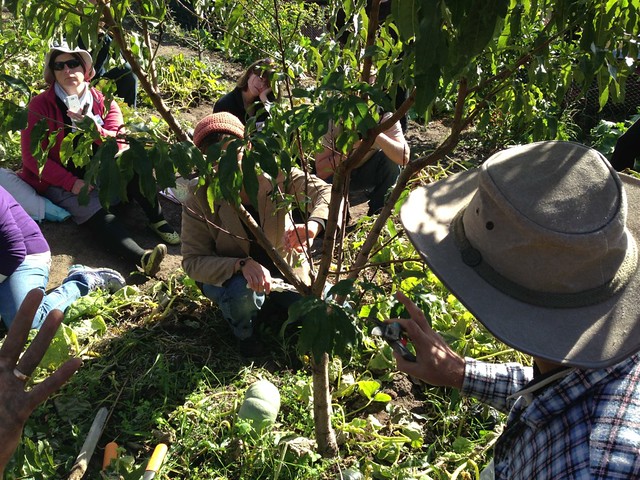
It's been a couple of years now since I walked into a classroom, for the first time in years, to learn more about permaculture. At the time, I wasn't quite sure what I was in for. I'd had a little insight into permaculture design and what it meant, but practically, I wasn't sure what I'd get out of it. I thought maybe some enhanced gardening skills, maybe learning about composting and some hot tips for collecting water. Or something. But what I discovered while doing my Permaculture Design Certificate (PDC) was so much more…

I was met by a room full of people from all over the country (the world!), looking to learn more. Brought together with this one common goal - a desire for a simpler, practical, more connected way of living. We couldn't have been more different. But the enthusiasm that brought us together created this infectious positivity. Plugging away with books at home on my own hadn't managed to reach me nearly half as successfully, even though that's my preferred method of learning. It's inspired the way we've designed our Seedlings course, and we'd recommend at least one member from every Seedlings family undertake a PDC too. I can't believe it took me so long to get around to doing it and I think I'd do another in a heartbeat!

IMG_5342

Oberon had a similar experience while doing his PDC, and later, his Permaculture Teacher Training. Permies are the best kind of people. So we thought we'd put down some reasons why a PDC is an amazing start towards living and breathing permaculture, just incase you're thinking about it...

1. Each PDC is different, drawing on the experience within the group and a range of learning styles are provided for. You can learn all sorts of skills and concepts you may not have expected.

2. You can make friendships with wonderful, likeminded people. They say the key to making friends is spending time together. Spending 72 hours with people, sharing knowledge, ideas and space tends to bring you closer. There may be hugs, challenging conversations and interesting perspectives gleaned along the way.

3. You have a chance to really immerse yourself in permaculture and what it's all about. You may leave your PDC feeling that this is only the beginning. But it's a wonderful grounding to build upon and those permaculture goggles help you do great things.

4. It helps to put our modern lives into context to create positive, practical change. Sharing the experience with others makes it achievable.

5. A PDC motivates you to be part of a community and give back to your own community. It's quite amazing the breadth of knowledge and support that can be gleaned from a group of ordinary, extraordinary people willing to share.

22/04/2013

6. A PDC gives you a great overview of environmental issues, but considers them in a solutions-based way.

7. You'll learn how to grow your own food well, in a way that's sustainable for you, your family and your community.

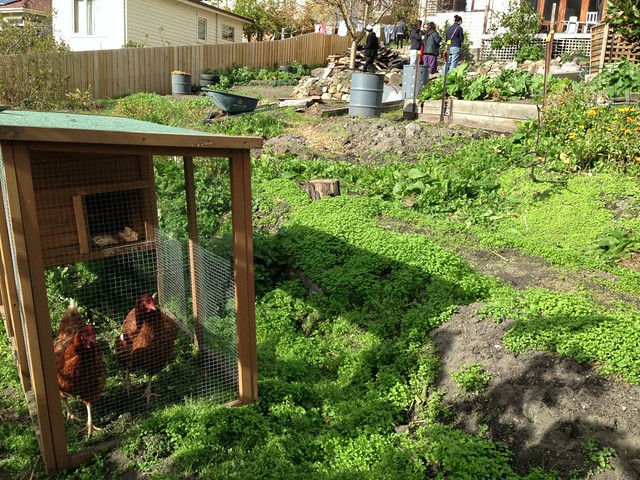
8. You'll get to visit some permaculture properties in action and be inspired by their owners - one of the most excellent bits! It's a chance to see what people in your community are doing.

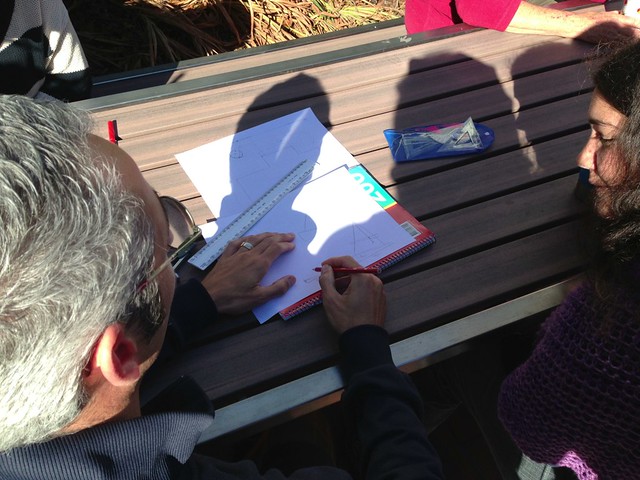
9. You will get experience in drawing, designing, sketching and imagining, within a supportive environment. You can take those skills further to apply permaculture design within your own home or community.

10. You'll have fun!

IMG_5303

The lovely folk at Good Life Permaculture are offering a part-time PDC, starting in early October. Part-time works really well for families and full-time workers so it's a great opportunity to fit everything in. Oberon is co-teaching alongside some other super amazing teachers and we encourage you to sign up if you're even vaguely interested or just thinking about it. You totally won't regret it! Head here for more information about the course and to enrol.

If you're wanting to get stuck into some permaculture with your family and want a gentle introduction, we'll be starting our Spring Seedlings course in a few weeks and there's still plenty of time to sign up. 

Happy growing! 

~ Lauren & Oberon. xx


27 April 2015

10 life lessons learned through fungi

I reckon I can pinpoint the shift in my perception back to this day one year ago, when we took a walk through a patch of rainforest in the Florentine Valley, northwest of Hobart. I'd seen rainforest before, and as someone with botanical leanings. Sure, I saw rainforest to be lush and peaceful but a little dull and simplistic, botanically speaking. You see, I was the kind of guy whose juices tended to flow at the sight of species-rich, dry sandy heathland or grassland, with their grand display of wild flowers in Spring.

But on this particular April day in the rainforest, the forest floor was awash with colour, not from plants, but, you guessed it, fungi! All colours of the rainbow, alien forms and configurations. I had previously read a little about fungi and their role in ecosystems as decomposers of dead organic matter and taken the odd passing snap with my camera. But there was a lot more going in this forest than I had previously noticed, and it was sparking my brain and my heart. I was filled with questions about their ecology, but was also struck by their beauty and diversity. All manner of mushroom, jelly, bracket, earth ball, and cup fungi! I took a bunch of photos and starting reading about these curious organisms...

These Mycena viscidocruenta were spotted on that pivotal bush walk exactly one year ago.


Since that eye-opening bushwalk exactly one year ago, we have been on about sixty dedicated fungi walks. The owlets have accompanied me on all but a few of these, and as a result they have developed keen fungi-spotting goggles and even learned the names of many! It's pretty awesome. 

And whilst I can't speak for the wisdom gained by the owlets during these walks, I can list with confidence some of my own insights. Lessons learned, if you will. Here goes:

1. Perception of the natural world is limited by ones attitudes to it and time spent in it.


On my walks sometimes strangers would see me crouched awkwardly with my camera and ask me what I was looking at. When I explained or showed people the fungi, often the response would be along the lines of "Oh I walk along here all the time, I've never noticed them!" I think there are many things I see, but treat as background noise to perception. It takes focus to see past that which we see easily. This can translate into our modern society, for example, it's is quite easy to ignore the under-privileged, the down-trodden and the minorities, unless we intentionally open our hearts and focus attention. Empathy can really open the minds-eye.

2. There really are worlds within world's but most humans will see only one. 

These jelly fungi are reminiscent of a galaxy of stars - tiny worlds on a log.


When looking closely at a fungus, you will often see small animals scuttling around its surface. Some tiny insects called springtails spend their whole life cycle within the gills on the underside of a mushroom! Planet earth may be the "world" as humans know it, but for many species their world is much smaller.

Also, some fungi cluster in ways that are reminiscent of galaxies or complex networks. You will often see the  intricate dendritic pattern of mycelial threads at the base of a fungus, reaching down into the soil. 

3. In intact nature, all living creatures are connected, but most connections are invisible.

Here you can see mycelial threads that connect this mushroom with the earth - what other connections do you see?


The pretty little mushrooms and other fungi that we see are not the whole organism, rather they might be considered as the fruit, whilst much of the species grows beneath the surface (of the wood or soil substrate). Those underground parts (called mycelium) often form associations with the roots of plants and these can extend throughout a forest. I think there is a lot still to learn about this phenomenon and the invisible ways that a forest communicates with itself and its environment.

Translating this to humans, whilst we can be physically connected, we are more often connected with others in invisible ways such as through our hearts or our shared thoughts and visions. Whilst I am not religious, I do feel my spiritual connection with nature is broadening over time. I feel like more of the connections in my life become visible or perceivable through observation of fungi. I feel less like my garden at home is completely disconnected from my favourite areas of native forest far away, and that these areas are connected through earth and water and fungal mycelium! Such thoughts only strengthen my affinity with natural areas. 

4. Science and art can be strong partners.

Zoom in close enough to a fungus and the colours and textures invoke an art piece as much as a scientific depiction!


Advances in digital photography and social media have provided great opportunities for fungi study. Mobile phone photography makes it easy to physically get the camera lens to point at harder-to-reach features of fungi. Increasingly I see fungi through both a scientific lens (what is its name, how does it work etc.) and an artistic one (look at the shape, the little bonsai-style setting, the patterns and texture!). I try to create images that provide enough information to identify the species, but I want them to be visually pleasing or interesting. This art part makes communicating the science part more effective, and thus I see the two disciplines as strong allies!

5. There is a stigma attached to fungi and related processes of death and decay and these inhibit human empathy towards nature.


Decaying fruiting body of Mycena cystidiosa, standing tall to the end.

In online discussions I've read many comments by others about how "gross" fungi and slime moulds are. I wonder if such disgust stems from a deeply-set avoidance instinct developed as a personal safety mechanism? I have a fear of big hairy spiders and I've seen other people carry massive tarantulas on their hands - this repulses me, but I'm sure my feelings stem from ignorance about those spiders as much as anything. Slimy or decaying fungi are not to be feared! Just wash your hands afterwards and all will be well!

6. Beauty can come from darkness.

Porpolomopsis lewelliniae, emerged from the darkness.


Many fungi grow in darkness; hundreds of microscopic fungi may reside in the woods of a single fallen log. Many larger mushrooms fruit on the dark underside of logs and branches, in deep dark leaf litter and in hollow logs. Despite the darkness of these places, many fungi thrive.

7. Even the very small can hold their head high.

Even amongst forest giants, this delicate mushroom holds its own.


In Tasmania we have trees that are nearly 100 metres tall making them the tall flowering plants in the world. Around the base of these trees, if you look closely, you're likely to find tiny mushrooms, maybe just a few centimetres tall. But here the height difference doesn't matter - every being holds their own space. Every individual is distinct but integrating as an effective community. 

8. We all have opportunity to reinvent ourselves by the choices we make each day.


Be your own earth star! 


When you see a mushroom and it has sagged into a decaying, goopy mess, the organism is still very much alive below ground. It might pop back up fresh nearby soon after, or it might wait until condition are suitable in future years. Translate this to humans and we can wake up each day a sagging goopy mess, bearing the burdens of yesterday, or we can wake up fresh and be whoever we choose to be!

9. Nature is much more than skin deep.

A family of springtails doing their thang on the jelly fungus, Tremella fuciformis.


One thing that I think really draws me into spending time in nature, is that it is not superficial. I think understanding of the more subtle or complex aspects of nature (e.g. All the small creatures and their interactions) increases with time spent immersed in it. The cool thing about fungi is that you're going to see different species and stages of fungi growth with each visit to an area. 


10. Learning is never complete.

The great thing about fungi books is that they are almost always pretty to look at! 


When I started learning names for fungi, I had aspirations to learn ALL the names! To learn ALL the things! But the reality is that our time to learn new things or follow any pursuit, is limited. So, I've come to realise that simple idea that "you can only do what you can do"! For example, I have dozens of books-to-read on my shelves, probably enough to last the next few decades - so many classic and amazing books I'll probably never get to read given a busy life - this is kinda sad, but it just encourages me to prioritise! Likewise with fungi, or any other activity really, I think it is important to focus on doing more of the stuff you really love. Learn for the sake of learning and share your knowledge with others and happiness will inevitably follow!

As you can see, these hitherto unseen organisms have had a profound effect on me - and it's only the been one year!

Have you had an equivalent hobby influence your world view? 

You can see more of my fungi photos on instagram @owletpapa. You can find a link in the sidebar. 

~ Oberon. 

20 April 2015

The Importance of Home Days


We're pretty busy people. Busy by choice and busy because we're chasing up all the things we're so passionate about. Mostly we're busy because we're hunting for fungi this time of year and wandering though the bush any chance we can get. I suppose that makes us not so much busy as at play. But we take our play seriously.

The stereotypical image of the isolated, unsocialised homeschooler is not a reality we've ever witnessed.  Where we live, there's so much on offer in the home educating community, and in the natural world around us, we actually have to put our collective foot down to grab some space amongst it all.

The balance of our adventuring days, and classes and outings and co-op days, is our home days. These are the days where we go very slow. Our in-breath. This is our daydreaming space. This is the space where we get stuff done and each explore what it is we each love to do. These are pyjama days, where the questions flow before breakfast ends. These are the days when the owlets delve into their preferred mediums for relaxation, learning and play.


Usually you'll find Big Owlet making art.


Little Owlet will, at some point, be working with her favourite wooden spoon.
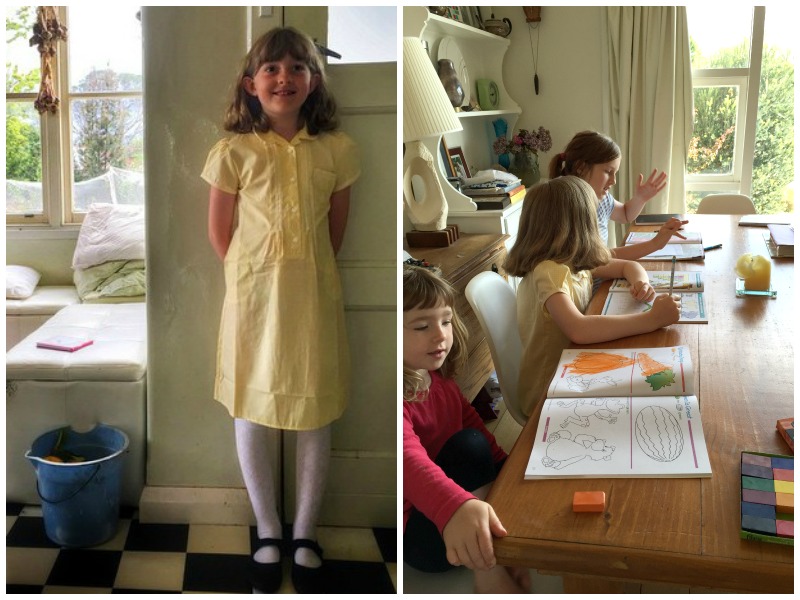


And Tiny Owlet will be stacking blocks, or putting them all in a line up the hallway.

I'll be floating around all of them,  helping keep them in orbit, if they need me. I'll be reading with one or all of them. Or working alongside them on my own projects. Sometimes I'll be cooking vast quantities of food to keep them fed and our evenings easier. Lately I've been looking at the piles of surplus stuff in our lives. Things that have seemed to accumulate mysteriously. Home days are a beautiful opportunity to assess those. They're a wonderful opportunity to get out in the garden too, and observe, explore, work and play. There will be screens watched and played on, arguments resolved, friends chatted with, pets played with, chooks cuddled, berries foraged, spills wiped up, washing done… and by the end of the day, the house will probably be trashed before Owletpapa arrives home. A family effort will set it (almost) right before dinner and we'll catch our breath before setting about doing it all again. These are the days that slip by quietly, full of beauty and challenge; everything and nothing much at all.
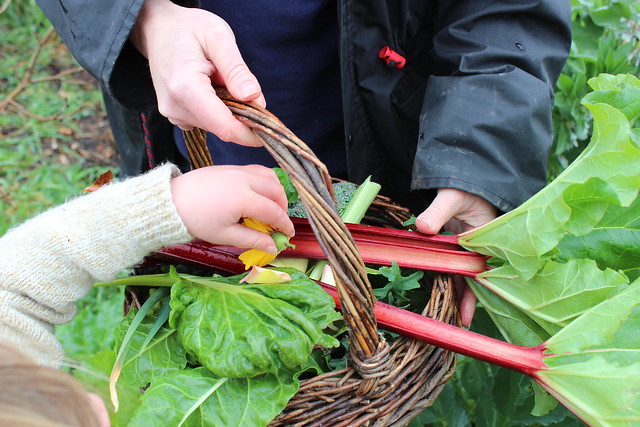
Home days are a moment to pause and gather ourselves up for the next adventure. But they're also an opportunity to just be ourselves, in our own little nest, without the distractions of commuting and routine driven by external forces. They're an opportunity to grow and learn as individuals and also to work together, in a collective effort, to do what needs doing. And there is so much that needs learning and growing and doing! To us, home education and even permaculture are about anything but being at home all the time. But gosh we'd be lost without our home days!

Do you manage home days often?
Maybe you're travelling and call them something else?
Or maybe you don't spend much time home at all and you like it that way! 
Are home days important to you? 

~ Owletmama. xx


3 February 2015

That time we tried school...


A few weeks ago, Little Owlet hit that stage… The one where an Owlet gets curious about what most other kids her age are up to. We've been here before, but all the same it surprised us. All the cartoons and kids shows she watches online begin talking about how awesome school is, to prepare the back to school crew, and an Owlet who is Little Owlets's age wonders what it means to fit in.

She began by asking Huz and I what it was like to go to school. And then she said she'd like to know what it feels like. She wanted to try it. Just for a day. So we asked her what it was she wanted to find out about… and together, we hatched a plan. Little Owlet has a rather vivid imagination, so pretending our home was a school was an easy compromise.

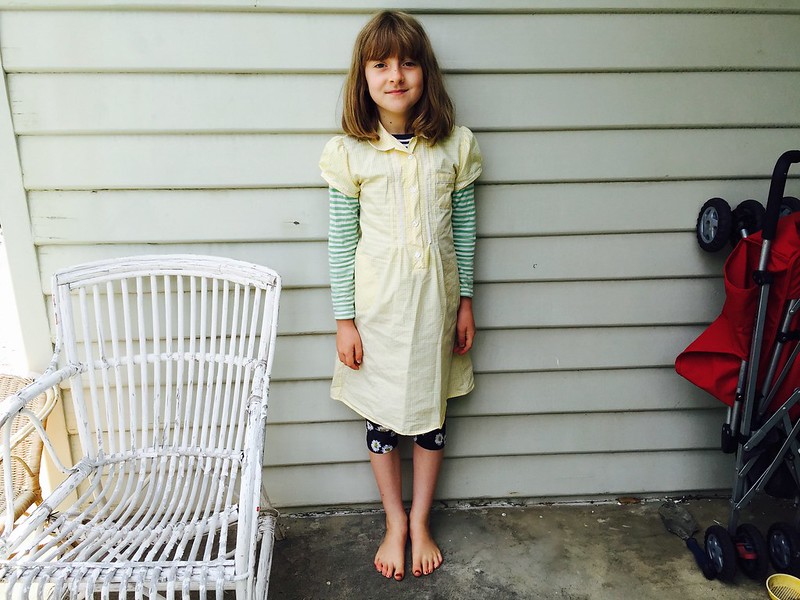
We ordered a uniform in her colour of choice, knee-hi socks and black shoes to match. We worked out all the things an Owlet her age might learn in a schoolish kind of setting. And then we tweaked it a bit. We picked out a day, marked in the calendar, and woke up to a whole new schoolish world that day.

school

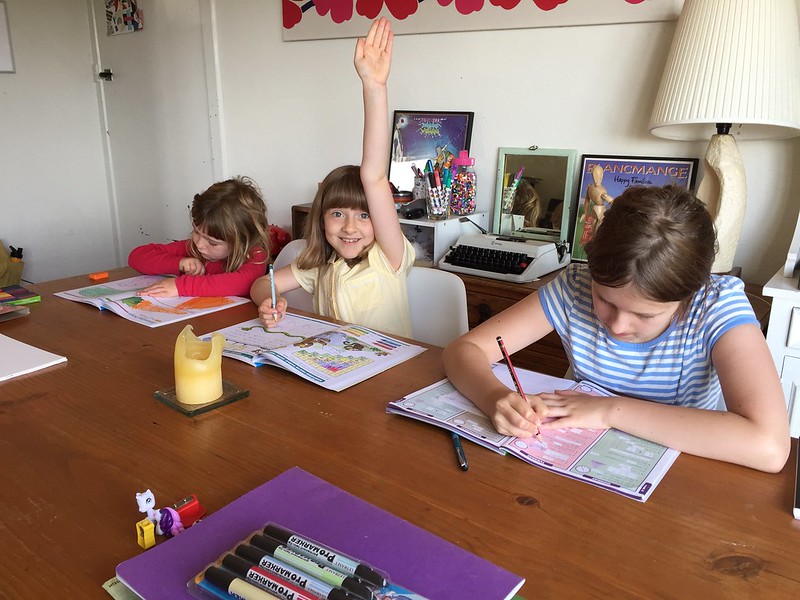
Lunches and backpacks at the ready, three Owlets assembled at our dining table at 9am one Monday to attend Mrs Carter's School for Particularly Wise Owlets. We structured our day around the school bell (thanks iPhone), and set to work with me as the teacher, my students eager to learn. Hands were raised when questions needed answering, a toilet pass was given when the toilet was needed. Recess and lunch were taken outside and playing with friends had to wait until the bell. Although, apparently, I wasn't as strict as they'd have like,  and it was a fairly simplistic representation of a school situation, I'd say they were fairly convinced.

The Owlets found the day interesting and hilarious, boring and exhausting. As did I. We didn't work at their usual pace and it was odd for them to have to persist with some things and give others up before they were finished. We covered maths, LOTE (French and Japanese all at once!), music, geography, english and art… and I'm fairly sure we approached them in more uschooly ways than we first intended, but old habits are heard to break!

Untitled

By the end of the day, we had a story to share with Huz and Little Owlet had determined that school was no longer something she was curious about. She did still like the uniform though… with a few minor alterations - daisy leggings for climbing trees, long sleeves for keeping the sun off and bare feet for feeling comfortable and free. And so we began with our year accordingly.

Happy new school year to our pals getting back to it and happy rambly days to our unschooly-type friends. Here's to finding what works, trying new things and learning together. xo

26 October 2014

Seedlings

seedlingsbasket
catch and store

Last night, very late (perhaps because we're a little nervous and excited about it and wanted to start with a whisper…) Huz pressed post and we shared something pretty big that we've been working on. We moved from that excited limbo state where your project is still an idea, onto that OMG moment where your work is out there for all the world to see. Within an hour we had our first participant sign up (a gorgeous, supportive friend who we're ever so grateful for) and we headed off to bed. This is real now. It's a thing. This morning we were joking that we might have to make up a bunch of fake Facebook identities to follow through with the whole online community we're aiming to create for our lovely participant - oh we're going to be busy alright! Haha! I hope she's not the only one. I hope… 

After Huz's Permaculture Design Certificate finished, we found ourselves to be a pair of passionate, optimistic permaculturalists, looking for ways to get our hands dirty, and not just in our own backyards. Big Owlet saw us gardening and talking and planning and wanted in on it. She wanted to know what we knew. So she asked us to teach her. This unschooled kid, who's never really asked to be taught much at all, wanted to know all about permaculture too. A seed was planted and so we began. 

seedlingstea

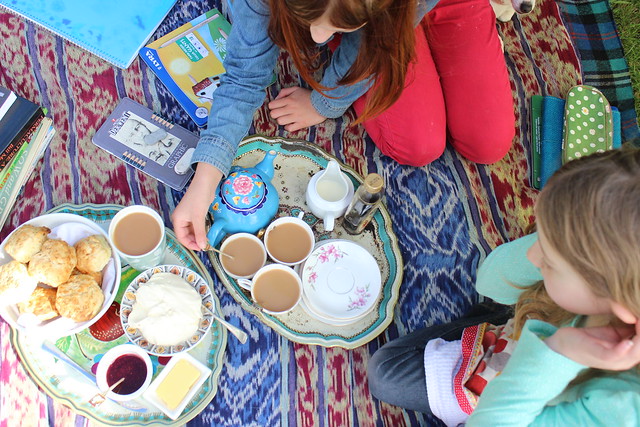
Over a number of weeks, we picnicked and talked and began with the permaculture principles, using some fun activities to back up our discussion. All the owlets took to it like ducks to water. We heard phrases and words entering their vocabulary and saw their confidence and understanding of our own permaculture design begin to make sense to them… So we wanted to share our experience with others and the Spiral Garden Seedlings program was born. 

Looking at the experience and backgrounds we have combined, I know we've come up with something that draws on all our strengths and knowledge to date. We're hoping to share a little of our experience as home educators, an ecologist, a designer, gardeners, parents and custodians of the earth. And we're hoping to inspire some connection and nurturing experiences for others. To help pass on some important life skills and welcome a whole new generation of earth custodians to the fray. 

yield

We discovered that in the process of passing on information to our owlets, we were revising our own permaculture learning and reinforcing it. We realised that by reaching out to families, we can not only pass this information onto children, but to their parents too. And as my mum just called to tell us, their grandparents as well! Three generations of wonderful humans working to look at the world and nurture it in a way that can only be good. I'm looking forward to getting to know them and work with them too.  It's a big job, so let's begin… xx

You can find the Spiral Garden Seedlings website and more information here.